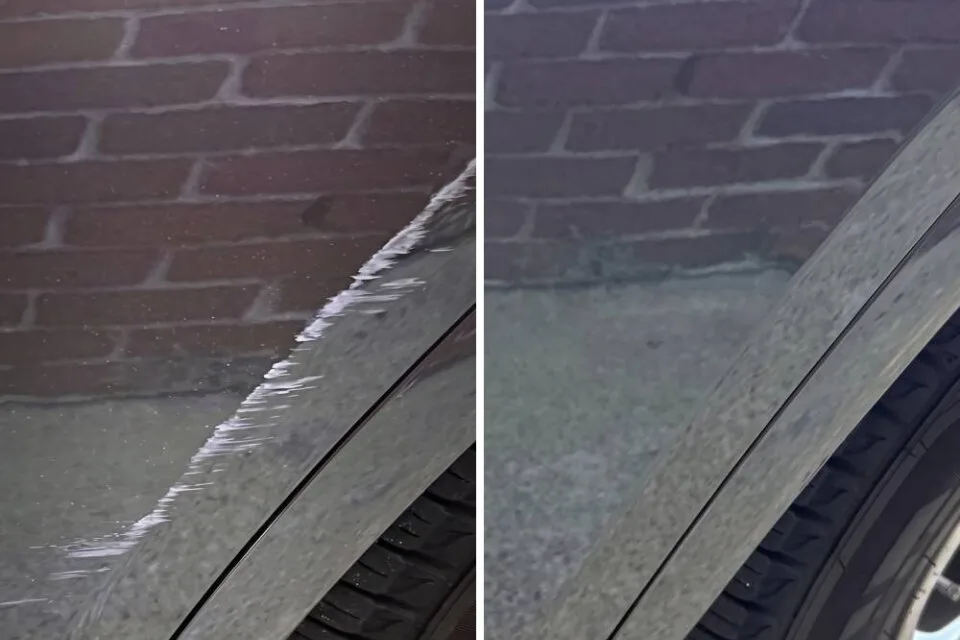
Car scratches are one of the most searched car care problems in the US, with tens of thousands of searches every month for scratch removers. Parking lots, shopping carts, bikes, branches and car washes leave their mark on almost every car.
The good news: most everyday scratches are only in the top layer of the paint and can be fixed at home in minutes. In this guide we explain how to tell how deep a scratch is, which DIY method fits each type, the mistakes to avoid and when a body shop is worth it.
What are the layers of car paint?
Understanding paint layers is the key to fixing scratches. According to Maaco, a car's finish has four levels:
- Clear coat: the transparent, glossy protective top layer.
- Base coat: the color layer.
- Primer: the layer that helps paint stick to the panel, usually gray or white.
- Panel: the metal or plastic body itself.
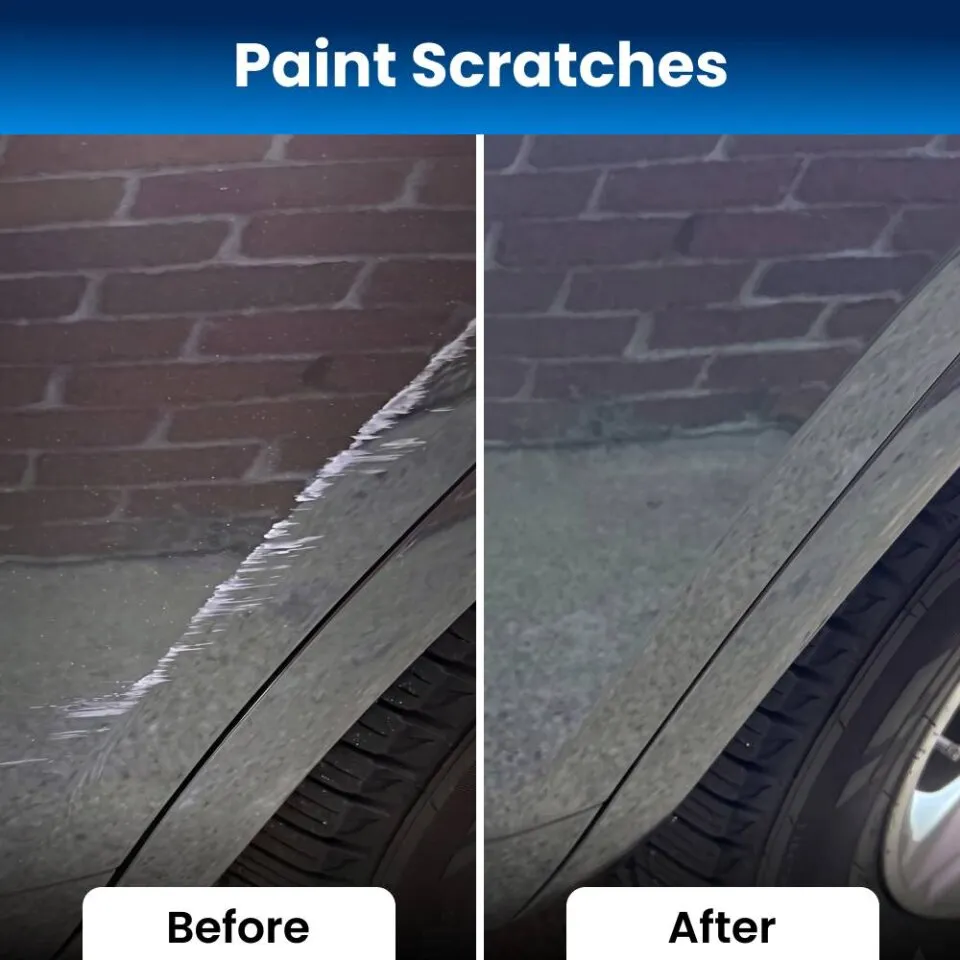
Most light scratches, swirl marks and scuffs live in the clear coat. That's why they can often be polished away: you smooth the clear coat so it reflects light evenly again.
How do you tell how deep a scratch is?
Use the fingernail test. Wash the area, then gently drag a fingernail across the scratch, not along it.
| What you notice | Likely depth | DIY fix? |
|---|---|---|
| Nail glides over, faint white line | Clear coat | Yes, scratch remover cloth or polish |
| Paint transfer or scuff sitting on top | On the surface | Yes, scratch remover cloth |
| Nail catches slightly, color still visible | Deeper clear coat or base coat | Improve the look, may need touch-up |
| Gray or white layer visible | Primer | Touch-up paint or body shop |
| Shiny metal visible | Bare metal | Repair soon to prevent rust |
What are the DIY options for removing scratches?
| Method | Best for | Difficulty |
|---|---|---|
| Nano scratch remover cloth | Scuffs, light scratches, paint transfer, water spots, oxidation | Very easy |
| Scratch remover liquid or polish by hand | Light clear-coat scratches | Easy to moderate |
| Rubbing compound plus polish | Deeper clear-coat scratches | Moderate, can haze or thin the clear coat |
| Machine polisher | Swirls across whole panels | Advanced |
| Touch-up paint pen | Chips and scratches to primer or metal | Moderate |
How do you remove light scratches step by step?
- Wash the car, or at least the area. Any grit will cause new scratches. A quick rinse with a hose nozzle helps; see our Jetterix review.
- Dry completely with a clean microfiber towel.
- Park in the shade so the paint is cool.
- Do the fingernail test to confirm the scratch is light.
- Test a hidden spot with your product, especially on matte or specialty paint.
- Rub firmly in small, overlapping circles over the scratch.
- Check from different angles and in sunlight. Repeat if needed.
- Buff with a clean microfiber towel to remove residue and restore shine.
- Protect the paint with a wax or sealant if your product doesn't leave a protective layer.
Why are nano scratch cloths so popular?
Traditional compounds work, but they're messy, take time and can leave haze or even thin the clear coat if you rub too hard. Nano cloths make it much simpler: the polishing agents are already in the cloth, so there are no liquids, no pads and no machines.
Our pick is NanoPolix. According to NanoPolix, its cloth:
- Is designed for surface-level paint damage: key marks, fingernail scratches around door handles, branch scuffs, light side-swipe marks, swirls, water spots and oxidation.
- Works in under 60 seconds on most surface scratches.
- Has a non-abrasive formula that's safe on all paint colors.
- Leaves a protective layer that helps resist new scuffs and UV fading.
- Is reusable for multiple repairs.
It costs $34.96 for two cloths, or as little as $12.23 per cloth in bundles, with a 30-day refund guarantee. Read the full NanoPolix review.
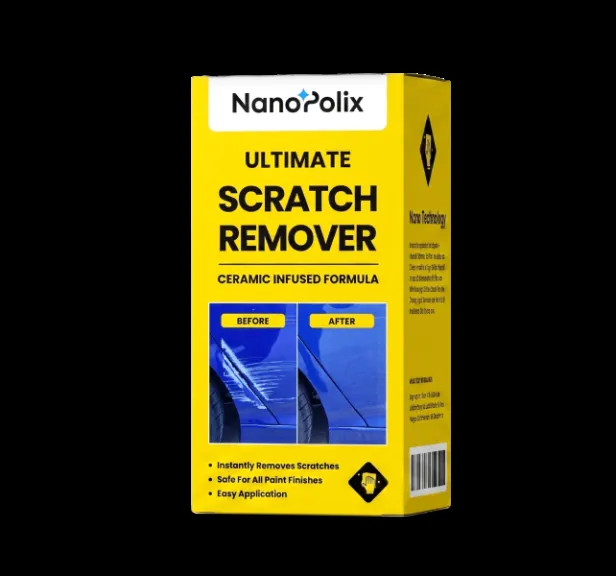
Our pick: the NanoPolix Scratch Remover Cloth
Reusable nano cloth for light paint scratches, scuffs, water spots and oxidation. Rub in small circles, buff, done.
Check today's price →2 for $34.96 (buy 1, get 1 free)
Does toothpaste or WD-40 remove car scratches?
These are popular internet hacks, but they're not great ideas:
- Toothpaste is mildly abrasive and might dull a tiny mark, but it isn't designed for automotive clear coat. Results are unpredictable and it can leave haze.
- WD-40 can make a scratch look less visible temporarily by filling it with oil, but the effect washes away.
- Magic erasers are abrasive and can dull the clear coat around the scratch.
Products made for car paint are a safer, more reliable choice.
What should you do about deep scratches?
If the scratch goes through the color to primer or bare metal, polishing can't put paint back. You have two options:
- Touch-up paint: get the factory color code (usually on a sticker inside the driver's door jamb), clean the scratch, apply thin layers with a fine brush or pen, let each dry, then apply clear coat.
- Body shop: Maaco recommends professional repair for scratches that expose metal, damage body lines, span several panels or involve failing clear coat.
Don't wait too long on scratches to bare metal. Exposed metal can rust, and rust spreads under the paint.
How much does professional scratch repair cost?
It varies a lot by car, color, location and damage. Small cosmetic repairs often run a few hundred dollars, and repainting a full panel costs more. Many NanoPolix buyers mention being quoted $200 to $450 for marks they fixed themselves. That's why trying a DIY fix first makes sense for light damage, as long as you check the depth.
How do you prevent new scratches?
- Park farther away from other cars and cart returns.
- Wash with the two-bucket method and a clean microfiber mitt.
- Never dry-wipe dust or snow off paint. A cordless blower clears snow without touching the paint; see using a leaf blower for snow.
- Dry with a blower or microfiber, not an old towel. Our Wood Ranger review covers a 2.1 lb blower that's handy for drying mirrors and door jambs, and do mini leaf blowers work? explains what these small blowers handle.
- Wax or seal your paint a few times a year.
- Remove bird droppings and sap quickly, before they etch the clear coat.
Getting a leased car ready for return?
Lease inspections often flag scratches and scuffs. As the FTC reminds drivers, when you lease you're responsible for excess wear and damage. Before your inspection, wash the car, check every panel in good light, treat light scratches and scuffs with a scratch remover cloth, and use touch-up paint on chips. Many drivers find they can fix most cosmetic marks themselves and avoid excess wear charges.
What are the most common mistakes?
- Working on dirty paint, which grinds grit into the finish.
- Working in hot sun on hot panels.
- Rubbing too hard with harsh compounds, thinning the clear coat.
- Using household products not made for car paint.
- Ignoring deep scratches until they rust.
What causes the most common car scratches?
- Door handle scratches: rings, keys and fingernails leave fine arcs around handles. These are almost always in the clear coat.
- Shopping cart and door dings: often leave paint transfer, which sits on top of your paint and wipes away with a scratch cloth.
- Branches and bushes: narrow driveways and trails leave long, light "pinstripe" scratches.
- Car washes and dirty towels: cause swirl marks, the spider-web pattern you see in sunlight.
- Snow brushes and scrapers: drag grit across the paint in winter.
- Keying: can range from light to deep; always do the fingernail test.
Why do scratches look worse on dark cars?
On black, dark blue and dark gray paint, light reflects off the edges of a scratch and shows up as a bright line. The same scratch on a white or silver car can be almost invisible. That's why owners of dark cars notice swirl marks and fine scratches so much more, and why a product that smooths the clear coat makes such a big visible difference on them. Always work in the shade and check your results in sunlight.
What should be in a DIY scratch repair kit?
- A gentle car wash soap and a clean wash mitt.
- Two or three clean microfiber towels.
- A scratch remover cloth, like NanoPolix, for light damage.
- A touch-up paint pen in your factory color code for chips.
- Painter's tape to mark the area you're working on.
- A spray wax or sealant to finish.
With these in your garage, most small marks take minutes to fix instead of a trip to the body shop.
Should you fix scratches on a new car right away?
Yes. Light scratches are easiest to remove while they're fresh, before dirt and oxidation settle into them. On a new car, the clear coat is in great shape, so a scratch cloth usually restores it quickly. Treat new marks within a few days, then wax or seal the area to help protect it.
The bottom line
Most car scratches are only in the clear coat, and you can fix them at home in minutes. Start with the fingernail test: if your nail glides over it, a scratch remover cloth or polish will usually make it disappear. If you see primer or metal, use touch-up paint or see a body shop.
For the everyday scuffs and scratches, our pick is NanoPolix: no liquids, no machines, reusable and from $12.23 per cloth. Check today's NanoPolix price.
Sources
- Federal Trade Commission. Financing or Leasing a Car.
- Maaco. Step by Step Guide to Car Scratch Repair.
- Official NanoPolix product page and FAQ, checked October 2026.
Frequently asked questions
Can you remove car scratches yourself?
Yes, most light scratches and scuffs in the clear coat can be fixed at home with a scratch remover cloth or polish. Deeper scratches need touch-up paint or a professional.
How do I know how deep a scratch is?
Use the fingernail test: drag a fingernail across the scratch. If it glides over, it's in the clear coat. If it catches, the scratch is deeper. Gray primer or bare metal means it's through the paint.
Does toothpaste remove car scratches?
Toothpaste is mildly abrasive and may dull a tiny mark, but it isn't made for automotive clear coat and results are unpredictable. A product made for car paint is a safer bet.
What is the easiest way to remove light car scratches?
A nano scratch remover cloth is one of the easiest: rub in small circles, buff, done. Our pick is NanoPolix, from $12.23 per cloth in bundles.
How much does a body shop charge to fix a scratch?
It varies widely by car, color and damage. Small cosmetic repairs often cost a few hundred dollars, which is why many people try a DIY fix for light marks first.
Should I fix deep scratches quickly?
Yes. Scratches that reach bare metal can start to rust, so cover them with touch-up paint soon or have them repaired.
Do scratch removers work on all car colors?
Many are designed for all colors, including dark and metallic paint. Always test a small hidden area first, especially on matte or specialty finishes.

Tim Humbert
Tim looks into the viral gadgets that show up in your feed, from mini leaf blowers to chain sharpeners and car care cloths. He reads the product pages, checkout and return policies, and buyer feedback so you know what a gadget really does before you spend money on it. His reviews are built on manufacturer information, official checkout and return policies, trusted safety sources and buyer feedback, and are updated when offers change. More about Tim.