
- After each use: wipe it down, clear leaves from the air intake and check the nozzle.
- Battery care: charge at room temperature, don't leave it fully empty, store it indoors.
- Monthly in season: inspect for cracks, loose parts and worn battery contacts.
- End of season: clean thoroughly, store the battery partly charged in a cool, dry place.
A leaf blower is one of the simplest tools in the garage, and a cordless one is simpler still: no oil, no fuel mixing, no spark plug. But a few minutes of care keeps it strong, protects the battery and avoids the frustration of a dead tool on the first big leaf weekend. Gas blowers need more attention, and we cover those too.
This guide explains after-use cleaning, battery care, seasonal checks, storage, troubleshooting common problems and the extra steps for gas blowers.
What should you do after every use?
- Release the trigger and remove the battery.
- Wipe the body with a dry or slightly damp cloth.
- Clear leaves, grass and dust from the air intake and vents.
- Check the nozzle for blockages.
- Recharge the battery indoors if it's low.
How do you take care of the battery?
- Charge at room temperature; avoid charging in a hot car or freezing garage.
- Don't store it fully empty for weeks.
- Store indoors in winter; cold reduces capacity and lifespan.
- Use the original charger.
- Keep contacts clean and dry.
- Recycle old batteries properly. The EPA explains how to recycle used lithium-ion batteries safely.
What should you check monthly during the season?
- Cracks in the housing or nozzle.
- Loose screws or parts.
- Battery contacts and the latch.
- Unusual noise or vibration.
- Any burning smell (stop using and contact support).
How do you store a blower for the off-season?
- Clean it thoroughly.
- Charge the battery partway, not full and not empty.
- Store the battery indoors in a cool, dry place.
- Hang the blower or store it on a shelf away from moisture.
- Check the battery every couple of months and top it up if needed.
Many people actually skip "off-season" storage because a light blower is useful year-round on snow, dust and grass clippings. See leaf blower uses.
How do you fix common problems?
| Problem | Likely cause | Fix |
|---|---|---|
| Weak airflow | Blocked intake or nozzle, low battery | Clear intake, recharge |
| Short runtime | Cold battery, high speed, aging battery | Warm battery, lower speed, replace if old |
| Won't start | Battery not seated, dead battery | Reseat, charge, check contacts |
| Rattling | Debris inside or loose part | Remove battery, clear debris, check screws |
| Overheating | Long continuous use, blocked vents | Rest it, clear vents |
If a problem continues, contact the manufacturer's support before trying repairs yourself.
What extra care do gas blowers need?
- Use fresh fuel with stabilizer; mix 2-stroke fuel correctly.
- Clean or replace the air filter regularly.
- Check and replace the spark plug as recommended.
- Drain fuel or add stabilizer before storage.
- Check the spark arrestor screen.
That's a lot more work than cordless, which is one reason many homeowners switch. See electric vs gas leaf blowers.
Which blower is easiest to maintain?
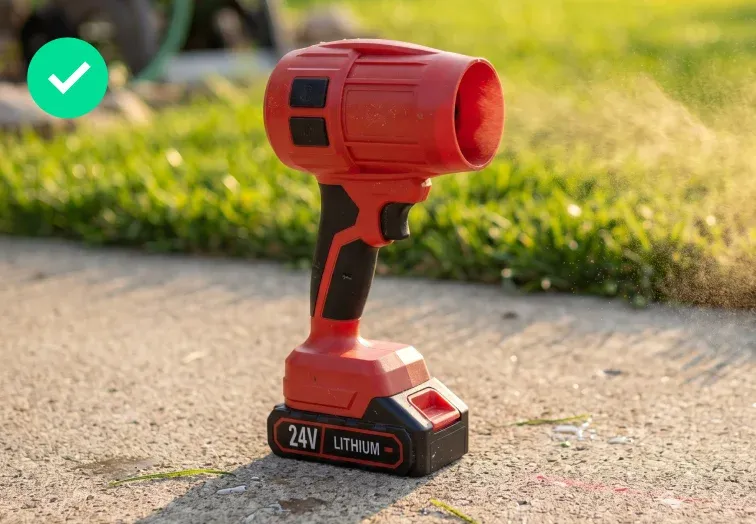
A cordless blower with a brushless motor is about as low-maintenance as power tools get: brushless motors have no brushes to wear out, and there's no fuel system to clog. The Wood Ranger Power Leaf Blower uses a 1600W brushless motor, weighs about 2.1 lb and runs about 30 minutes per charge. It ships from Ohio with a 90-day guarantee and costs from $55.99 each in bundles, with an optional 1-year extended warranty for $9.99. Read our Wood Ranger review.
A blower that needs almost no maintenance
Brushless motor, no fuel, about 2.1 lb and about 30 minutes per charge. From $55.99 each in bundles, 90-day guarantee.
Check today's price →From $55.99 each in bundles · 90-day guarantee
Which safety tips apply to maintenance?
- Always remove the battery before cleaning or checking the blower.
- Never open a lithium battery or use a damaged one.
- Keep batteries away from metal objects that could short the contacts.
- Wear eye protection when clearing debris from the intake.
How do you use the guarantee or warranty?
Keep your order confirmation, register the product if asked and contact support with a clear description of the problem. For the Wood Ranger, support is at 1-888-413-5241 and support@woodrangertools.com. See is Wood Ranger legit? and Wood Ranger complaints.
How long does a cordless blower last?
With good care, the blower itself can last many seasons; the battery is usually the part that ages first, gradually holding less charge over a few years. Good charging and storage habits extend its life. When runtime drops a lot, a replacement battery brings the blower back to full strength.
Why does the air intake matter so much?
A blower works by pulling air in through the intake and pushing it out the nozzle. If leaves, grass or dust clog the intake screen, the motor has to work harder, airflow drops and the battery drains faster. In heavy leaf season, check the intake several times per session, especially if you notice the sound changing or the airflow getting weaker. Remove the battery first, then clear the screen by hand or with a soft brush. Never run the blower with the intake cover removed.
How do you look after the charger?
Keep the charger indoors, away from heat, water and dust, and unplug it when not in use. Don't cover it while charging, and check the cord for damage. If the charger or battery gets unusually hot, smells or shows warning lights, stop and contact support. Using only the original charger protects the battery and keeps the warranty valid.
What changes in winter?
If you use your blower for snow, wipe off melted snow after each use, let the blower dry before storing it and keep the battery indoors. Cold, damp storage is the fastest way to shorten battery life. Check the nozzle for ice and the intake for snow before starting. See can a leaf blower remove snow?
When should you replace the battery?
Lithium batteries gradually hold less charge over hundreds of cycles. When runtime drops to roughly half of what it was when new, or the battery won't charge fully, it's time for a replacement. Buy the manufacturer's battery or an approved one; cheap no-name batteries can be unsafe. Recycle the old one at a battery drop-off point rather than throwing it in the trash.
How do you care for the nozzle?
Check that the nozzle clicks firmly into place and isn't cracked. Clear any debris inside it, and avoid using the blower as a lever or scraper, which can crack the tube. Some blowers come with different nozzle tips; store them together so they don't get lost.
What's a simple maintenance checklist?
- Every use: remove the battery, wipe, clear intake and nozzle.
- Every few uses: check for cracks, loose parts and clean battery contacts.
- Monthly in season: full inspection, charger check.
- Before storage: deep clean, store battery partly charged indoors.
- Each year: check battery runtime and replace if it's dropped a lot.
What if the blower gets wet?
Remove the battery right away, wipe the blower dry and let it air dry indoors for a day before using it again. Don't use a hair dryer or heater to speed it up, and never charge a wet battery. Light rain on the outside housing is usually fine, but don't submerge the blower or use it in heavy rain.
What does unusual vibration mean?
Strong vibration or a new rattling sound often means something is stuck in the fan, the nozzle is loose or a part is damaged. Stop, remove the battery and check the intake and nozzle. If you can't find the cause, contact support rather than opening the housing, which can void the warranty.
Which everyday habits make a blower last longer?
Use the lowest effective speed, avoid running the battery completely flat every time, don't drop the blower on hard surfaces, and hang it on a hook rather than tossing it in a bin with other tools. Small habits like these keep both the motor and the battery healthy for many seasons.
How do you store a gas blower over winter?
Add fuel stabilizer and run the engine for a few minutes, or run the tank dry. Clean the air filter, check the spark plug and store the blower in a dry place away from heat and flames. In spring, use fresh fuel and check the starter rope before the first use.
Which spare parts are worth having?
A second battery is the most useful spare for cordless blowers. For gas blowers, keep a spare spark plug and air filter. Store spares with the blower so they're easy to find mid-season.
Should you blow dust out of the blower itself?
Use a soft brush or a dry cloth instead; compressed air can push dust deeper into the vents.
The bottom line
Cordless leaf blower maintenance is mostly about keeping the intake clear and treating the battery well: charge at room temperature, store indoors and don't leave it empty. Inspect it monthly in season and clean it before storage. Gas blowers need fuel, filter and spark plug care. A brushless cordless blower is the easiest to keep running.
Our pick: check today's Wood Ranger price on the official site.
Sources
- U.S. Environmental Protection Agency. Used Lithium-Ion Batteries.
- Federal Trade Commission. Online Shopping.
Frequently asked questions
How do you maintain a cordless leaf blower?
Wipe it after use, clear the intake, charge the battery at room temperature and store it indoors.
Why is my leaf blower losing power?
Usually a blocked intake or nozzle, a cold or low battery, or an aging battery.
How should I store a leaf blower battery?
Indoors, in a cool, dry place, partly charged.
Do cordless blowers need oil?
No. Brushless cordless blowers have no fuel or oil system.
How long does a cordless leaf blower last?
Many seasons with care; the battery usually ages first.
What extra care do gas blowers need?
Fresh stabilized fuel, air filter cleaning, spark plug checks and draining fuel before storage.

Tim Humbert
Tim looks into the viral gadgets that show up in your feed, from mini leaf blowers to chain sharpeners and car care cloths. He reads the product pages, checkout and return policies, and buyer feedback so you know what a gadget really does before you spend money on it. His reviews are built on manufacturer information, official checkout and return policies, trusted safety sources and buyer feedback, and are updated when offers change. More about Tim.