
- Use the lowest speed that works: full power drains the battery fastest.
- Blow when leaves are dry; wet leaves need much more power.
- Work in short bursts and plan your path so you don't move the same leaves twice.
- Keep the battery warm in cold weather and store it indoors.
- Charge after use, avoid leaving it fully drained, and store it partly charged in the off-season.
- Keep intake vents clean so the motor doesn't strain.
Cordless leaf blowers are convenient: no cord, no gas, no pull-start. The one thing owners worry about is battery life. The battery always seems to run out just before the last pile of leaves, and after a few seasons, many people feel it doesn't last as long as it used to.
The good news is that how you use, charge and store the battery makes a big difference, both to runtime per charge and to how many seasons the battery lasts. This guide explains what affects battery life, how to get more minutes from each charge, cold-weather tips, charging and storage habits, and when it's time for a new battery.
What affects how long a blower battery lasts?
| Factor | Effect on runtime |
|---|---|
| Speed setting | The biggest factor: high speed drains the battery much faster |
| Wet or heavy debris | Needs more power, shortens runtime |
| Temperature | Cold batteries deliver less power and runtime |
| Battery age | Capacity slowly drops over the years |
| Clogged intake | Motor works harder |
| Technique | Moving leaves twice wastes battery |
How do you get more runtime from each charge?
- Start on low and only increase when needed. Most dry leaves move easily at lower speeds.
- Use the variable trigger to feather power instead of holding full throttle.
- Blow with the wind, not against it.
- Plan your route: work from the edges toward one collection point, so you move leaves once.
- Keep the nozzle low and sweep side to side like a broom.
- Work in short bursts, releasing the trigger between pushes.
- Wait for dry leaves when you can; a sunny afternoon after rain makes a big difference.
- Split big jobs into sections and charge in between.
See leaf blower vs rake for when raking makes more sense on big lawns.
Why does the battery run out faster in the cold?
Lithium-ion batteries deliver less power and runtime when they're cold, which is why runtime often drops in late fall and winter. Tips:
- Store the battery indoors and bring it out just before use.
- Don't charge a very cold battery; let it warm to room temperature first.
- Keep spare batteries in a pocket or a warm bag while you work.
- Expect shorter runtime when clearing light snow; plan quick jobs.
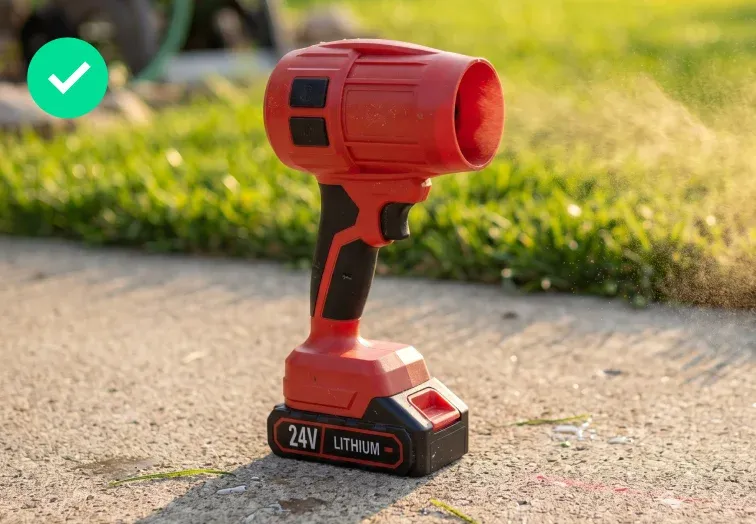
Which blower makes battery-friendly use easy?
The Wood Ranger Power Leaf Blower is a 2.1 lb cordless mini blower with a 1600W brushless motor and a variable-speed trigger, so you can run gentle speeds for most leaves and dust and save full power for stuck or wet spots, which stretches every charge. It runs about 30 minutes per charge, enough for patios, decks, driveways and small yards. Brushless motors are generally efficient, which also helps runtime. It ships from Ohio with a 90-day guarantee and costs $69.99, or as little as $55.99 each in bundles. Read our Wood Ranger Leaf Blower review (4.6/5).
A light blower that's easy to run efficiently
Wood Ranger Leaf Blower: 2.1 lb, cordless, brushless motor, variable-speed trigger, about 30 minutes per charge. From $55.99 each in bundles, 90-day guarantee.
Check today's price →From $55.99 each in bundles · 90-day guarantee
What are the best charging habits?
- Recharge after each use, once the battery has cooled down.
- Avoid running it completely flat regularly, if your tool allows you to stop earlier.
- Use the charger that came with the tool.
- Charge at room temperature, not in a hot car or freezing garage.
- Don't leave it in direct sun or near heaters.
- Follow your manual on leaving it on the charger.
How should you store the battery in the off-season?
Many lithium-ion battery makers recommend storing batteries partly charged, often around 40 to 60 percent, in a cool, dry place indoors, and checking the charge every few months. Avoid storing a fully drained battery for months, which can damage it, and avoid freezing or very hot spaces like attics and car trunks. Follow your manual's specific advice.
How do you handle batteries safely?
- Don't use or charge a battery that's damaged, swollen, cracked or very hot.
- Keep batteries away from metal objects that could short the terminals.
- Don't leave charging batteries unattended for long periods, and charge on a hard, non-flammable surface.
- Recycle old batteries properly; many hardware stores and local programs accept them. The EPA explains how to handle and recycle lithium-ion batteries.
Why do clean vents help battery life?
Leaf bits and dust clogging the air intake make the motor work harder to move the same air, which drains the battery faster and can make the tool run hot. Wipe the intake and vents after each use and check the nozzle for blockages.
When is it time for a new battery?
All rechargeable batteries slowly lose capacity over time and charge cycles. Signs it's time for a replacement:
- Runtime is much shorter than it used to be, even when warm and fully charged.
- The battery won't hold a charge or drains while stored.
- It gets unusually hot or shows physical damage.
Check whether your tool's maker sells replacement batteries before buying a new tool.
How long should a charge last for common jobs?
- Porch, steps and walkway: a few minutes.
- Patio or deck: 5 to 10 minutes.
- Driveway: 10 to 15 minutes, depending on size and debris.
- Garage floor: 5 to 10 minutes.
- Small yard of dry leaves: a full charge or more.
These are rough estimates; speed setting and debris make a big difference. For more ideas, see leaf blower uses and do mini leaf blowers work?
Is battery runtime a reason to choose gas?
For very large properties with heavy leaf loads, a gas blower's unlimited runtime can make sense. For most homes, a cordless blower's runtime is plenty, especially with good technique, and you skip the fuel, noise, fumes and maintenance. See electric vs gas leaf blowers and quiet leaf blowers.
Should you buy a second battery?
If you regularly run out of charge before you finish, a second battery is often the simplest fix. Charge one while you use the other, and you'll never wait for a charge mid-job. For most homes, though, using lower speeds and better technique stretches one charge far enough for weekly cleanups.
How do you plan battery use for the leaf season?
During peak leaf drop, short, frequent cleanups are kinder to the battery than one huge session. Clearing a few minutes' worth of leaves every couple of days means each job fits in one charge, the leaves never pile up wet and heavy, and the motor never has to work at full power for long. Keep the charger in a convenient spot indoors and make recharging part of putting the blower away. By the end of the season, store the battery partly charged and indoors so it's ready for light snow and next spring.
How does battery life change when blowing snow?
Light snow is denser than dry leaves, and cold temperatures reduce battery output, so expect shorter runtime in winter. Clear light, fluffy snow as soon as it stops falling, before it's packed down or wet, and keep each job short: steps, the porch and the car rather than the whole driveway. Store the battery inside and bring it out just before you start. For winter use, a 4-season blower designed for light snow is a good fit; see using a blower for snow and how to keep steps ice-free.
Which battery myths should you ignore?
- "You must fully drain lithium batteries before charging." That was true for old battery types; lithium-ion doesn't need it.
- "Leaving it on the charger forever is always fine." Follow your manual; many recommend removing it once charged.
- "Higher speed finishes faster, so it's more efficient." Often not: full power drains the battery far faster than the time it saves.
- "Cold doesn't matter." Cold reduces runtime noticeably.
Can heat damage the battery too?
Yes. High heat is just as hard on lithium-ion batteries as cold, and it can shorten their overall life. Don't leave the battery in a hot car, in direct summer sun or next to a heater, and let it cool down after heavy use before charging. A shaded spot in the garage or a shelf indoors is ideal.
What do battery numbers mean?
Voltage (V) relates to power, and amp-hours (Ah) to capacity: a higher Ah battery of the same voltage generally runs longer. Real runtime still depends mostly on the speed you use and the job.
The bottom line
To get more from a leaf blower battery, use the lowest speed that works, blow dry leaves with the wind in short bursts, keep the battery warm in cold weather, charge after use, store it partly charged indoors and keep vents clean. These habits stretch each charge and help the battery last for more seasons.
Our pick for efficient cordless cleanup is the Wood Ranger Leaf Blower. Check today's Wood Ranger price.
Sources
- U.S. Environmental Protection Agency. Used Lithium-Ion Batteries.
- CDC, NIOSH. Noise and Hearing Loss.
- Official Wood Ranger product page, checked October 2026.
Frequently asked questions
How long does a cordless leaf blower battery last?
It depends on the model and speed. Many mini blowers run around 15 to 30 minutes per charge; high speed drains the battery much faster.
How can I make my leaf blower battery last longer?
Use the lowest speed that works, blow dry leaves with the wind in short bursts, keep the battery warm in cold weather and keep the vents clean.
Why does my blower battery die faster in winter?
Lithium-ion batteries deliver less power when cold. Store the battery indoors and bring it out just before use.
Should I store my blower battery fully charged?
Many makers recommend storing lithium-ion batteries partly charged, around 40 to 60 percent, in a cool, dry place indoors. Follow your manual.
When should I replace my leaf blower battery?
When runtime is much shorter than before even when warm and fully charged, it won't hold a charge, or it's damaged, swollen or very hot.
How long does the Wood Ranger Leaf Blower run?
About 30 minutes per charge, with a variable-speed trigger to stretch runtime. From $55.99 each in bundles.

Tim Humbert
Tim looks into the viral gadgets that show up in your feed, from mini leaf blowers to chain sharpeners and car care cloths. He reads the product pages, checkout and return policies, and buyer feedback so you know what a gadget really does before you spend money on it. His reviews are built on manufacturer information, official checkout and return policies, trusted safety sources and buyer feedback, and are updated when offers change. More about Tim.