
- Make less noise, without the engine roar and low-frequency rumble.
- Don't idle: they're silent the moment you release the trigger.
- Produce no exhaust and need no fuel or pull-start.
Few yard tools draw as many complaints as leaf blowers. The high-pitched whine and the deep engine drone of a gas blower carry across a whole block, and early-morning yard work can start neighborhood arguments. Many towns now limit when blowers can be used, and some have restricted gas models altogether.
If you want to clear leaves without annoying the neighbors, or your own family, a quieter blower makes a real difference. This guide explains why some blowers are so loud, how noise is measured, what makes a blower quieter, how cordless models compare with gas, and simple habits that cut noise further.
Why are leaf blowers so loud?
- Two-stroke gas engines are inherently noisy and produce a low-frequency drone that travels far and through walls.
- High air speed creates a high-pitched whine from the fan and nozzle.
- Running at full throttle all the time, even when less power would do.
- Idling between bursts on gas models.
- Hard surfaces like concrete and walls reflect sound.
How is leaf blower noise measured?
Noise is measured in decibels (dBA). Because the scale is logarithmic, a 10 dB increase sounds roughly twice as loud. Manufacturers often list a rating at 50 feet, which is what neighbors hear, but the operator hears much more. The CDC's NIOSH recommends limiting exposure to noise at or above 85 dBA, and notes that higher levels can damage hearing in less time. Many gas blowers expose the operator to levels well above that.
How do gas and cordless blowers compare on noise?
| Factor | Gas blower | Cordless electric blower |
|---|---|---|
| Overall loudness | Loud, especially at the operator | Generally quieter |
| Low-frequency drone | Strong; travels far | Little or none |
| Idling | Runs between bursts | Silent when trigger is released |
| Exhaust and fuel smell | Yes | None |
| Starting | Pull-start, choke | Press the trigger |
| Raw power | Highest, for big properties | Plenty for most home yards |
California has moved to phase out new gas-powered small off-road engines like leaf blowers, partly over emissions; the California Air Resources Board explains the rules. See electric vs gas leaf blowers.
What makes a blower quieter?
- Electric motor instead of a gas engine.
- Brushless motor, which tends to run smoother.
- Variable-speed trigger, so you use only the power you need.
- Smaller size for patios and decks, rather than a backpack blower for a small yard.
- Well-designed fan and nozzle that reduce whine.
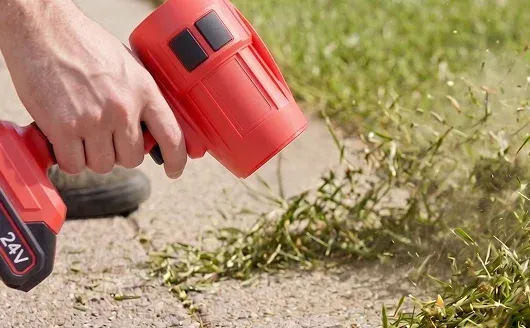
Which compact blower keeps noise down?
The Wood Ranger Power Leaf Blower is a 2.1 lb cordless mini blower with a 1600W brushless motor and a variable-speed trigger, so you can use lower power for most leaves and dust and save full power for wet or stuck debris. There's no gas engine, no idling and no exhaust, and it stops instantly when you release the trigger. It runs about 30 minutes per charge, which covers patios, decks, driveways, garages and small yards. It ships from Ohio with a 90-day guarantee and costs $69.99, or as little as $55.99 each in bundles. Read our Wood Ranger Leaf Blower review (4.6/5) and choosing a cordless leaf blower.
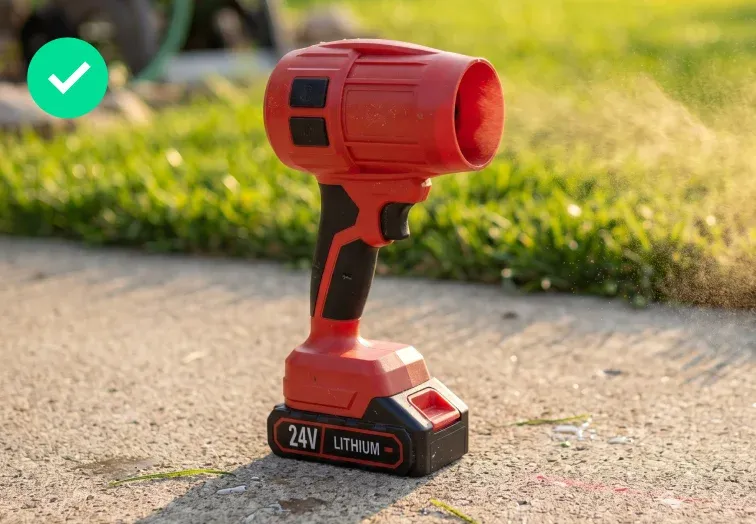
A compact blower that's easier on the ears
Wood Ranger Leaf Blower: 2.1 lb, cordless, brushless motor, variable-speed trigger, no gas engine, about 30 minutes per charge. From $55.99 each in bundles, 90-day guarantee.
Check today's price →From $55.99 each in bundles · 90-day guarantee
Which habits make leaf blowing quieter?
- Use the lowest speed that works: most dry leaves move easily.
- Blow at reasonable hours: mid-morning to early evening on weekdays, later on weekends.
- Work in short bursts rather than running continuously.
- Point the nozzle down and away from houses and windows.
- Blow leaves when they're dry, so less power is needed.
- Mix tools: rake lawns and blow hard surfaces. See leaf blower vs rake.
- Tell neighbors if you'll be doing a big cleanup.
Are there rules about leaf blower noise?
Many cities and homeowners associations set hours when power tools can be used, and some restrict gas blowers entirely or set noise limits. Check your local ordinance and HOA rules before buying. Electric blowers are often exempt from gas bans and are less likely to cause complaints. In California, a state law phased out sales of new gas-powered small engines; the California Assembly announced the change in 2021.
Should you wear hearing protection?
For long sessions, yes, even with a quieter blower. Hearing damage builds up over time from repeated exposure. Foam earplugs or earmuffs are inexpensive and comfortable. For gas blowers, hearing protection is strongly recommended. Eye protection is also smart, since blowers kick up dust and grit.
Is a quieter blower powerful enough?
For most home yards, yes. Large properties with acres of leaves may still benefit from a big backpack blower, but patios, decks, driveways, sidewalks, garages and small to medium yards are well within the range of a good cordless model. Variable speed means you get extra power when you need it. See do mini leaf blowers work?
What else is a quiet blower good for?
A quieter, lighter blower gets used for more than leaves: clearing grass clippings after mowing, dusting the garage, drying the car after a wash, blowing light snow and cleaning out the workshop. Its lower noise means you can use it in the early evening or in a garage without disturbing the house. See clever leaf blower uses.
How do you avoid neighbor complaints?
- Avoid early mornings and late evenings.
- Don't blow leaves onto the neighbor's property or the street.
- Keep sessions short and efficient.
- Choose an electric model.
- Coordinate big cleanups, or offer to do a shared sidewalk.
Do cordless blowers run long enough?
Battery life depends on the model and the speed you use. Lower speeds, which are also quieter, stretch each charge. Plan big jobs in sections, charge between them, or keep a second battery if your model offers one. For most patios, decks and driveways, one charge is plenty. See leaf blower battery life.
Are quieter blowers better for kids and pets?
Yes. Many dogs and cats are frightened by the roar of a gas blower, and the noise can startle small children or wake a napping baby. A quieter electric blower that stops the moment you release the trigger is much less stressful for everyone at home. It also means you can do quick cleanups, like blowing off the porch before guests arrive, without turning it into a production. Keep children and pets a safe distance away anyway, since any blower can kick up grit and small debris.
Does a quieter blower cost more?
Not necessarily. Compact cordless blowers are often more affordable than high-end gas backpack units, and they have lower running costs: no fuel, no oil mixing, no spark plugs and less maintenance. Over a few seasons, the savings on gas and tune-ups can be significant. The main ongoing cost is eventually replacing the battery, which depends on how often you use it and how well you store it.
Which blowing technique uses less power?
Good technique means you can run the blower at a lower, quieter speed and still finish faster. Work with the wind, not against it. Hold the nozzle low and close to the ground, sweeping side to side like a broom, rather than pointing it straight down. Move leaves into a few small piles instead of trying to push one huge pile across the yard. Start at the edges, like along the house and fence, and work toward the open lawn or a tarp. Blow when leaves are dry; wet leaves stick together and need much more power. See what to do with fallen leaves.
When do you need the most power?
Peak leaf drop in late October and November is when you'll use the blower most and need the most power, especially after a rainy week. That's also when neighbors are blowing too, so being considerate matters. Doing a quick pass every few days during peak season, instead of one huge weekend session, keeps each cleanup short, quiet and easy on the battery. Our fall yard cleanup checklist helps you plan.
How do you store a cordless blower?
Store it indoors, in a garage or shed that doesn't freeze hard, and keep the battery partly charged during the off-season. Wipe dust and leaf bits off the intake vents after each use so air flows freely, which helps it run efficiently at lower, quieter speeds.
The bottom line
The quietest leaf blowers are usually compact cordless electric models: no engine drone, no idling and no exhaust. Use a variable-speed trigger at lower power, blow at reasonable hours, work in short bursts and wear hearing protection for long sessions. For most home yards, a quiet cordless blower has all the power you need.
Our pick for quieter yard cleanup is the Wood Ranger Leaf Blower. Check today's Wood Ranger price.
Sources
- CDC, NIOSH. Noise and Hearing Loss.
- California Air Resources Board. Small Off-Road Engines.
- California Assembly. Phase-out of gas-powered leaf blowers.
- Official Wood Ranger product page, checked October 2026.
Frequently asked questions
What is the quietest type of leaf blower?
Small cordless electric blowers are usually the quietest: no engine drone, no idling and no exhaust.
Why are gas leaf blowers so loud?
Two-stroke engines create a low-frequency drone that travels far, and high air speed adds a high-pitched whine. They also idle between bursts.
How loud is too loud for a leaf blower?
NIOSH recommends limiting exposure to noise at or above 85 dBA. Many gas blowers exceed that at the operator, so wear hearing protection.
Are cordless leaf blowers powerful enough?
For patios, decks, driveways, garages and most home yards, yes. Large properties may still benefit from a bigger backpack blower.
Are there rules about leaf blower noise?
Many cities and HOAs limit hours, set noise limits or restrict gas blowers. California has phased out new gas small engines.
Is the Wood Ranger Leaf Blower quiet?
It's a cordless electric blower with no gas engine or idling and a variable-speed trigger for lower power. From $55.99 each in bundles.

Tim Humbert
Tim looks into the viral gadgets that show up in your feed, from mini leaf blowers to chain sharpeners and car care cloths. He reads the product pages, checkout and return policies, and buyer feedback so you know what a gadget really does before you spend money on it. His reviews are built on manufacturer information, official checkout and return policies, trusted safety sources and buyer feedback, and are updated when offers change. More about Tim.