- It's quieter, lighter and starts instantly.
- It needs no gas, oil or tune-ups, and has no fumes.
- It handles patios, driveways, decks, beds and typical suburban lawns easily.
For decades, gas leaf blowers were the default: loud, powerful and smelly, but they got the job done. Battery technology has changed that. Cordless blowers are now strong enough for most homes, and many towns and states are moving away from gas yard equipment altogether. But gas still has its place.
This guide compares electric and gas leaf blowers on power, run time, noise, weight, maintenance, cost and environmental impact, so you can choose the right type for your yard.
What types of leaf blowers are there?
- Battery (cordless electric): rechargeable lithium-ion batteries; from 2 lb mini blowers to backpack models.
- Corded electric: plug into an outlet; unlimited run time but limited by the cord.
- Gas handheld: two-stroke engines; moderate power and weight.
- Gas backpack: the most powerful residential option, for big properties.
How do electric and gas leaf blowers compare?
| Battery electric | Gas | |
|---|---|---|
| Power | Plenty for most homes; top models rival gas | Highest on heavy, wet leaves and big areas |
| Run time | Limited by battery; extra batteries help | Refuel and keep going |
| Noise | Much quieter | Loud |
| Weight | From about 2 lb (mini) upward | Heavier, especially backpacks |
| Starting | Instant | Pull cord, choke |
| Fumes | None | Exhaust fumes |
| Maintenance | Minimal; charge and clean | Fuel mix, spark plugs, filters, carburetor |
| Upfront cost | Low (mini) to high (big battery systems) | Moderate to high |
| Running cost | Electricity | Gas, oil, parts |
Are electric leaf blowers powerful enough?
For most suburban homes, yes. Battery blowers have improved dramatically, especially those with brushless motors, which are more efficient and durable. A compact cordless blower easily clears dry leaves, grass clippings and debris from patios, decks, driveways and garden beds, and herds leaves on a typical lawn. Very large properties with deep, wet leaf piles are where gas backpacks still have an edge.
Power isn't only about specs. A blower you can hold comfortably and aim precisely is often more effective in practice than a heavier, more powerful one you get tired of after ten minutes.
How much quieter are electric blowers?
Noticeably. Gas blowers are among the loudest pieces of home equipment, which is why many towns restrict their use or hours. Battery blowers are much quieter for you, your family, pets and neighbors. Long exposure to loud noise can damage hearing; the CDC's NIOSH recommends limiting exposure to noise above 85 dBA. Hearing protection is still a good idea for long sessions with any blower.
What about emissions and regulations?
Small two-stroke gas engines produce significant air pollution for their size. California has moved to phase out sales of new gas-powered small off-road engines like leaf blowers, according to the California Air Resources Board, and many local governments have restricted gas blowers. Battery blowers produce no exhaust at the point of use, which also means no fumes in your face or in an enclosed garage.
How much maintenance does each need?
Gas blowers need the right fuel-oil mix, fresh fuel or stabilizer, periodic spark plug and air filter changes, carburetor care and winterizing. Old fuel is a common reason they won't start in spring. Battery blowers mostly need charging, keeping vents clean and storing batteries at moderate temperatures. For many homeowners, avoiding the hassle of gas is the main reason to switch.
Which costs more over time?
Upfront, a compact battery blower like the Wood Ranger costs about $55 to $70, while gas handhelds and big battery systems cost more, and gas backpacks the most. Over time, gas adds fuel, oil and parts costs, while battery blowers add only electricity and, eventually, a replacement battery. For typical home use, battery blowers are usually cheaper to own.
Which electric blower do we recommend for most homes?
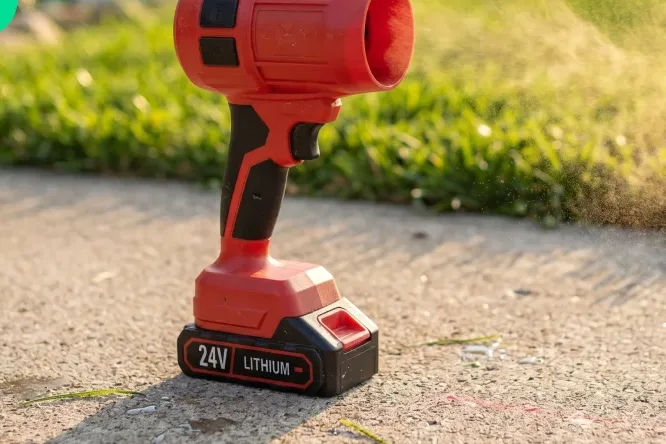
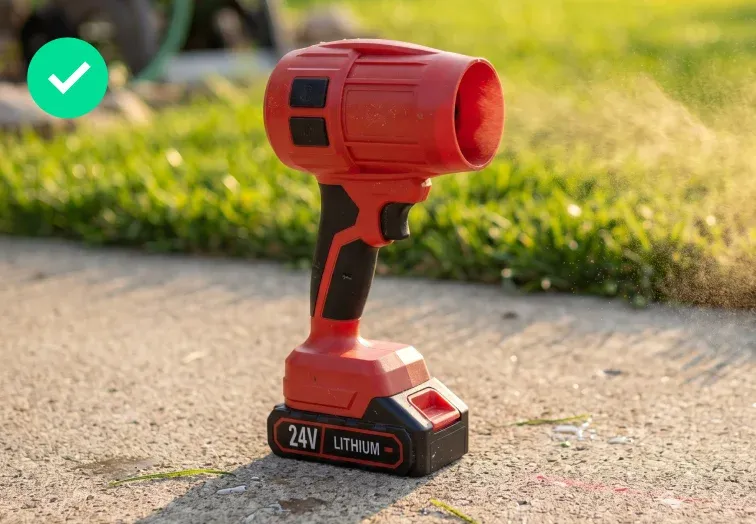
For everyday jobs, the Wood Ranger Power Leaf Blower is our pick. According to the brand, it has a 1600W brushless motor in a 2.1 lb body, a variable-speed trigger and about 30 minutes per charge. It's light enough to hang by the door and grab for a five-minute cleanup of the driveway, patio or garage, and it ships from Ohio with a 90-day money-back guarantee. The brand reports a 4.8 rating from about 27,000 reviews (the brand's own figures). Read our Wood Ranger review and our guide to the best cordless leaf blower.
Quiet, light and ready instantly
Wood Ranger Power Leaf Blower: 1600W brushless motor, 2.1 lb, variable-speed trigger, about 30 minutes per charge. $69.99, or from $55.99 each in bundles, 90-day guarantee.
Check today's price →From $55.99 each in bundles · 90-day guarantee
Which type is more useful year-round?
This is where battery blowers quietly win. A gas blower tends to come out only for the big fall cleanup, because starting it and dealing with fuel is too much hassle for small jobs. A light battery blower, on the other hand, gets used all year: grass clippings off walkways after mowing in summer, pollen and dust off the porch in spring, sawdust out of the garage after a project, crumbs and dust out of the car, cobwebs from the eaves, and light, fluffy snow from cars, steps and decks in winter. Each of those jobs takes a few minutes, and because the blower is ready instantly, they actually get done. For winter use, the 4-season Wood Ranger Power Blower is designed with snow in mind; see using a leaf blower for snow.
That everyday usefulness is a big part of the value. A tool that earns its keep twelve months a year is a better buy than a more powerful one that sits in the shed for eleven.
What are common myths about battery blowers?
- "They're toys." Early cordless blowers were weak, but brushless motors and modern batteries changed that. Today's compact blowers handle real yard work. See do mini leaf blowers really work?
- "The battery dies in five minutes." Run time depends on speed; most blowers run far longer on low and medium settings, which are enough for most tasks.
- "You need a huge battery system." For a typical suburban lot, a single compact blower is often all you need.
- "Gas is always cheaper." Once you count fuel, oil, parts and tune-ups, battery blowers are usually cheaper to own for home use.
Who should still choose gas?
- Owners of large, heavily wooded properties with deep, wet leaf layers every fall.
- People who need to work for hours without stopping to recharge.
- Rural properties without convenient charging.
- Professional landscapers (where local rules still allow gas).
Even then, many owners keep a light battery blower for quick everyday jobs and use the gas blower only for the big fall cleanup.
Who is a battery blower best for?
- Suburban, townhouse and condo homeowners.
- Anyone with patios, decks, driveways and garden beds to keep tidy.
- People who want quiet operation and no fumes.
- Anyone who hates pull cords, fuel mixing and tune-ups.
- Older adults and anyone who wants a light tool.
- Homes in areas with gas blower restrictions.
What about corded electric blowers?
Corded blowers offer unlimited run time and are inexpensive, but the cord limits reach and can be a tripping and tangling hazard. They're fine for small yards near an outlet. Most homeowners prefer battery models for freedom of movement.
How do you get the most from a battery blower?
- Use low or medium speed for most tasks and save high for stubborn debris.
- Blow dry leaves; wet leaves take much more power and battery.
- Work with the wind and plan your route.
- Charge after use and store batteries indoors.
- Keep a second blower or battery for big cleanups, so you can swap and keep going.
How do you use any leaf blower safely?
Whichever type you choose, a few rules apply. Wear eye protection, since blowers throw grit, small stones and twigs. Wear hearing protection for long sessions, especially with gas. Point the nozzle away from people, pets, cars and windows, and keep children at a distance while you work. Don't blow leaves into the street or storm drains. With gas blowers, refuel outdoors with the engine off and cool, and never run one in a closed garage. With battery blowers, charge and store batteries according to the manufacturer's instructions, away from extreme heat. Simple habits like these keep blower work safe and keep neighbors happy.
What happens when a homeowner switches from gas to battery?
A common story goes like this: the old gas blower is hard to start every fall because the fuel sat all summer, it's heavy enough that the owner dreads using it, and it's so loud they feel guilty firing it up on a Saturday morning. After switching to a light battery blower, the first thing they notice is that they use it much more often: a quick pass on the patio before guests arrive, the driveway after mowing, the garage after a project, light snow off the car in winter. The second thing is that the neighbors stop wincing. For the biggest leaf weekends of the year, it may take a little longer or a second battery, but most owners say the trade-off is well worth it, and many never go back to gas.
The bottom line
For most homeowners, a battery electric leaf blower is the smarter choice: quieter, lighter, instant-starting, low-maintenance and fume-free, with plenty of power for typical yards. Gas still makes sense for very large, wooded properties and all-day use. Many homes are best served by a light cordless blower for everyday jobs.
Our pick is the Wood Ranger Power Leaf Blower. Check today's Wood Ranger price, and see leaf blower vs rake.
Sources
- California Air Resources Board. Small Off-Road Engines.
- CDC / NIOSH. About Noise and Occupational Hearing Loss.
- Official Wood Ranger product page and checkout, checked October 2026.
Frequently asked questions
Is an electric leaf blower as good as gas?
For most suburban homes, yes. Battery blowers have plenty of power for patios, driveways, beds and typical lawns. Gas still leads on very large, wooded properties.
Are battery leaf blowers quieter than gas?
Yes, noticeably. Gas blowers are among the loudest home tools, which is why many towns restrict them.
Do electric leaf blowers need maintenance?
Very little: charge the battery, keep vents clean and store batteries at moderate temperatures. Gas blowers need fuel, plugs, filters and carburetor care.
Are gas leaf blowers being banned?
California has moved to phase out sales of new gas small off-road engines like leaf blowers, and many local governments restrict gas blowers.
How long does a battery leaf blower run?
It depends on the model and speed. The Wood Ranger runs about 30 minutes per charge according to the brand; lower speeds last longer.
What is the best electric leaf blower for a small yard?
A light cordless mini blower like the Wood Ranger, at 2.1 lb with a 1600W brushless motor per the brand, covers most small-yard jobs.

Tim Humbert
Tim looks into the viral gadgets that show up in your feed, from mini leaf blowers to chain sharpeners and car care cloths. He reads the product pages, checkout and return policies, and buyer feedback so you know what a gadget really does before you spend money on it. His reviews are built on manufacturer information, official checkout and return policies, trusted safety sources and buyer feedback, and are updated when offers change. More about Tim.