
- Most suburban homes (patio, driveway, deck, beds, a modest lawn): a lightweight handheld mini blower is the most useful. It's easy to grab, quiet compared with gas, and ready in seconds.
- Large, wooded properties: may need a bigger battery backpack blower.
- 1600W brushless motor.
- Just 2.1 lb.
- Variable-speed trigger.
- About 30 minutes per charge.
- 90-day money-back guarantee.
Cordless leaf blowers have taken over from gas for most homeowners, and it's easy to see why: no pull cords, no fuel mixing, less noise, no fumes and no winter tune-ups. But the cordless market is huge and confusing, with blowers ranging from palm-sized gadgets to backpack models that rival gas. Specifications like volts, CFM and MPH get thrown around without much explanation.
This guide explains what actually matters when choosing a cordless leaf blower, how to match one to your yard, what the numbers mean, and why for many people a small, light blower ends up being the one they use most.
Why choose a cordless leaf blower?
- Instant start: pull the trigger and go. No pull cords or choke.
- No fuel or oil: no mixing, storing gas or stale fuel problems.
- Quieter: better for you, your neighbors and noise ordinances.
- No exhaust fumes.
- Low maintenance: no spark plugs, carburetors or air filters to service.
- Lighter: especially compact models.
- Future-proof: California has moved to phase out sales of new gas small off-road engines, according to the California Air Resources Board, and other places are considering similar rules.
What types of cordless blowers are there?
| Type | Weight | Best for | Trade-offs |
|---|---|---|---|
| Mini handheld (e.g. Wood Ranger) | About 2 lb | Patios, decks, driveways, beds, garage, car, light snow, modest lawns | Not designed for acres of wet leaves |
| Full-size handheld | About 5–10 lb with battery | Medium to large lawns | Heavier, pricier batteries |
| Backpack battery | 15–25 lb | Large, wooded properties | Expensive, heavy, bulky |
What do CFM, MPH and volts mean?
- CFM (cubic feet per minute): how much air moves. Higher CFM pushes bigger piles.
- MPH (air speed): how fast the air leaves the nozzle. Higher MPH lifts stuck or wet leaves and debris from cracks.
- Volts / watts: a rough indicator of power, but motor design matters too. Brushless motors are more efficient and last longer.
- Run time: depends on battery capacity and speed setting; most blowers run much longer on low than on full power.
Specs are useful for comparing similar blowers, but they don't tell you how a blower feels in your hand after 20 minutes, which is just as important.
Why does weight matter so much?
A blower you have to haul out of the shed, attach a battery to and lug around is a blower you use once a week. A blower that weighs two pounds and sits by the door is one you grab every time you see leaves on the patio, grass clippings on the walkway or sawdust in the garage. For most homeowners, the lightest blower that handles their typical jobs gets far more use, and keeps the yard tidier, than a heavy one with more power than they need.
What is our top pick for most homeowners?
The Wood Ranger Power Leaf Blower hits the sweet spot for everyday use. According to the brand:
- 1600W brushless motor in a compact body.
- 2.1 lb, easy to use one-handed.
- Variable-speed trigger: gentle for beds and mulch, stronger for concrete and debris.
- About 30 minutes per charge.
- Ships from Ohio in 2 to 3 days, with a 90-day money-back guarantee (full refund or replacement).
The brand reports a 4.8 rating from about 27,000 reviews (the brand's own figures). In our review, we rate it 4.6/5 for its combination of power, weight and convenience. Read the full Wood Ranger review and is Wood Ranger legit?
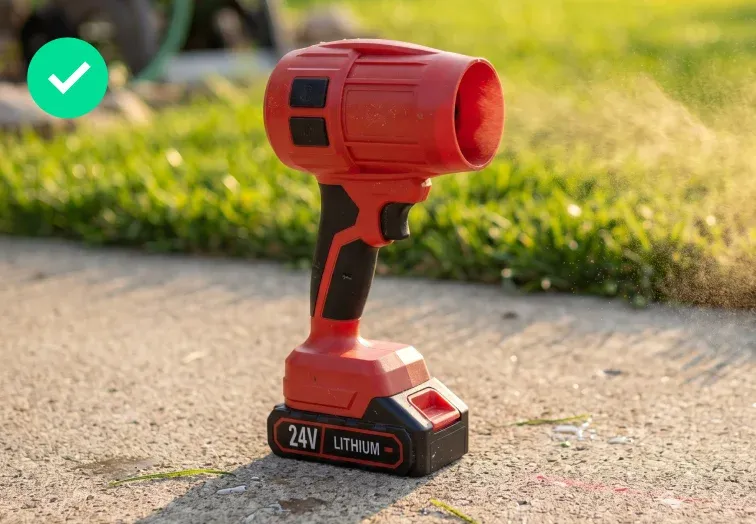
Our top pick for everyday yard and garage cleanups
Wood Ranger Power Leaf Blower: 1600W brushless motor, 2.1 lb, variable-speed trigger, about 30 minutes per charge. $69.99, or from $55.99 each in bundles, 90-day guarantee.
Check today's price →From $55.99 each in bundles · 90-day guarantee
How do you match a blower to your yard?
- Townhouse, condo or small yard: a mini blower handles everything.
- Typical suburban lot with a few trees: a mini blower for patios, beds, driveway and regular upkeep; add a rake and tarp for the peak leaf weeks.
- Large lawn with many mature trees: a full-size or backpack blower for the big fall cleanup, plus a mini blower for quick daily jobs.
- Acreage or heavy woods: backpack blower, possibly gas, or a leaf vacuum.
See do mini leaf blowers really work? for real-world expectations.
Which other features are worth looking for?
- Variable speed to save battery and avoid scattering mulch.
- Brushless motor for efficiency and durability.
- Comfortable grip and balance, so your wrist doesn't tire.
- Interchangeable nozzles for focused or wide air.
- Easy charging and a battery indicator.
- Good warranty and return policy, ideally long enough to test it through a real leaf season.
What can you use a cordless blower for besides leaves?
- Grass clippings off driveways and walkways after mowing.
- Sawdust and dust in the garage and workshop. See how to clean a garage fast.
- Crumbs and dust in car interiors and floor mats.
- Drying the car after washing. See how to dry your car after washing.
- Cobwebs and dust off porches, screens and eaves.
- Light, fluffy snow off cars, steps and decks; for winter, the 4-season Wood Ranger Power Blower is built for this. See leaf blower for snow.
- Clearing debris from gutters' landing zones, window wells and stairs.
How do you get the most from the battery?
- Use the lowest speed that does the job; switch to high only for stubborn debris.
- Blow dry leaves, not wet ones.
- Work with the wind and plan your route so you're not re-blowing the same leaves.
- Charge after each use and store indoors at moderate temperatures.
- For big jobs, consider a second blower or battery.
How quiet are cordless blowers?
Cordless blowers are generally much quieter than gas models, though they're not silent. For long sessions, hearing protection is still sensible; the CDC's NIOSH recommends limiting exposure to noise above 85 dBA. Check local ordinances for allowed hours, and use lower speeds near neighbors.
How much should you spend?
Mini cordless blowers like the Wood Ranger cost about $55 to $70. Full-size handheld battery blowers with a battery and charger often cost $150 to $300, and backpack battery models can exceed $400. For most homeowners, a mini blower offers the best value per use: it's cheap enough to keep by the door and powerful enough for the jobs that come up every week. Bundles are popular for gifts and for keeping one in the garage and one in the car.
What does a week with a mini blower look like?
On Monday morning, there are leaves scattered across the front walkway. You grab the blower from its hook by the door and clear the walk and porch in two minutes before leaving for work. On Wednesday, after mowing, you blow the clippings off the driveway and back onto the lawn. On Saturday, you clear the patio and deck, pull leaves out of the flower beds on low speed and push the lawn leaves into a couple of rows for the rake. On Sunday, you blow out the garage after a woodworking project and dust out the car floor mats. None of these jobs needed a big gas blower, but together they add up to a tidier home with very little effort. That's the case for a light cordless blower: not one huge job, but dozens of small ones done quickly.
What mistakes do people make when buying a leaf blower?
The most common mistake is buying for the biggest job of the year instead of the jobs you do every week. A powerful backpack blower is impressive in late November, but it sits in the shed the rest of the year because it's too heavy and too much hassle for a quick sweep of the patio. Another is focusing only on peak specs: a blower with huge numbers on the box can be tiring to hold, unbalanced or loud, and run time on maximum power may be short. Think about how often you'll use it and for what.
Other mistakes include forgetting to check the return policy and warranty, buying a model whose batteries are expensive to replace, and not considering storage: a compact blower hangs on a hook by the door, while a big one needs shelf or floor space. Finally, some people buy a blower and then use it on maximum for everything, which drains the battery and scatters mulch. A variable-speed trigger and a little technique make a big difference: low for beds, medium for lawns, high only for stubborn debris on concrete.
The simplest way to avoid all of these is to start with a light, versatile blower for everyday use and add a bigger tool only if your property truly needs it.
How do you use a blower safely?
Wear eye protection, as debris, grit and small stones can fly, especially on gravel and concrete. Point the nozzle away from people, pets, windows and cars. Don't blow leaves into the street, where they can clog storm drains. Keep children away while working, and store batteries out of extreme heat and cold.
The bottom line
The best cordless leaf blower is the one sized for your yard and light enough that you'll use it often. Most homeowners are best served by a compact, powerful mini blower for everyday jobs, adding a larger blower only for very big properties.
Our top pick is the Wood Ranger Power Leaf Blower. Check today's Wood Ranger price, and compare with gas in electric vs gas leaf blowers.
Sources
- California Air Resources Board. Small Off-Road Engines.
- CDC / NIOSH. About Noise and Occupational Hearing Loss.
- Official Wood Ranger product page and checkout, checked October 2026.
Frequently asked questions
What is the best cordless leaf blower for a small yard?
A lightweight mini blower handles patios, driveways, decks, beds and small lawns well. Our pick is the Wood Ranger, at 2.1 lb with a 1600W brushless motor per the brand.
Are cordless leaf blowers as good as gas?
For most suburban yards, yes. Large, wooded properties may still benefit from a backpack or gas blower for the biggest fall cleanups.
What do CFM and MPH mean on a leaf blower?
CFM measures how much air moves; MPH measures how fast it leaves the nozzle. Higher CFM pushes bigger piles; higher MPH lifts stuck debris.
How long do cordless leaf blower batteries last?
It depends on the model and speed. The Wood Ranger runs about 30 minutes per charge according to the brand; using lower speeds extends run time.
Is a mini leaf blower worth it?
For everyday jobs like patios, walkways, garages and cars, yes. Its light weight means you'll use it often, which keeps the yard tidier.
How much does the Wood Ranger blower cost?
It was $69.99 on the official checkout in October 2026, or from $55.99 each in bundles, with a 90-day money-back guarantee.

Tim Humbert
Tim looks into the viral gadgets that show up in your feed, from mini leaf blowers to chain sharpeners and car care cloths. He reads the product pages, checkout and return policies, and buyer feedback so you know what a gadget really does before you spend money on it. His reviews are built on manufacturer information, official checkout and return policies, trusted safety sources and buyer feedback, and are updated when offers change. More about Tim.