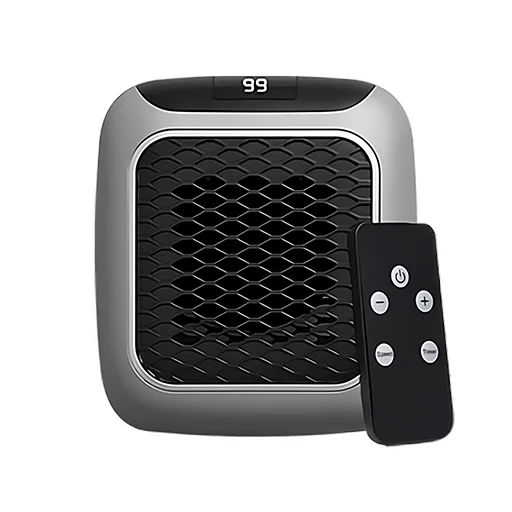
- Wall-mounted heater: it stays off the floor, so there's no tip-over risk and nothing for kids, pets or rugs to bump. It's a good fit for bedrooms, nurseries, offices and bathrooms you heat every day.
- Portable space heater: you can move it from room to room and there's nothing to install. It's a good fit for occasional use, renters who can't drill, or a quick warm-up under the desk.
Every winter, the same question comes up: why heat the whole house when you only need one room warm? A small electric heater is the obvious answer, but there are two very different styles. One is the familiar boxy space heater that sits on the floor. The other is a slim unit that mounts on the wall like a mini-split air conditioner. Both turn electricity into heat at roughly the same efficiency, so the real differences are safety, convenience, space and running costs.
This guide explains:
- how each type works
- which one is safer around kids, pets and older adults
- what they cost to run
- which rooms suit each one
- what to look for before you buy
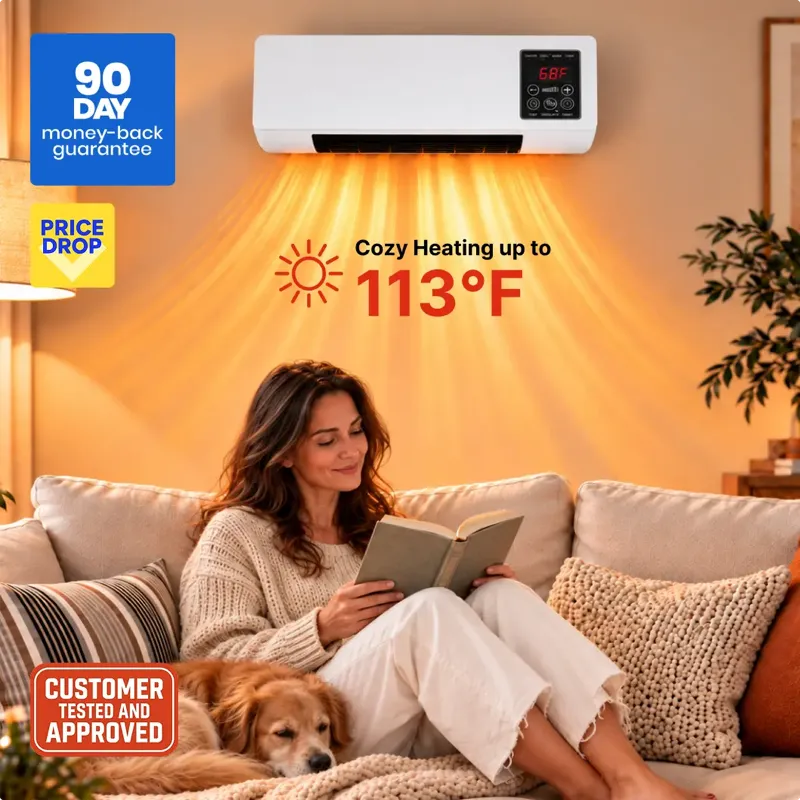
Our pick: the Cozy Cove Pro Wall Heater
Ceramic (PTC) heater with a remote and touch panel. Mounts on the wall or sits on a surface, with overheat auto shut-off. Ships from a US warehouse.
Check today's price →$99.99, or from $59.99 each in bundles · 90-day guarantee
What is the difference between a wall-mounted heater and a space heater?
| Wall-mounted heater | Portable space heater | |
|---|---|---|
| Where it sits | On the wall, off the floor | On the floor or a table |
| Tip-over risk | None once mounted | Needs a tip-over switch |
| Floor space | None | Takes up floor space; cord crosses the room |
| Installation | About 15 minutes with a drill (plug-in models) | None |
| Moving between rooms | Stays in one room | Easy to carry |
| Typical power | Often 400–1,000 W for plug-in models | Often 750–1,500 W |
| Best for | Rooms you heat daily | Occasional or flexible use |
There are also hardwired wall heaters that an electrician installs on a dedicated circuit. This guide focuses on the plug-in kind most homeowners and renters can set up themselves.
How do these heaters actually work?
Most modern small heaters use one of three methods:
- Ceramic (PTC) with a fan: ceramic elements heat up and a fan pushes warm air into the room. PTC elements self-regulate, so they don't get as hot as bare coils. Most wall-mounted heaters and many space heaters use this.
- Oil-filled radiators: they warm slowly and stay warm, but they're heavy and only come in floor models.
- Infrared or quartz: they warm people and objects directly rather than the air, and work best close up.
Whatever the design, every plug-in electric heater turns nearly all its electricity into heat. A 1,500 W space heater isn't more efficient than an 800 W wall heater. It just uses more power and makes more heat. What matters is matching the heater to the room and not heating space you don't use.
Which one is safer?
Heating equipment is one of the leading causes of home fires in winter. The National Fire Protection Association notes that most heater fires start when something that can burn is too close, like bedding, curtains, clothes or furniture.
That's where a wall-mounted heater has a clear advantage:
- Nothing to knock over. Floor heaters can be bumped by kids, dogs or a foot in the dark. Wall units can't.
- Away from blankets and rugs. It sits above the clutter that usually ends up too close to floor heaters.
- No cord across the floor. That means fewer trip hazards, which matters a lot for older adults.
- Out of reach. Small children and pets can't touch it.
Good space heaters handle this with tip-over switches and overheat protection. They can be used safely, but they rely more on you keeping the area clear. The Electrical Safety Foundation International recommends plugging any heater straight into a wall outlet, never into an extension cord or power strip, and keeping a three-foot clear zone around it.
Which one is cheaper to run?
Running cost depends on wattage and hours, not on the heater style. A rough guide at 16 cents per kWh:
| Power | Per hour | 8 hours a day for 30 days |
|---|---|---|
| 400 W | about 6 cents | about $15 |
| 800 W | about 13 cents | about $31 |
| 1,500 W | about 24 cents | about $58 |
A thermostat or low setting lowers that, because the heater cycles off when the room is warm. The real savings come from turning the central thermostat down a few degrees and heating only the room you're in. See the cheapest way to heat one room.
How much space do they take up?
This is the difference you'll notice every day. A floor heater needs a three-foot clear zone, which takes a chunk out of a small bedroom or home office. You also step around the cord and move it to vacuum. A wall-mounted heater takes no floor space at all. In a nursery, a kid's room, a small office or a bathroom, that can make the room feel bigger and calmer.
Which rooms suit each type?
| Room | Better choice | Why |
|---|---|---|
| Bedroom | Wall-mounted | Away from bedding, no cord to trip over at night |
| Nursery or kid's room | Wall-mounted | Out of reach, nothing to pull over |
| Home office | Either | Wall for daily use, portable for under-desk warmth |
| Living room | Wall-mounted | Frees floor space where people and pets move around |
| Bathroom | Wall-mounted, rated for bathrooms | Off wet floors; check the manual for bathroom use |
| Garage or workshop | Wall-mounted | Off the floor and away from sawdust and fumes |
| Short visits or several rooms | Portable | Carry it where you need it |
For workshops, see how to heat a garage in winter.
Can renters use a wall-mounted heater?
Often, yes. Plug-in wall heaters only need a couple of screws, which most leases treat like hanging a shelf or a TV. Ask your landlord if you're unsure. Many models, including the Cozy Cove Pro, can also stand on a dresser or shelf, so you can use them without drilling at all.
Why do we like the Cozy Cove Pro for one-room heating?
The Cozy Cove Pro is a slim PTC ceramic heater designed to mount on the wall or sit on a flat surface. Here's why it stands out:
- 400–800 W, roughly half the draw of a typical 1,500 W floor heater on high.
- A remote and touch panel with a digital display, so you can adjust it from bed or the couch.
- Overheat protection with automatic shut-off.
- Wall mounting that keeps it away from kids, pets and fabrics; the hardware is in the box.
- Ships from a US warehouse, usually in about 2–3 days.
- A 90-day money-back guarantee, so you can try it through the coldest weeks.
Prices on the official store are $99.99 for one, $79.99 each for two and $59.99 each for three. Read our full Cozy Cove Pro review and is Cozy Cove Pro legit?
Slim wall heater with a remote
Cozy Cove Pro: 400–800 W PTC ceramic heat, remote and touch panel, overheat shut-off, wall or tabletop. From $59.99 each in bundles, 90-day guarantee.
Check today's price →$99.99, or from $59.99 each in bundles · 90-day guarantee
When is a portable space heater the better buy?
A portable heater wins when you need flexibility: a few minutes of warmth in different rooms, a cold spot under a desk, or a vacation rental you're only in for a week. A compact plug-in model is also handy for a small bathroom or an office cubicle. Our HeatMe Pro review covers a small 800 W plug-in heater that sits right on the outlet with no cord on the floor.
What should you check before buying either type?
- Overheat protection that shuts the heater off automatically.
- Tip-over protection on any floor model.
- A thermostat or eco setting so it doesn't run flat out all night.
- A remote if the heater will be on a wall or across the room.
- The right size: roughly 10 watts per square foot in an insulated room is a useful starting point.
- A clear return policy from an official store.
How do you install a plug-in wall heater?
- Pick a spot near an outlet, away from curtains, beds and furniture.
- Check the manual for minimum distances from the floor, ceiling and corners.
- Mark the holes using the bracket or template.
- Drill, add the wall anchors and screw the bracket in place.
- Hang the heater, plug it straight into the wall outlet and test the remote.
Most people finish in about 15 minutes. Never plug it into an extension cord or power strip.
What mistakes should you avoid?
- Running a heater on an extension cord or power strip.
- Drying clothes or towels on or near the heater.
- Leaving a heater on in an empty room.
- Buying a heater far too big for the room.
- Ignoring a warm plug or outlet; that's a sign to stop using it and get the outlet checked.
Should you use one with your central heating?
Yes, that's the smartest way to use either type. Set the central thermostat a few degrees lower and let the small heater keep your main room comfortable. Close doors to rooms you don't use, add draft stoppers and use thick curtains at night. Our guide on keeping a room warm without central heat has more ideas.
The bottom line
Both heater styles turn electricity into heat at about the same efficiency, so choose based on how you'll use it.
- Portable space heater: good for flexible, occasional use.
- Wall-mounted heater: better for a room you heat every day. It's off the floor, out of reach, away from bedding and doesn't take up any space.
The Cozy Cove Pro is a slim 400–800 W ceramic wall heater with a remote and overheat shut-off. It costs from $59.99 each in bundles and comes with a 90-day guarantee.
Our pick: the Cozy Cove Pro Wall Heater
Ceramic (PTC) heater with a remote and touch panel. Mounts on the wall or sits on a surface, with overheat auto shut-off. Ships from a US warehouse.
Check today's price →$99.99, or from $59.99 each in bundles · 90-day guarantee
Frequently asked questions
Is a wall-mounted heater safer than a space heater?
It has no tip-over risk, no cord across the floor and stays away from bedding and kids, which removes common causes of heater accidents.
Which one is cheaper to run?
Cost depends on wattage and hours. A 400 to 800 W heater costs about 6 to 13 cents an hour at 16 cents per kWh.
Can renters use a wall-mounted heater?
Usually; plug-in models need just a couple of screws, and many can also sit on a dresser or shelf.
How hard is it to install a plug-in wall heater?
Most take about 15 minutes with a drill and the included bracket.
What size heater do I need for one room?
Roughly 10 watts per square foot in an insulated room, so about 800 W for a typical bedroom.
Can I plug a heater into an extension cord?
No. Plug any heater straight into a wall outlet, never into an extension cord or power strip.

Tim Humbert
Tim looks into the viral gadgets that show up in your feed, from mini leaf blowers to chain sharpeners and car care cloths. He reads the product pages, checkout and return policies, and buyer feedback so you know what a gadget really does before you spend money on it. His reviews are built on manufacturer information, official checkout and return policies, trusted safety sources and buyer feedback, and are updated when offers change. More about Tim.