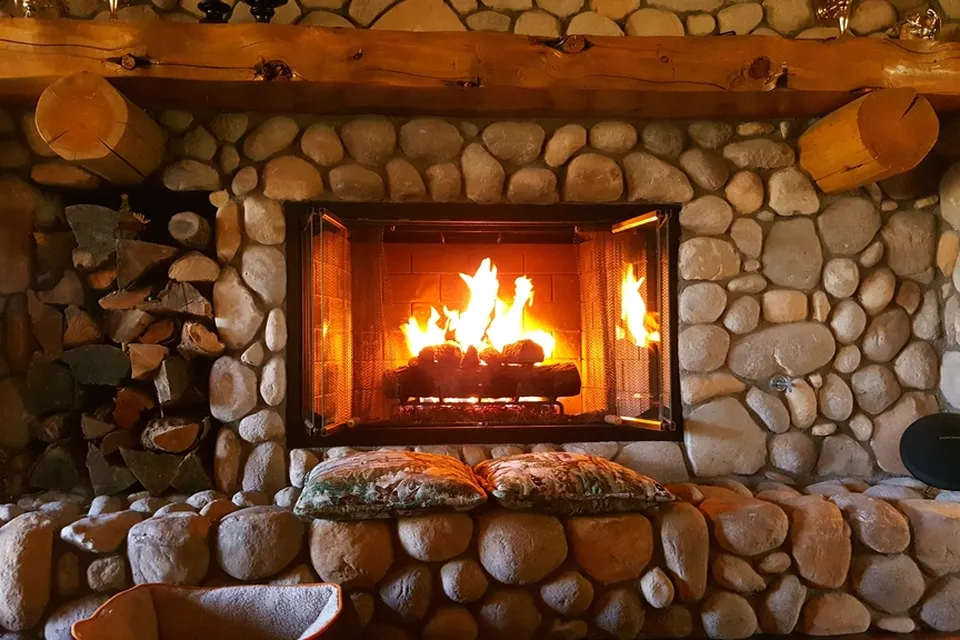
- Stop drafts with draft stoppers, weatherstripping and window film.
- Hold heat in with thick curtains at night, rugs on bare floors and the door closed.
- Let the sun in on south-facing windows during the day.
- Heat only that room with a small electric heater plugged straight into the wall.
- Warm yourself, not just the air, with layers, warm socks, a heated blanket and hot drinks.
Maybe your furnace broke in the middle of a cold snap. Maybe you live in an older home with no central heating upstairs. Or maybe you just don't want to pay to heat six rooms when you only sit in one. Whatever the reason, you can keep a single room surprisingly warm without central heat. The trick is to keep heat in first and then add heat only where you need it.
This guide covers:
- free and cheap ways to stop heat loss
- how to pick and use a small heater safely
- how to stay warm at night
- what to do in a power or furnace outage
- mistakes that waste money or cause fires
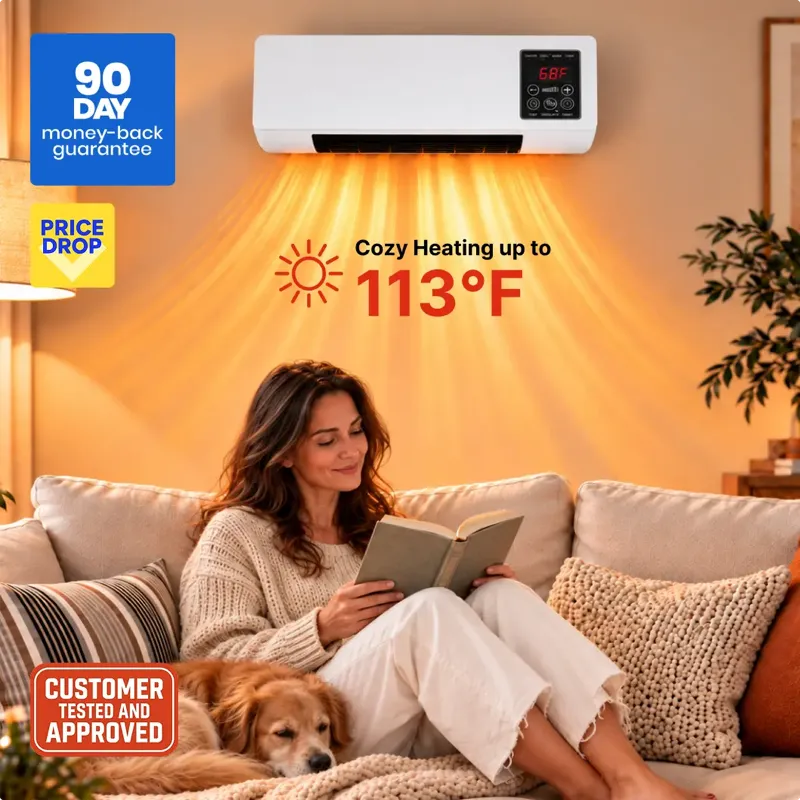
Our pick: the Cozy Cove Pro Wall Heater
Ceramic (PTC) heater with a remote and touch panel. Mounts on the wall or sits on a surface, with overheat auto shut-off. Ships from a US warehouse.
Check today's price →$99.99, or from $59.99 each in bundles · 90-day guarantee
Why does a room get cold so fast without heat?
Heat always moves toward cold. In a typical room it escapes in four main ways:
- Drafts: cold air sneaks in around windows, doors, outlets and baseboards, and warm air leaks out.
- Windows: glass loses heat much faster than an insulated wall, especially single-pane windows.
- Floors: bare wood, tile and concrete feel cold and pull heat from your feet.
- The rest of the house: an open door lets your warm air flow into cold hallways and rooms.
Fix those four and any heat you add lasts much longer. The ENERGY STAR program notes that sealing air leaks and adding insulation is one of the most cost-effective ways to make a home more comfortable.
How do you stop drafts in one room?
- Find them: on a windy day, hold your hand or a lit incense stick near windows, door frames, outlets and baseboards. Where the smoke wavers, there's a leak.
- Door: put a draft stopper or rolled towel along the bottom and add foam weatherstripping around the frame.
- Windows: use removable rope caulk or weatherstripping on gaps, and a clear shrink-film kit over the glass for the winter.
- Outlets on outside walls: foam gaskets behind the cover plates cost very little.
- Unused fireplace: close the damper or use a chimney balloon or fireplace cover.
These fixes cost a few dollars, take an afternoon and often make the room feel several degrees warmer.
How do you hold heat in the room?
- Thick or thermal curtains: close them at sunset, and let them hang to the floor and past the window frame.
- Rugs: a thick rug on a bare floor makes the room feel warmer underfoot.
- Close the door: heat one room, not the whole floor.
- Furniture placement: pull the couch or bed away from cold outside walls and windows.
- Cover cold walls: a bookcase or wall hanging on an outside wall adds a little extra insulation.
How can you use the sun for free heat?
On sunny days, open curtains on south- and west-facing windows to let sunlight warm the room. Close them as soon as the sun goes down so the heat stays inside. Dark rugs and furniture in the sunny spot soak up and slowly release that warmth.
What's the best way to add heat to one room?
A small electric heater is the simplest option. Plug-in electric heaters turn nearly all their electricity into heat, and you only pay to heat the room you're in. Pick the right size for the room. A rough starting point is about 10 watts per square foot in a reasonably insulated room, so 800 W suits a typical bedroom or office.
| Heater type | Good for | Watch out for |
|---|---|---|
| Wall-mounted ceramic | Bedrooms, offices, living rooms, nurseries | Takes 15 minutes to mount |
| Floor ceramic | Moving between rooms | Tip-over risk, cord on the floor |
| Oil-filled radiator | Steady, quiet heat | Slow to warm, heavy |
| Plug-in outlet heater | Small bathrooms and offices | Small rooms only |
A wall-mounted heater is a good fit for a room you heat every evening. It's off the floor, out of reach of kids and pets, and away from blankets and rugs. Compare the styles in wall-mounted heater vs space heater.
Why does the Cozy Cove Pro work well for this?
The Cozy Cove Pro is a slim PTC ceramic heater that mounts on the wall or sits on a dresser or shelf. It's a good match for one-room heating:
- 400–800 W, enough for a bedroom, office or living room without the full draw of a 1,500 W floor heater.
- Remote and touch panel with a digital display, so you can adjust it from bed.
- Overheat protection with automatic shut-off.
- No cord across the floor when mounted near an outlet.
- Ships from a US warehouse in about 2–3 days, with a 90-day money-back guarantee.
It costs $99.99 for one, $79.99 each for two or $59.99 each for three. Many households buy two or three for the bedroom, office and a cold upstairs room. Read our Cozy Cove Pro review.
Heat one room, not the whole house
Cozy Cove Pro: slim 400–800 W ceramic heater with remote, touch panel and overheat shut-off. From $59.99 each in bundles with a 90-day guarantee.
Check today's price →$99.99, or from $59.99 each in bundles · 90-day guarantee
How do you use a heater safely?
Heating equipment is a leading cause of home fires in winter. The National Fire Protection Association says most of those fires start when something that burns is too close. Follow these rules every time:
- Plug it directly into a wall outlet. Never use an extension cord or power strip.
- Keep a three-foot clear zone from beds, curtains, clothes and furniture.
- Never cover it or dry clothes on it.
- Turn it off when you leave the room or go to sleep.
- Test your smoke alarms and keep them working.
- Stop using it if the plug or outlet feels hot.
Never use a gas oven, grill, camp stove or generator to heat a room. They can produce deadly carbon monoxide. Keep a carbon monoxide alarm on every floor.
How do you stay warm at night?
- Warm the bedroom for 20–30 minutes before bed, then switch the heater off.
- Use flannel sheets, a thick duvet and an extra blanket on top.
- Wear warm socks, a hat and layers.
- Use a hot water bottle or a heated blanket, following the manufacturer's instructions.
- Have a warm drink before bed.
How do you warm yourself instead of the whole room?
It's often cheaper to warm your body than the air. Dress in thin layers, wear wool or fleece, and keep your feet and head covered. Move around every hour, even just to make tea. A throw blanket on the couch and slippers on cold floors make a bigger difference than you'd think. Our guide to gifts for homeowners has some cozy ideas.
How much does it cost to heat one room?
| Heater power | Cost per hour (16¢/kWh) | 5 hours a night for 30 nights |
|---|---|---|
| 400 W | about 6¢ | about $10 |
| 800 W | about 13¢ | about $19 |
| 1,500 W | about 24¢ | about $36 |
Compare that with heating an entire house and the one-room approach often wins, especially if you turn the main thermostat down. See the cheapest way to heat one room.
What if the power is out too?
Without power, electric heaters won't work, so focus on keeping heat in:
- Pick the smallest room with the fewest windows and gather everyone there.
- Close the door and hang blankets over windows and doorways.
- Layer clothes and blankets, and share body heat.
- Eat and drink warm food from a thermos if you can.
Never bring a grill, camp stove or generator indoors. Ready.gov has a full winter weather checklist. See also how to prepare for the first snow.
What if the furnace broke?
Call a heating technician first, but in the meantime:
- Check the thermostat batteries, the breaker and the furnace filter. A clogged filter can shut some furnaces down.
- Use small electric heaters in the rooms you're using, plugged straight into wall outlets.
- Open cabinet doors under sinks on outside walls and let faucets drip to help prevent frozen pipes.
- Keep interior doors to occupied rooms closed.
What mistakes waste money or cause danger?
- Heating the whole house when you use one room.
- Running several heaters on one circuit or a power strip.
- Leaving curtains open at night.
- Ignoring drafts and trying to beat them with more heat.
- Using an oven or grill for heat.
- Sleeping with an old heater that has no overheat protection.
Does this work in a garage or workshop?
Yes, with a few changes. Garages lose more heat, so seal the door and gaps first, add a rubber mat where you stand, and heat only the corner you work in. Keep heaters well away from fuel, paint, sawdust and rags. Read how to heat a garage in winter.
The bottom line
You can keep a room warm without central heat if you do three things, in this order:
- stop drafts
- hold heat in with curtains, rugs and a closed door
- heat only that room with a small electric heater plugged straight into the wall
Add warm layers and a cozy bed, and you'll stay comfortable on the coldest nights. The Cozy Cove Pro is a slim 400–800 W wall or tabletop heater with a remote and overheat shut-off. It costs from $59.99 each in bundles and comes with a 90-day guarantee.
Our pick: the Cozy Cove Pro Wall Heater
Ceramic (PTC) heater with a remote and touch panel. Mounts on the wall or sits on a surface, with overheat auto shut-off. Ships from a US warehouse.
Check today's price →$99.99, or from $59.99 each in bundles · 90-day guarantee
Frequently asked questions
How can I heat a room without central heat?
Seal drafts, close curtains at night, shut the door and use a small electric heater plugged straight into a wall outlet.
What is the cheapest way to heat one room?
Stop heat loss first, then use a 400 to 800 W electric heater only in the room you're in.
Is it safe to leave a heater on overnight?
It's safest to warm the room before bed and switch the heater off, then rely on warm bedding.
Can I use my oven to heat a room?
No. Ovens, grills and camp stoves can cause fires and carbon monoxide poisoning.
How do I keep a room warm if the power is out?
Gather in one small room, close the door, cover windows with blankets and layer clothes and bedding.
Do thermal curtains really help?
Yes. Closing thick curtains at sunset cuts heat loss through windows and makes the room feel warmer.

Tim Humbert
Tim looks into the viral gadgets that show up in your feed, from mini leaf blowers to chain sharpeners and car care cloths. He reads the product pages, checkout and return policies, and buyer feedback so you know what a gadget really does before you spend money on it. His reviews are built on manufacturer information, official checkout and return policies, trusted safety sources and buyer feedback, and are updated when offers change. More about Tim.