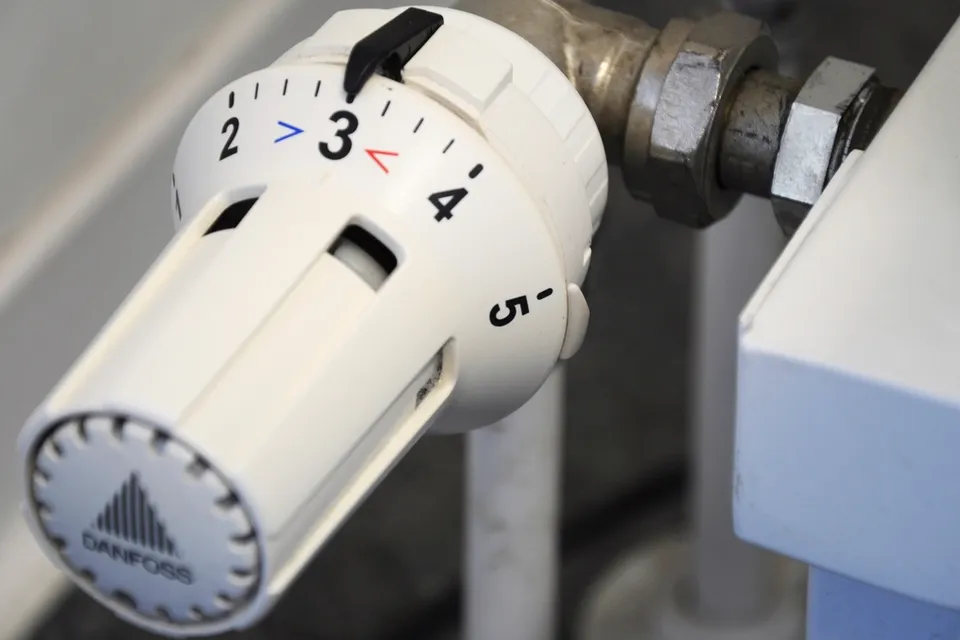
Watts ÷ 1,000 × hours × your electricity rate = cost
At the US average of about 17 cents per kWh:- 1,500 W heater: about 26 cents an hour, roughly $2 for an 8-hour day and around $60 a month if it runs at full power every day.
- 800 W heater: about 14 cents an hour, roughly $1.10 for 8 hours and around $33 a month at full power.
- 400 W heater: about 7 cents an hour.
When the first cold snap hits, a space heater feels like the quick fix: plug it in, and the room you're sitting in warms up in minutes without turning up the heat for the whole house. But then the next electricity bill arrives, and it's natural to wonder how much that little heater is really costing you. The answer depends on three numbers you can find in a minute: the heater's wattage, how many hours it runs and the price you pay for electricity. This guide shows how to calculate the cost of running any space heater, gives ready-made cost tables for common sizes, explains why thermostats and room size change the real number and shares practical ways to cut the cost while staying warm and safe.
In this guide:
- the simple cost formula
- cost tables by wattage
- how to find your electricity rate
- why real costs are often lower
- space heater vs central heating
- ways to cut the cost
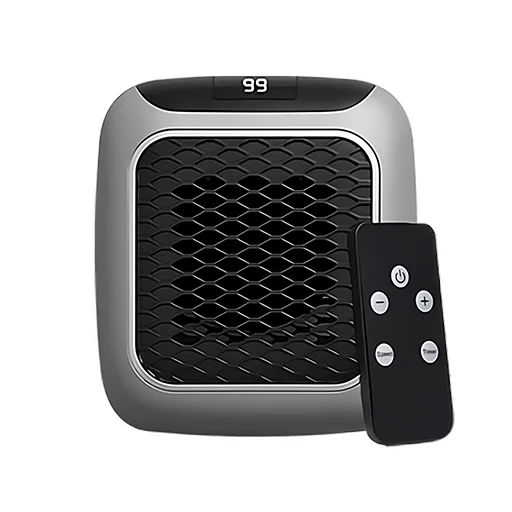
Our pick: the HeatMe Pro Plug-In Heater
Compact 800 W ceramic heater that plugs straight into the wall, with a remote, digital thermostat (60–90°F), 1–12 hour timer and a rotating plug.
Check today's price →$49.95, or from $29.97 each in bundles · 30-day money-back guarantee
How do you calculate what a space heater costs to run?
Every electric space heater turns electricity into heat, and its wattage tells you how much electricity it uses at full power. To work out the cost:
- Find the wattage on the label or in the manual. Common sizes are 400 W, 800 W, 1,000 W and 1,500 W.
- Divide by 1,000 to get kilowatts (kW). A 1,500 W heater is 1.5 kW.
- Multiply by the hours it runs. That gives kilowatt-hours (kWh), the unit on your bill.
- Multiply by your electricity rate in dollars per kWh.
Example: a 1,500 W heater running 6 hours at $0.17 per kWh: 1.5 × 6 × 0.17 = $1.53 for the day.
What does electricity cost where you live?
The quickest way is to look at your electricity bill: the price per kWh is usually printed near the usage chart. If your bill shows several charges, add the supply and delivery rates together for a more accurate number. Rates vary a lot by state, from around 11 cents in some states to more than 30 cents in others. The US Energy Information Administration publishes the average residential electricity price by state. In this guide we use about 17 cents per kWh, close to the national average.
How much do different space heaters cost per hour, day and month?
At $0.17 per kWh, running at full power:
| Heater power | Per hour | 8 hours a day | 30 days (8 h/day) |
|---|---|---|---|
| 400 W | $0.07 | $0.54 | $16 |
| 800 W | $0.14 | $1.09 | $33 |
| 1,000 W | $0.17 | $1.36 | $41 |
| 1,500 W | $0.26 | $2.04 | $61 |
And here's how the rate changes the picture for a 1,500 W heater running 8 hours a day:
| Electricity rate | Per day | Per month |
|---|---|---|
| $0.12 per kWh | $1.44 | $43 |
| $0.17 per kWh | $2.04 | $61 |
| $0.25 per kWh | $3.00 | $90 |
| $0.33 per kWh | $3.96 | $119 |
Why is the real cost usually lower than the table?
The numbers above assume the heater runs flat out the whole time. In real life, it usually doesn't:
- Thermostats cycle the heater. Once the room reaches the set temperature, the heater switches off and back on as needed. In a well-sealed room, it may only run at full power a third to half of the time.
- Lower settings use less. Many heaters have low and high modes.
- Timers stop it running when nobody needs it.
- Small rooms warm faster, so the heater reaches the target sooner.
On the other hand, a drafty room, a very cold day or a heater that's too small for the space will make it run longer. The best way to know your real cost is a plug-in energy monitor, which shows exactly how many kWh the heater used.
Our pick: the HeatMe Pro Plug-In Heater
Compact 800 W ceramic heater that plugs straight into the wall, with a remote, digital thermostat (60–90°F), 1–12 hour timer and a rotating plug.
Check today's price →$49.95, or from $29.97 each in bundles · 30-day money-back guarantee
Is a space heater cheaper than central heating?
It depends on how you use it. A space heater is cheaper when you heat one room and lower the thermostat for the rest of the house. If you heat a home office or bedroom for a few hours while the central heat is set a few degrees lower, you can save money. A space heater is not cheaper if you run it while the whole house is already heated, or if you use several heaters to warm the whole home, since electric resistance heating is usually more expensive per unit of heat than a gas furnace or heat pump. The US Department of Energy makes the same point in its Energy Saver advice on small space heaters. More options in the cheapest way to heat one room.
What size space heater do you need?
A common rule of thumb is about 10 watts per square foot of room in a typical home, more in drafty rooms or very cold climates.
| Room size | Suggested heater |
|---|---|
| Up to 80 sq ft (small office, bathroom) | 400 to 800 W |
| 80 to 150 sq ft (bedroom) | 800 to 1,500 W |
| 150 sq ft and up | 1,500 W, or a heater plus draft-proofing |
Buying a heater that matches the room keeps costs down: a small heater in a small room cycles off sooner, while an oversized one isn't needed. See the best heater for a home office.
Do some types of space heaters cost less to run?
Here's a fact many people don't know: all electric resistance heaters turn almost 100% of their electricity into heat. A 1,500 W ceramic heater, oil-filled radiator and infrared heater all use the same electricity at full power. What changes is how they deliver the heat:
- Ceramic fan heaters warm the air quickly, great for short bursts in a small room.
- Oil-filled radiators heat up slowly but stay warm and quiet.
- Infrared heaters warm people and objects directly, good in drafty spaces.
- Wall-mounted heaters save floor space and keep the heater away from feet and pets.
So the savings come from controls (thermostat, timer, eco modes) and from heating only the space you're in, not from the heater type. Compare formats in wall-mounted heater vs space heater.
How can you lower the cost of running a space heater?
- Lower the central thermostat a few degrees while you use the space heater in one room.
- Close the door to the room you're heating.
- Use the thermostat on the heater instead of running it on high nonstop.
- Set a timer to switch off after you fall asleep or leave the room.
- Seal drafts around windows and doors with weatherstripping or a draft stopper.
- Dress warmly and add a blanket, so you can set a lower temperature.
- Choose the right size for the room.
More ideas in how to keep a room warm without central heat.
How do you use a space heater safely?
- Plug it straight into a wall outlet. Never use an extension cord or power strip.
- Keep 3 feet of clear space around it, away from curtains, bedding, paper and furniture.
- Place it on a flat, hard surface, or mount it on the wall if it's designed for that.
- Choose overheat protection and tip-over shut-off features.
- Turn it off when you leave the room or go to sleep, unless it's designed for unattended use.
- Keep kids and pets away from the heater.
- Check smoke alarms at the start of the season.
The National Fire Protection Association shares more heating safety tips, including how much space to leave around a heater.
How much does the HeatMe Pro cost to run?
The HeatMe Pro is an 800 W ceramic heater that plugs straight into the wall, with a remote, a digital thermostat (60–90°F) and a 1–12 hour timer. At full power and 17 cents per kWh, that's about 14 cents an hour. Because the thermostat cycles the heater off once the room reaches your setting, real running costs in a small room are often well below that. It suits a home office, bedroom or bathroom where you only need heat part of the day. Read our HeatMe Pro review.
What about a wall-mounted heater?
If you'd rather keep the floor clear, a wall-mounted ceramic heater works the same way. The Cozy Cove Pro runs at 400–800 W, so it costs about 7 to 14 cents an hour at full power, with a remote, touch panel and overheat shut-off. See our Cozy Cove Pro review.
What does a typical month look like?
Here are three real-life examples at 17 cents per kWh, assuming the thermostat keeps the heater running about half the time:
- Home office, 800 W, 8 hours on weekdays: about $12 to $16 a month.
- Bedroom, 1,500 W, 3 hours each evening: about $11 to $14 a month.
- Garage workshop, 1,500 W, 4 hours on weekends: about $3 to $5 a month. See how to heat a garage in winter.
The bottom line
How much does a space heater cost to run?
- watts ÷ 1,000 × hours × your rate = cost
- a 1,500 W heater is about 26 cents an hour at 17 cents per kWh
- an 800 W heater is about 14 cents an hour
- thermostats and timers usually bring the real cost down
- it saves money when you heat one room and turn down the rest of the house
The HeatMe Pro is a compact 800 W plug-in heater with a thermostat, timer and remote, $49.95 or from $29.97 each in bundles, with a 30-day money-back guarantee.
Our pick: the HeatMe Pro Plug-In Heater
Compact 800 W ceramic heater that plugs straight into the wall, with a remote, digital thermostat (60–90°F), 1–12 hour timer and a rotating plug.
Check today's price →$49.95, or from $29.97 each in bundles · 30-day money-back guarantee
Frequently asked questions
How much does it cost to run a 1,500 W space heater?
At about 17 cents per kWh, around 26 cents an hour at full power, or about $2 for 8 hours.
How much does an 800 W heater cost per hour?
About 14 cents an hour at full power at 17 cents per kWh. A thermostat usually brings the real cost down.
How do I calculate my space heater's cost?
Divide the watts by 1,000, multiply by the hours it runs and multiply by your electricity rate per kWh.
Is it cheaper to use a space heater than central heat?
It can be, if you heat one room and lower the thermostat for the rest of the house. Heating the whole home with space heaters is usually more expensive.
Do some space heaters use less electricity?
At the same wattage, all electric heaters use the same power. Savings come from thermostats, timers, eco modes and heating only the room you use.
Can I plug a space heater into an extension cord?
No. Plug it straight into a wall outlet and keep 3 feet of clear space around it.

Tim Humbert
Tim looks into the viral gadgets that show up in your feed, from mini leaf blowers to chain sharpeners and car care cloths. He reads the product pages, checkout and return policies, and buyer feedback so you know what a gadget really does before you spend money on it. His reviews are built on manufacturer information, official checkout and return policies, trusted safety sources and buyer feedback, and are updated when offers change. More about Tim.