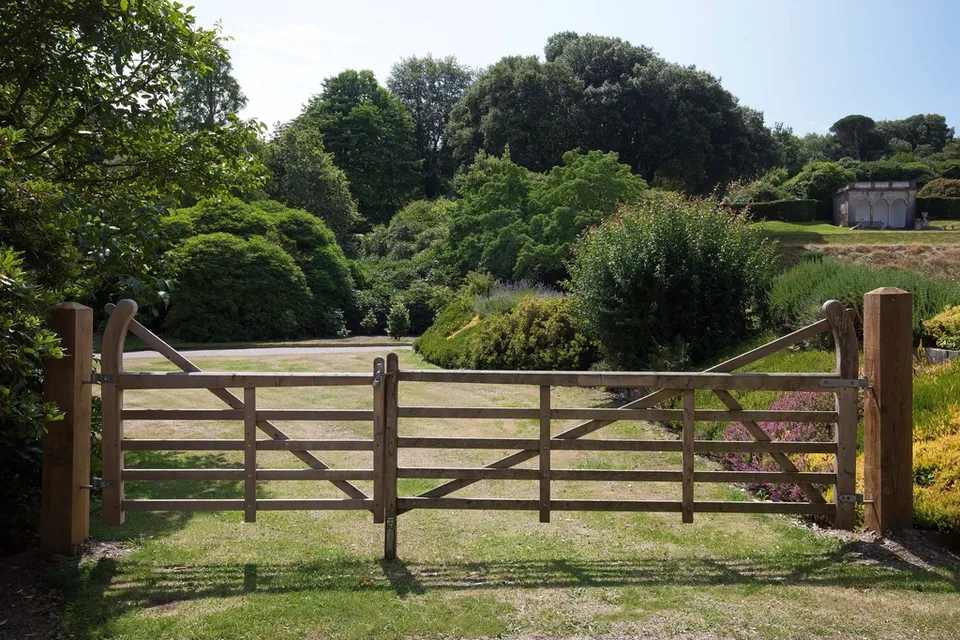
- Clear plants and debris from the base and protect nearby plants with a tarp or a pre-rinse.
- Rinse the fence with a hose to remove loose dirt.
- Apply a cleaner for your material: mild soap for vinyl, an oxygen-based cleaner for wood with mildew.
- Scrub with a soft brush (vinyl) or stiff brush along the grain (wood).
- Rinse thoroughly, top to bottom.
- Seal or stain wood once it's dry, if needed.
Fences take a beating from the weather: green algae on the shady side, gray weathering on wood, mildew at the bottom where sprinklers hit, dirt splashed up from the ground and stains from bird droppings and leaves. A dirty fence makes the whole yard look tired, and on wood fences, grime and moisture shorten the life of the boards.
The good news is that most fences clean up well in an afternoon. This guide covers how to clean wood, vinyl and metal fences, the right cleaners, how to deal with mildew and algae, whether to use a pressure washer, and how to protect the fence afterward.
When should you clean a fence?
- Once a year for most fences, usually spring or early fall.
- Before staining or sealing wood.
- When you see green or black growth, especially on the shady side.
- After a season of yard work splashed dirt up the bottom boards.
Pick a mild, overcast day with no rain in the forecast, so cleaners don't dry too fast and the fence can dry afterward.
How do you clean each type of fence?
| Fence | Cleaner | Brush | Notes |
|---|---|---|---|
| Vinyl | Mild dish soap and water; vinyl cleaner for stains | Soft brush or sponge | Avoid abrasive pads that dull the surface |
| Wood | Wood cleaner or oxygen-based cleaner for mildew | Stiff synthetic brush, with the grain | Let dry 24 to 48 hours before sealing |
| Metal (aluminum, wrought iron) | Mild soap and water | Soft brush | Dry and touch up rust spots |
| Chain link | Soap and water | Stiff brush | Hose rinse works well |
| Composite | Manufacturer-approved cleaner | Soft brush | Follow the maker's care guide |
How do you clean a fence step by step?
- Trim plants and clear leaves and debris from the base. A blower is fast for this. See leaf blower uses.
- Protect nearby plants by watering them first or covering them with a tarp.
- Rinse the fence from top to bottom.
- Apply the cleaner in sections with a garden sprayer or bucket and brush.
- Let it work for the time on the label, keeping it wet.
- Scrub: soft brush on vinyl, stiff brush along the grain on wood.
- Rinse thoroughly from top to bottom, then rinse the plants again.
- Let it dry completely.
How do you remove green algae and mildew?
Green and black growth is most common on the shady side of a fence and near sprinklers. An oxygen-based cleaner (sodium percarbonate) is effective and generally gentler on wood and plants than chlorine bleach. Apply it, let it sit, scrub and rinse well. To prevent regrowth, trim back bushes so air can circulate, adjust sprinklers so they don't spray the fence, and seal wood fences. The EPA explains that moisture control is the key to preventing mold and mildew.
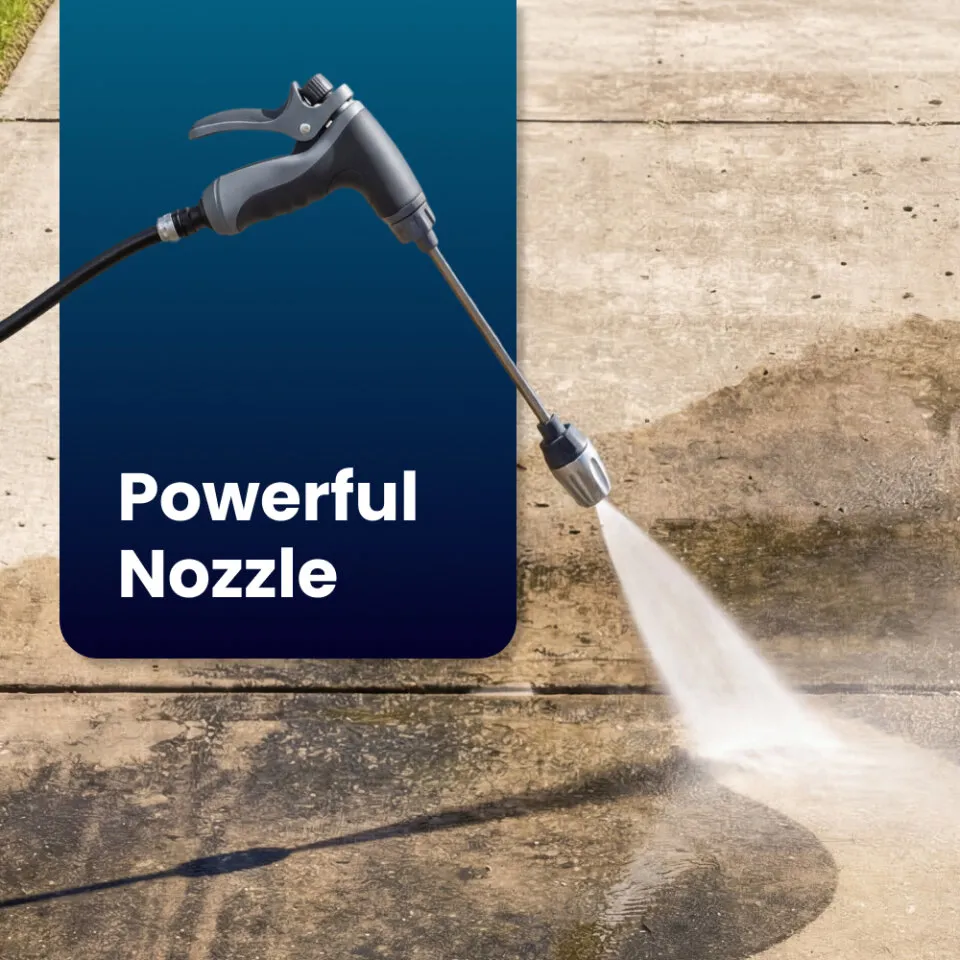
Which hose nozzle gives a strong, safe rinse?
A thorough rinse makes the difference between a clean fence and a streaky one with residue in the grain. The Jetterix Pressure Nozzle fits any standard garden hose and has multiple spray patterns: a focused jet for stubborn dirt at the bottom of boards and a wider, gentler spray for vinyl and freshly scrubbed wood. It concentrates your home's water pressure (typically about 40 to 60 psi) into a stronger stream. It doesn't deliver the force of a gas pressure washer, which is exactly why it's safer on wood fences, where high pressure can splinter boards and raise the grain. No electricity, gas or chemicals are needed.
It costs $59.99, or as little as $44.95 each in bundles. The brand reports high customer ratings; those are the brand's own figures. Read our Jetterix review (4.4/5).
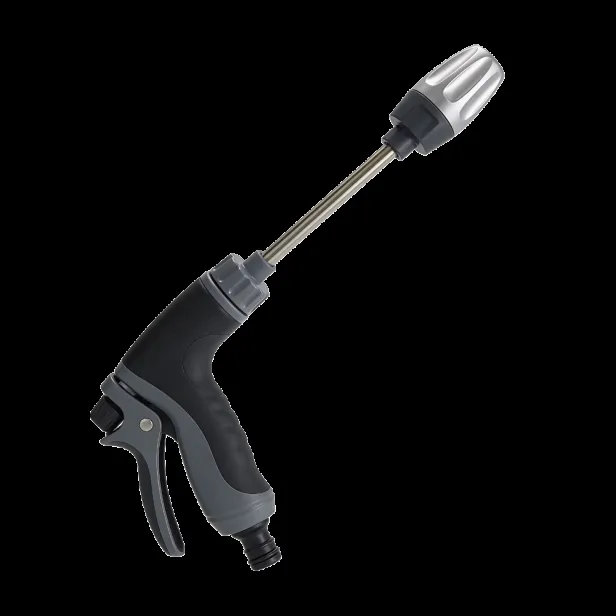
A strong rinse from your garden hose
Jetterix pressure nozzle: fits standard garden hoses, multiple spray patterns, concentrates your home's water pressure, no power needed. $59.99, or from $44.95 each in bundles.
Check today's price →$59.99, or from $44.95 each in bundles
Should you pressure wash a fence?
It's possible but risky, especially on wood. High pressure can gouge soft wood, leave "wand marks," splinter edges and drive water deep into the boards. On vinyl, it can crack or dislodge panels. If you use a pressure washer, choose the lowest effective setting, a wide fan tip, keep it moving and stay back from the surface. Many homeowners get great results with a cleaner, a brush and a strong hose rinse instead. See hose nozzle vs pressure washer. The CPSC has recalled some pressure washers over safety hazards, so check any machine you own.
How do you get stains off a vinyl fence?
- Dirt and grime: mild soap and water, soft brush.
- Green algae: a vinyl-safe cleaner or a diluted white vinegar solution.
- Rust marks from sprinklers: a rust stain remover safe for vinyl.
- Scuffs: a non-abrasive cleaner and soft cloth.
Avoid harsh solvents and abrasive pads, which dull the finish. See how to clean vinyl siding, which uses similar methods.
How do you restore a gray wood fence?
Weathered wood turns gray from sun and moisture. After cleaning, a wood brightener (often oxalic acid-based) can restore the natural color. Rinse well, let the wood dry for a day or two, then apply a stain or sealer to protect it. Test water absorption first: if drops soak in, the wood is ready; if they bead, the old finish is still active.
How often should you seal a wood fence?
Every two to three years for most fences, or as the stain or sealer maker recommends. Fences in full sun or with heavy sprinkler exposure may need it sooner. A sealed fence sheds water, resists mildew and lasts much longer.
How do you save water while cleaning?
Outdoor cleaning uses a lot of water: the EPA WaterSense program notes that outdoor use accounts for a large share of household water use. Use a trigger nozzle that shuts off between sections, clean in sections rather than letting the hose run, and rinse onto the lawn where possible.
What safety tips matter?
- Wear gloves and eye protection when using cleaners.
- Never mix cleaners, especially bleach and ammonia.
- Protect plants and keep pets away until the fence is rinsed.
- Use a stable step ladder for tall fences.
How long does it take?
A typical backyard fence of 100 to 150 feet takes an afternoon: an hour to clear the base and pre-rinse, a couple of hours to apply cleaner, scrub and rinse in sections, and drying time before sealing. Vinyl goes faster since it doesn't need sealing.
What about the neighbor's side?
If the fence is shared, talk to your neighbor before cleaning or staining, especially if you'd like to treat both sides. Many neighbors are happy to split the job or the cost. If you only clean your side, be careful not to spray cleaner or runoff onto their plants or property. A fence that looks good on both sides benefits everyone, and coordinating the timing makes the job easier.
Don't forget the gate and hardware
Gates get the most handling and often look the dirtiest. Clean them the same way as the fence, then check the hinges and latch. Wipe metal hardware dry and add a little lubricant to hinges so the gate opens smoothly. Tighten loose screws and replace rusted hardware. A gate that swings freely and latches properly is safer, especially if you have pets or a pool.
Why clean the fence before winter?
Cleaning a wood fence in early fall removes mildew and dirt before the wet, cold months, when moisture sits on the boards for weeks. It also gives you a dry window to seal the wood. Clear leaves and debris from the base, where they hold moisture against the bottom boards and posts. See our fall yard cleanup checklist and how to prepare your yard for winter.
What repairs should you check for?
- Loose or rotting boards and pickets.
- Leaning or wobbly posts.
- Popped nails and loose screws.
- Cracked vinyl panels or caps.
- Rust on metal posts and rails.
Small repairs now prevent bigger, more expensive ones later, and a clean fence makes problems easier to spot.
Should you paint or stain after cleaning?
Stain soaks into the wood and shows the grain; paint sits on top and hides it. Stain is usually easier to maintain because it fades gradually rather than peeling. Whatever you choose, apply it to a clean, completely dry fence on a mild day without rain in the forecast.
The bottom line
Clean a fence once a year by clearing the base, rinsing, applying a cleaner suited to the material, scrubbing and rinsing thoroughly. Use oxygen-based cleaners for mildew, avoid aggressive pressure washing on wood, and seal wood fences every few years to keep them looking good longer.
For a strong, safe rinse from your garden hose, our pick is the Jetterix. Check today's Jetterix price.
Sources
- U.S. Environmental Protection Agency. A Brief Guide to Mold, Moisture and Your Home.
- U.S. Environmental Protection Agency, WaterSense. How We Use Water.
- U.S. Consumer Product Safety Commission. Pressure washer recall.
- Official Jetterix product page, checked October 2026.
Frequently asked questions
What is the best way to clean a wooden fence?
Rinse it, apply a wood cleaner or oxygen-based cleaner for mildew, scrub along the grain with a stiff brush, rinse thoroughly and seal once dry.
How do you clean a vinyl fence?
Mild dish soap and water with a soft brush or sponge, then a thorough rinse. Use a vinyl-safe cleaner for stains.
How do you get green algae off a fence?
Use an oxygen-based cleaner or a vinyl-safe cleaner, scrub and rinse. Trim plants and redirect sprinklers to prevent regrowth.
Should I pressure wash my fence?
It's risky on wood, where high pressure can splinter boards. A cleaner, a brush and a strong hose rinse are safer.
How often should a fence be cleaned?
About once a year, plus before staining or sealing wood.
Does the Jetterix nozzle work for fences?
It concentrates your home's water pressure into a stronger rinse with multiple spray patterns, without pressure-washer force. From $44.95 each in bundles.

Tim Humbert
Tim looks into the viral gadgets that show up in your feed, from mini leaf blowers to chain sharpeners and car care cloths. He reads the product pages, checkout and return policies, and buyer feedback so you know what a gadget really does before you spend money on it. His reviews are built on manufacturer information, official checkout and return policies, trusted safety sources and buyer feedback, and are updated when offers change. More about Tim.