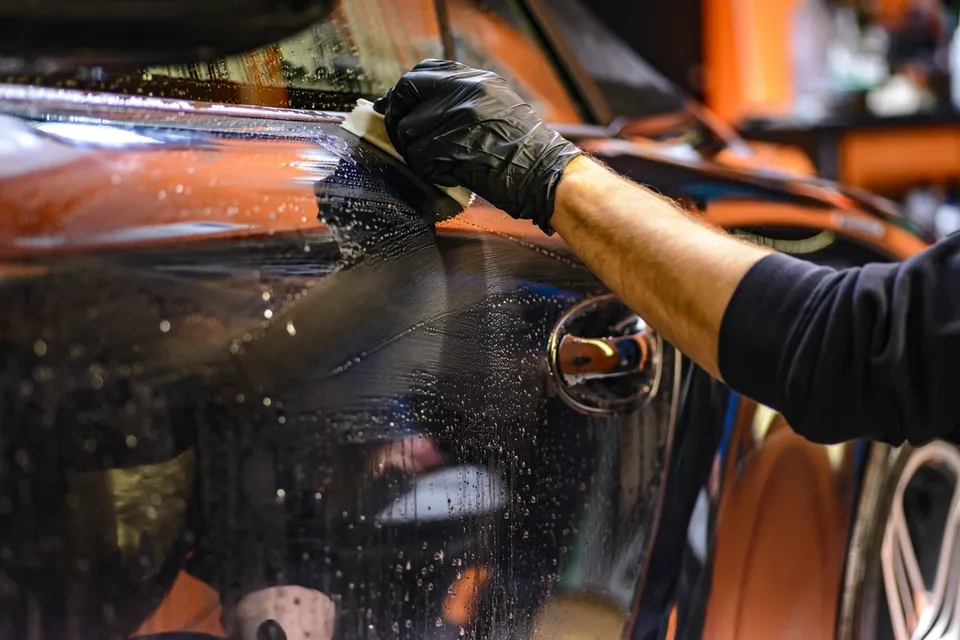
- Fresh spots: wash the car and dry it right away with a microfiber towel or a blower.
- Dried mineral spots: wipe with a mix of distilled water and white vinegar (about 1:1) on a microfiber cloth, then rinse and dry.
- Stubborn spots: gently rub with a scratch-removal cloth or fine polish in small circles.
- Etched spots that you can feel or that won't come off: a professional polish.
- Protect the paint afterward with wax or sealant.
You wash the car, it looks great, and a day later it's covered in little white rings. Or the sprinklers hit the side of the car, or the rain dries in the sun, and the hood ends up dotted with spots that don't wipe off with a towel. Water spots are one of the most common paint complaints, especially in hard water areas.
The good news is that most water spots come off easily if you treat them early and use the right method. This guide explains what causes water spots, the different types, how to remove each one safely, how to avoid making them worse and how to prevent them.
What causes water spots on a car?
Water spots form when water evaporates and leaves behind whatever was dissolved in it: calcium, magnesium and other minerals from hard water, plus dirt and pollutants from rain. The minerals form a crust, and sun and heat can bake them onto the clear coat. The most common sources:
- Washing the car in the sun and letting it air-dry.
- Sprinklers hitting a parked car.
- Rain that dries on the paint, especially acidic rain with pollutants.
- Hard tap water used for washing.
- Melting snow and slush that dries with road salt and grime.
What types of water spots are there?
| Type | What it looks like | Fix |
|---|---|---|
| Type 1: surface deposits | Fresh white spots that sit on top of the paint | Wash and dry; quick detailer |
| Type 2: bonded minerals | Spots that don't wash off; feel slightly rough | Vinegar solution or a mineral spot remover; scratch-removal cloth |
| Type 3: etching | Ring-shaped marks that remain after cleaning; visible in light | Polishing the clear coat, often professional |
The sooner you deal with spots, the less likely they are to etch. Maaco explains how the clear coat protects the paint and why damage to it should be addressed early.
How do you remove water spots step by step?
- Park in the shade and let the paint cool.
- Wash the car with car wash soap to remove dirt, so you don't scratch the paint while treating spots.
- Dry it with a clean microfiber towel.
- Test the spots: if they're still there, move to the vinegar step.
- Mix distilled water and white vinegar about 1:1 in a spray bottle.
- Spray a small area, let it sit 30 to 60 seconds (don't let it dry), and wipe gently with microfiber.
- Rinse the area with water and dry.
- For stubborn spots, rub gently with a scratch-removal cloth or fine polish in small circles.
- Protect with a coat of wax or sealant.
Test on a small hidden area first, and don't use vinegar on hot paint or leave it to dry.
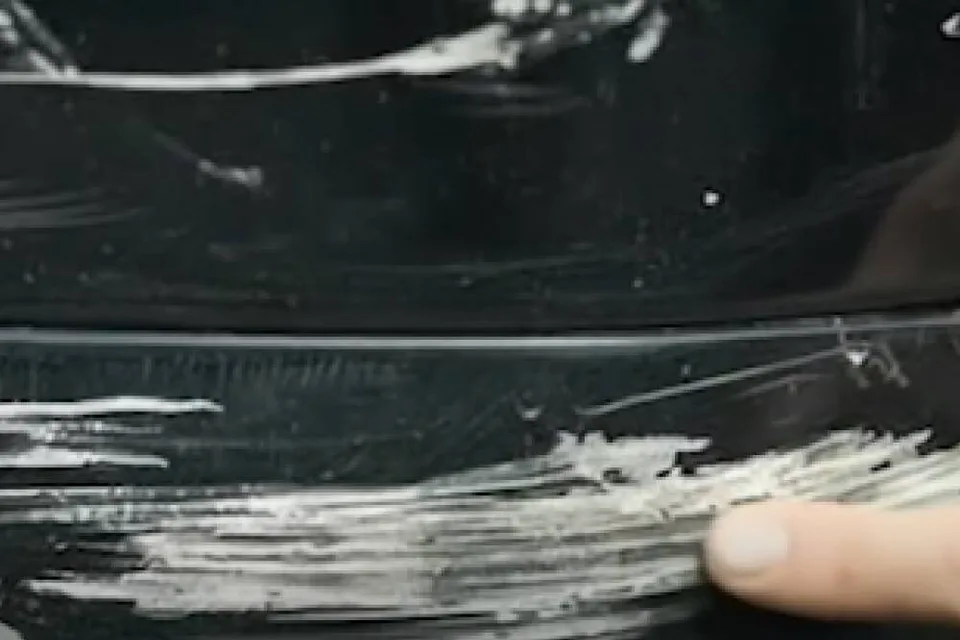
What's an easy way to handle stubborn spots?
When spots survive a wash and a vinegar wipe, they're usually bonded to the surface of the clear coat. NanoPolix is a reusable nano scratch remover cloth designed for light paint scratches, scuffs, water spots and oxidation. You rub it gently in small circles over the spot, check your progress, repeat if needed and buff with a clean microfiber towel. No machine, no compound bottles, and it fits in the glove box.
It works on surface-level marks in the clear coat. Deep etching that has cut into the clear coat, or damage that reaches the color layer, needs professional polishing or paint. It's sold at 2 for $34.96 (buy 1, get 1 free), with larger bundles down to about $12.23 each. The brand reports high customer ratings; those are the brand's own figures. Read our NanoPolix review (4.3/5).
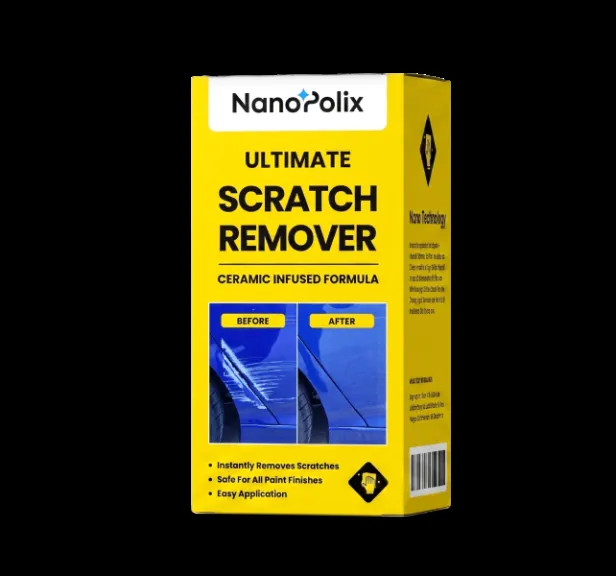
A glove-box fix for stubborn water spots
NanoPolix scratch remover cloth for light scratches, scuffs, water spots and oxidation in the clear coat. Rub in small circles, buff, done. 2 for $34.96.
Check today's price →2 for $34.96 (buy 1, get 1 free)
What should you avoid?
- Scrubbing dry paint: grit causes swirl marks. See how to remove swirl marks.
- Strong household cleaners or abrasive pads.
- Working in direct sun or on hot paint.
- Letting vinegar dry on the paint.
- Using vinegar on unsealed trim or plastic without testing.
- Waiting weeks, which lets spots etch.
How do you remove water spots from car windows?
Glass handles slightly stronger treatment than paint. A vinegar solution works on most glass spots; for stubborn mineral deposits, use a glass-specific water spot remover. Clean the glass thoroughly afterward and consider a glass sealant that helps water bead off. Keep products off rubber seals.
How do you dry a car to prevent spots?
Drying is the number one way to prevent water spots after a wash. Use a large, clean microfiber drying towel and blot or drag it gently, or use a blower to push water out of mirrors, emblems and panel gaps, where drips come from later. See how to dry a car after washing and how to wash a car at home.
How do you prevent water spots?
- Wash in the shade, in the morning or evening.
- Dry immediately after washing.
- Use a water softener or filter for washing if your water is very hard.
- Park away from sprinklers, or adjust them.
- Keep the paint protected with wax, sealant or a ceramic coating, so water beads and rolls off.
- Rinse off rain residue before it bakes in the sun.
What about water spots in winter?
In winter, melting snow and slush dry on the car with road salt and grime, leaving gray-white spots and film. Wash the car regularly in winter, including the lower panels and wheels, on warmer days, and dry it to avoid frozen water in locks and door seals. Keeping a coat of protection on the paint before winter makes cleanup much easier. See car paint care in winter and winter car checklist.
Why do spots look worse on dark cars?
Dark paint shows mineral spots, dust and swirl marks much more than white or silver. If you drive a dark car, drying after every wash and keeping a fresh layer of protection on the paint make the biggest difference. Light-colored cars hide spots better but still benefit from the same care, since spots can etch on any color.
When should you see a professional?
If spots remain after washing, vinegar and gentle polishing, or if you can see or feel rings etched into the clear coat, a professional detailer can machine-polish the paint. They can also apply a ceramic coating, which makes future spots much easier to remove. For damage through the clear coat, a body shop may be needed.
What should be in a water-spot kit?
- Car wash soap and two buckets.
- Several clean microfiber towels.
- A spray bottle with a distilled water and vinegar mix.
- A scratch-removal cloth for bonded spots.
- A quick detailer spray for touch-ups.
- Wax or sealant.
How do you stop sprinklers from spotting your car?
Sprinkler water is often the worst offender because it's usually hard, untreated water that hits the same part of the car every day and dries in the sun. Adjust sprinkler heads so they don't reach the driveway, water early in the morning instead of midday, or park in a different spot when the sprinklers run. If the spots have already built up, treat them with the vinegar method soon, before they etch. A coat of protection on the side panels makes the next round much easier to wipe away.
Which paint protection helps most against spots?
Protection works by making water bead up and roll off instead of sitting flat and drying in place. A traditional carnauba wax adds a warm shine and lasts a few weeks to a couple of months. A synthetic paint sealant usually lasts longer, often several months, and is easy to apply by hand. Ceramic coatings, applied by a detailer or carefully at home, can last much longer and make spots much easier to remove, though they still need regular washing. Whatever you choose, apply it to clean, spot-free paint; sealing over mineral spots just locks them in. A good time to add protection is in the fall, before winter salt and slush arrive.
Does the type of water you rinse with matter?
Yes. If your tap water is very hard, every rinse leaves minerals on the paint. Some car owners use an inline water filter on the hose, or a deionized water system for the final rinse, which dries almost spot-free. A simpler trick is to rinse and dry one panel at a time, so water never has the chance to evaporate on its own. A cordless blower helps push water out of mirrors, door handles and trim, where drips run down and dry into new spots after you've finished.
The bottom line
Water spots are minerals left behind when water dries on the paint. Treat them early: wash and dry in the shade, use a diluted vinegar solution for bonded spots, rub gently with a scratch-removal cloth for stubborn marks and protect the paint afterward. Etched spots need professional polishing.
For quick fixes on stubborn spots and light marks, our pick is NanoPolix. Check today's NanoPolix price.
Sources
- Maaco. Car Scratch Repair Guide.
- National Highway Traffic Safety Administration. Winter Driving Tips.
- Official NanoPolix product page, checked October 2026.
Frequently asked questions
How do you get water spots off car paint?
Wash and dry the car in the shade. For bonded spots, wipe with a 1:1 mix of distilled water and white vinegar, rinse and dry. Rub stubborn spots gently with a scratch-removal cloth.
Does vinegar remove water spots from cars?
A diluted vinegar solution dissolves many mineral spots. Don't use it on hot paint or let it dry, and rinse afterward.
What causes water spots on cars?
Minerals and pollutants left behind when water evaporates, from washing in the sun, sprinklers, rain or hard tap water.
Can water spots damage car paint?
Yes, if left too long. Minerals can etch the clear coat, leaving rings that need professional polishing.
How do I prevent water spots on my car?
Wash in the shade, dry immediately, avoid sprinklers, use softened water if yours is very hard and keep the paint protected with wax or sealant.
Does NanoPolix remove water spots?
It's designed for light scratches, scuffs, water spots and oxidation in the clear coat. Deep etching needs professional polishing.

Tim Humbert
Tim looks into the viral gadgets that show up in your feed, from mini leaf blowers to chain sharpeners and car care cloths. He reads the product pages, checkout and return policies, and buyer feedback so you know what a gadget really does before you spend money on it. His reviews are built on manufacturer information, official checkout and return policies, trusted safety sources and buyer feedback, and are updated when offers change. More about Tim.