
- Use a heater designed for bathrooms: a hardwired wall or ceiling heater, a heated exhaust fan or a portable heater whose manual says it's suitable for bathroom use.
- Plug only into a GFCI-protected outlet, directly into the wall. Never use an extension cord or power strip.
- Keep it far from water: well away from the tub, shower and sink, where it can't be splashed or knocked in.
- Never touch it with wet hands, and never use it while you're in the tub.
- Keep 3 feet of clearance from towels, robes, curtains and bath mats.
- Choose overheat and tip-over protection, and turn it off when you leave.
Stepping out of a hot shower into a freezing bathroom is one of winter's small miseries, and it's why so many people bring a heater into the bathroom. But bathrooms are the riskiest room in the house for electric heaters: there's water everywhere, steam settles on surfaces, towels hang close by and people are moving around with wet hands and bare feet. Used the wrong way, a heater can cause shocks, burns or fires. Used the right way, it makes winter mornings much more comfortable. This guide covers which types of heaters belong in a bathroom, the electrical rules that matter, where to place a heater, everyday safety habits, special precautions for kids and older adults and other ways to warm a bathroom without a plug-in heater.
In this guide:
- why bathrooms are risky for heaters
- which heaters are designed for bathrooms
- GFCI outlets and cords
- where to place a heater
- daily safety habits
- other ways to warm a bathroom
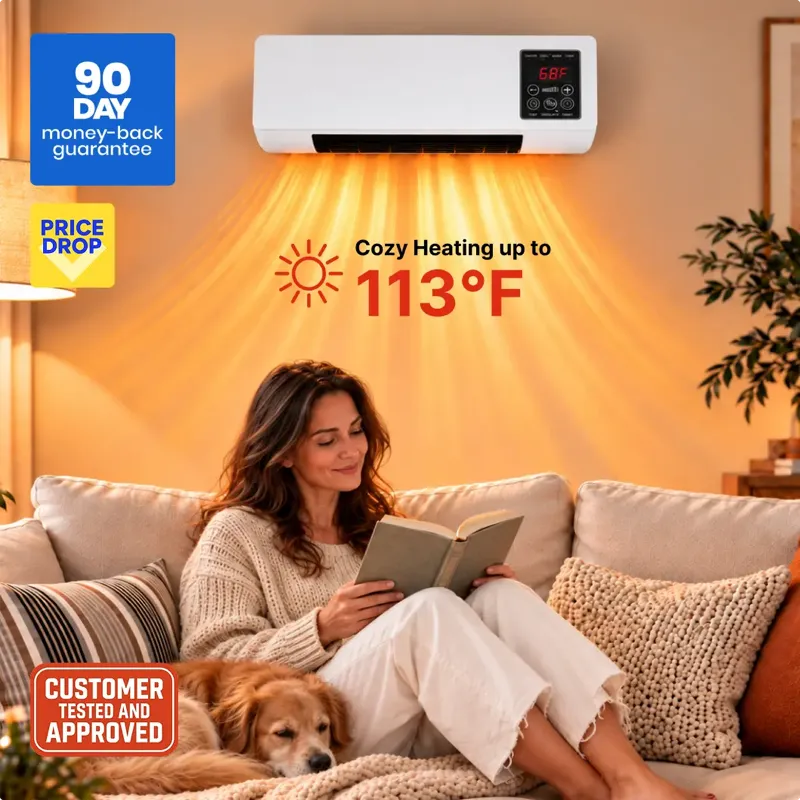
Our pick: the Cozy Cove Pro Wall Heater
Ceramic (PTC) heater with a remote and touch panel. Mounts on the wall or sits on a surface, with overheat auto shut-off. Ships from a US warehouse.
Check today's price →$99.99, or from $59.99 each in bundles · 90-day guarantee
Why are bathrooms risky for electric heaters?
- Water and electricity: splashes, drips and wet hands can create a shock hazard.
- Humidity and condensation can get inside heaters that aren't designed for damp rooms.
- Small spaces put towels, robes, shower curtains and bath mats close to the heater.
- Hard, wet floors make it easy to slip and knock a heater over.
- Older outlets in some homes may not have GFCI protection.
The National Fire Protection Association reports that heating equipment is a leading cause of home fires in the US, most often when something that can burn is too close. See its heating safety tips.
Which heaters are safest in a bathroom?
| Heater type | Bathroom use | Notes |
|---|---|---|
| Hardwired wall or ceiling heater | Designed for it | Installed by an electrician on a dedicated circuit |
| Exhaust fan with built-in heater | Designed for it | Removes moisture and adds heat |
| Heated towel rail | Designed for it | Gentle warmth, dries towels |
| Radiant floor heating | Designed for it | Best installed during a remodel |
| Portable plug-in heater | Only if the manual says it's suitable for bathrooms | Must be kept away from water and plugged into a GFCI outlet |
Before using any portable or plug-in heater in a bathroom, read the manual. Many portable heaters say not to use them in bathrooms, laundry rooms or other damp areas. If yours does, use it in the bedroom or hallway instead and warm the bathroom another way.
Why does a GFCI outlet matter?
A GFCI (ground fault circuit interrupter) outlet, the kind with "Test" and "Reset" buttons, cuts power in a fraction of a second if it senses electricity going where it shouldn't, such as through water or a person. Bathroom outlets in modern homes are required to have GFCI protection. To check yours:
- Plug in a lamp and turn it on.
- Press "Test". The lamp should go off.
- Press "Reset" to restore power.
If your bathroom has no GFCI protection, or the test fails, have an electrician fix it before using any appliance there.
Can you use an extension cord with a bathroom heater?
No. Heaters draw a lot of power, and extension cords and power strips can overheat. In a bathroom, a cord on the floor is also a trip hazard and can end up in water. Plug the heater straight into a wall outlet, and don't run the cord under rugs or bath mats. More in how much a space heater costs to run, which also covers safe use.
Our pick: the Cozy Cove Pro Wall Heater
Ceramic (PTC) heater with a remote and touch panel. Mounts on the wall or sits on a surface, with overheat auto shut-off. Ships from a US warehouse.
Check today's price →$99.99, or from $59.99 each in bundles · 90-day guarantee
Where should you place a heater in the bathroom?
- as far as possible from the tub, shower and sink
- where it can't fall or be pushed into water
- on a hard, flat, dry surface, or mounted according to the manual
- at least 3 feet from towels, robes, shower curtains, bath mats and paper
- out of walkways where someone could trip
- never on a toilet tank, counter edge or shelf above water
Wall-mounted heaters keep the floor clear and are harder to knock over. Compare formats in wall-mounted heater vs space heater.
Which daily habits keep bathroom heating safe?
- Warm the room before you bathe, then turn the heater off before getting in the shower or tub.
- Dry your hands before touching the heater or its plug.
- Never use a heater while you're in the bath.
- Don't dry towels or clothes on a heater unless it's a towel warmer designed for that.
- Turn it off when you leave the bathroom.
- Unplug it by pulling the plug, not the cord.
- Check the cord and plug regularly for damage, heat or discoloration.
- Keep smoke alarms working on every level of the home.
Ready.gov's guide to home fire safety explains how to plan and practice an escape route.
Which safety features should a heater have?
- Overheat protection that shuts the heater off if it gets too hot.
- Tip-over switch on portable models.
- Cool-touch housing, especially with kids or older adults.
- A thermostat and timer so it doesn't run longer than needed.
- A sturdy plug that fits firmly in the outlet.
What extra precautions help kids and older adults?
- Kids: never leave children alone in a bathroom with a heater on, and keep heaters out of reach.
- Older adults: choose wall-mounted or hardwired heat to avoid trip hazards, and keep the path to the shower clear.
- Everyone: non-slip mats and good lighting reduce falls near any appliance.
How else can you warm a bathroom?
- Warm the bathroom from next door: heat the adjoining bedroom or hallway and leave the bathroom door open for a few minutes before showering.
- Run the hot shower briefly with the door closed to warm the air.
- Seal drafts around the window and under the door.
- Add a thick bath mat and warm slippers by the tub.
- Warm towels and robes in the dryer for a few minutes.
- Install a heated exhaust fan or towel rail as a long-term fix.
More whole-room ideas: how to keep a room warm without central heat and the cheapest way to heat one room.
Where does a wall-mounted heater fit in?
For bedrooms, dressing rooms and home offices, especially the room right next to the bathroom, a wall-mounted ceramic heater warms the space without a cord across the floor. The Cozy Cove Pro mounts on the wall or sits on a surface, runs at 400–800 W and has a remote, touch panel and overheat auto shut-off. Check the manual for where it can be installed before putting any heater near water. Read our Cozy Cove Pro review or compare small heaters in the best heater for a home office.
What are the warning signs of an unsafe heater?
- a burning or melting smell
- a plug, cord or outlet that feels hot
- flickering, sparks or a tripped GFCI
- scorch marks on the wall or floor
- a heater that keeps shutting off unexpectedly
Stop using it, unplug it if safe to do so and have it checked or replaced.
Can steam damage a heater?
Yes. Steam and condensation can get into vents and controls of heaters that aren't designed for damp rooms. Over time, moisture can corrode contacts or cause electrical faults. Run the exhaust fan during and after showers for 20 to 30 minutes, keep the door open afterward to let moisture out and keep any portable heater well away from the shower area. If you notice rust, a musty smell or condensation inside the heater, stop using it.
What should you look for when buying a heater for near a bathroom?
- clear guidance in the manual on where it can be used
- overheat protection and, for portable models, a tip-over switch
- a thermostat and timer, so it doesn't run longer than needed
- a wall-mount option to keep it off wet floors
- a power level matched to the room: 400 to 800 W is enough for many small rooms
Is it safe to leave a bathroom heater on overnight?
No. Turn portable heaters off when nobody is in the room and before bed. For warmer mornings, use a heater with a timer in the adjoining room, or a hardwired bathroom heater on a timer switch.
The bottom line
Bathroom heater safety:
- use heaters designed for bathrooms, or ones whose manual allows bathroom use
- plug only into a GFCI outlet, directly into the wall
- keep heaters far from water and 3 feet from towels and fabrics
- never touch with wet hands or use while bathing
- warm the bathroom before showering, then turn the heater off
For the rooms next to the bathroom, the Cozy Cove Pro wall heater runs at 400–800 W with a remote and overheat shut-off, $99.99 or from $59.99 each in bundles, with a 90-day guarantee.
Our pick: the Cozy Cove Pro Wall Heater
Ceramic (PTC) heater with a remote and touch panel. Mounts on the wall or sits on a surface, with overheat auto shut-off. Ships from a US warehouse.
Check today's price →$99.99, or from $59.99 each in bundles · 90-day guarantee
Frequently asked questions
Is it safe to use a space heater in a bathroom?
Only if the heater's manual says it's suitable for bathrooms, it's plugged into a GFCI outlet and it's kept far from water and fabrics.
Do bathroom heaters need a GFCI outlet?
Yes. Bathroom outlets should have GFCI protection, which cuts power quickly if electricity goes where it shouldn't.
Can I use an extension cord for a bathroom heater?
No. Plug heaters directly into a wall outlet. Extension cords can overheat and are a trip and water hazard.
How far should a heater be from the tub?
As far as possible, where it can't be splashed or knocked into water, and at least 3 feet from towels and curtains.
What is the safest way to heat a bathroom?
A hardwired bathroom heater, a heated exhaust fan, a towel rail or radiant floor heating are designed for bathrooms.
Can I leave a heater on while I shower?
It's safer to warm the room first and turn the heater off before you get in the shower or bath.

Tim Humbert
Tim looks into the viral gadgets that show up in your feed, from mini leaf blowers to chain sharpeners and car care cloths. He reads the product pages, checkout and return policies, and buyer feedback so you know what a gadget really does before you spend money on it. His reviews are built on manufacturer information, official checkout and return policies, trusted safety sources and buyer feedback, and are updated when offers change. More about Tim.