- Loose chain tension, the most common cause.
- A worn or damaged bar, with a spread or uneven groove.
- A worn drive sprocket or bar nose sprocket.
- A stretched or wrong-size chain.
- Poor lubrication, or pinching and twisting the saw in the cut.
- A dull or unevenly sharpened chain that pulls to one side.
A chain that comes off while the saw is running is dangerous. Stop immediately, engage the chain brake, turn the saw off and remove the battery or spark plug wire before touching the chain. Wear cut-resistant gloves.
Few things are more frustrating, or alarming, than a chainsaw chain that jumps off the bar in the middle of a cut. It stops the job, can damage the saw and, if it happens at speed, creates a real safety risk. The good news is that a chain coming off almost always has a clear, fixable cause.
This guide walks through the most common reasons a chain comes off, how to check each one, how to set the tension correctly, when to replace the bar, sprocket or chain, and the habits that keep it from happening again.
Why does a chainsaw chain come off?
| Cause | What you might notice | Fix |
|---|---|---|
| Loose tension | Chain sags under the bar; you can pull drive links out of the groove | Adjust tension correctly |
| Worn bar rails | Groove is spread, burred or uneven; chain wobbles | Dress or replace the bar |
| Worn sprocket | Pointed or grooved sprocket teeth | Replace sprocket |
| Stretched chain | Tension is at the limit of adjustment | Remove a link (pro) or replace chain |
| Wrong chain or bar | Chain doesn't seat; pitch or gauge mismatch | Match chain to bar specs |
| Poor lubrication | Smoke, burning smell, dry chain | Fill oil, clean oil holes |
| Uneven sharpening | Saw pulls to one side | Sharpen all cutters evenly |
| Pinching or twisting | Chain comes off when the bar binds | Better cutting technique |
How do you check and set chain tension?
Chains stretch as they warm up and wear in, so tension changes during use, especially with a new chain. To set it:
- Turn off the saw, engage the chain brake and remove the battery or spark plug wire.
- Loosen the bar nuts slightly (or the tool-free knob).
- Lift the tip of the bar and hold it up while adjusting.
- Turn the tensioning screw until the chain fits snugly against the underside of the bar.
- Check: you should be able to pull the chain away from the bar slightly, but the drive links shouldn't come out of the groove.
- Pull the chain around by hand (with gloves) and brake off; it should move smoothly.
- Tighten the bar nuts while still holding the bar tip up.
Check tension before each use and every 15 to 30 minutes of cutting, and adjust a new chain more often. Your saw's manual has the exact procedure.
How do you know if the bar is worn?
Look at the bar's rails (the two edges of the groove the chain rides in). Signs of wear include:
- A spread or widened groove, so the chain leans side to side.
- Burrs or a lip of metal on the outside of the rails.
- One rail lower than the other, which makes cuts drift.
- A worn or stiff nose sprocket.
- Blue discoloration from overheating.
Light burrs can be filed off and the rails squared. Flip the bar every time you sharpen so it wears evenly. Replace a bar that's spread, bent or cracked.
What about the drive sprocket?
The drive sprocket behind the clutch cover turns the chain. When it wears, the teeth become pointed or grooved, the chain doesn't engage properly and it can jump. Many experts suggest replacing the sprocket every two chains. Running a new chain on a worn sprocket also wears the new chain faster.
When should you replace the chain?
- The cutters are worn down to the wear marks.
- The tension screw is at its limit and the chain is still loose.
- Links are stiff, cracked or kinked.
- Cutters are broken or chipped.
Always buy a chain that matches your bar's pitch, gauge and drive link count, printed on the bar or in the manual.
Can sharpening affect whether the chain comes off?
Yes. If cutters on one side are shorter or filed at a different angle, the chain pulls to one side, puts uneven stress on the bar and can help it jump. Even sharpening keeps the chain cutting straight. Chain makers like Oregon recommend filing all cutters to the same length and angle.
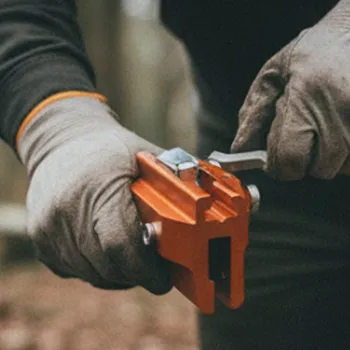
What helps keep cutters even?
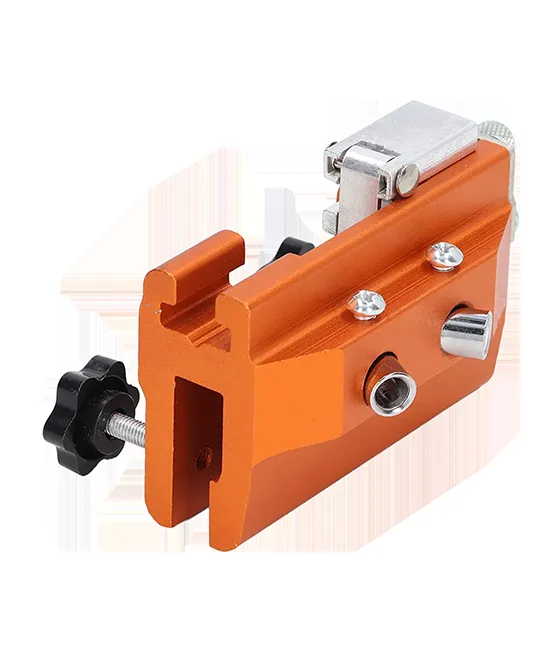
SawShark is a hand-crank chain sharpener that clamps to your chainsaw bar and guides every tooth at the same angle. You line up a tooth, turn the crank a few times, move to the next and repeat, doing all the teeth on one side and then the other. Because the guide holds the angle, both sides end up even, which helps the chain track straight. No power is needed, so it works in the yard or at the woodpile. It costs $29.95, or as little as $17.97 each in bundles. Read our SawShark review (4.5/5) and how often to sharpen a chainsaw chain.
Even, straight-cutting chains
SawShark hand-crank chain sharpener: clamps to the bar, guides every tooth at the same angle, no power needed. $29.95, or from $17.97 each in bundles.
Check today's price →$29.95, or from $17.97 each in bundles
How does lubrication affect the chain?
Bar and chain oil reduces friction and heat between the chain and the bar. Without enough oil, the chain heats, stretches and wears the bar quickly. Fill the oil reservoir every time you refuel or swap batteries, clean the oil holes on the bar, and check that oil is flinging off the chain when you rev the saw over a clean surface. Use the oil your manufacturer recommends, especially in cold weather.
Which cutting habits cause the chain to come off?
- Twisting the saw in the cut, which levers the chain sideways.
- Letting the bar get pinched in a log under tension.
- Cutting with the bar tip, which also increases kickback risk.
- Forcing a dull chain through the wood.
- Cutting into dirt, which damages chain and bar.
The OSHA chainsaw safety fact sheet covers safe handling. See chainsaw safety tips and how to cut firewood.
How do you put a chain back on correctly?
- Saw off, brake on, battery or spark plug wire removed, gloves on.
- Remove the clutch cover and loosen the bar.
- Check the bar, sprocket and chain for damage.
- Fit the chain around the sprocket and into the bar groove, with the cutters on top facing forward (toward the bar tip).
- Seat the drive links in the groove all the way around.
- Replace the cover and set the tension as above.
- Test by pulling the chain by hand before starting the saw.
A chain installed backward won't cut and can behave unpredictably.
What maintenance prevents it?
Check tension before every job, oil every refuel, sharpen evenly, flip the bar each sharpening, clean the bar groove, and inspect the sprocket every chain or two. Our guide to chainsaw maintenance covers the full routine.
Why does a new chain come off more often?
New chains stretch more than older ones during the first few uses as the parts wear in. That's normal, but it means a new chain can go from properly tensioned to loose quickly, sometimes in the first 10 to 15 minutes of cutting. Check and adjust the tension frequently during the first few tanks of fuel or battery charges, and you'll avoid the most common cause of a chain coming off a new saw.
What's a quick pre-cut checklist?
- Chain tension snug, links seated in the groove.
- Bar nuts tight.
- Bar oil full; oil flinging off the chain when revved.
- Chain sharp, cutters even on both sides.
- Chain brake works.
- Protective gear on: chaps, gloves, eye and hearing protection, helmet.
Two minutes before each job prevents most chain problems and makes cutting safer.
Does cold weather affect the chain?
Yes. In cold weather, bar oil thickens and may not flow as well, so use a winter-grade or the oil your manufacturer recommends for low temperatures. A chain tensioned while warm can tighten as it cools, so after a long cutting session, loosen it slightly before storing the saw in a cold garage. Frozen wood is also harder on the chain, so expect to sharpen more often in winter. See how to cut firewood.
How should you store a chainsaw between jobs?
Clean sawdust from the bar groove, the sprocket area and the oil holes, loosen the chain slightly if it was tensioned warm, and store the saw with a bar cover in a dry place. For long storage, follow the manual for fuel or battery care. A clean, well-stored saw starts the next job with a chain that stays put.
The bottom line
A chainsaw chain usually comes off because of loose tension, a worn bar or sprocket, a stretched or mismatched chain, poor oiling or uneven sharpening. Set tension correctly and check it often, inspect and maintain the bar and sprocket, oil every refuel and keep cutters sharp and even.
For even, straight-cutting sharpening, our pick is SawShark. Check today's SawShark price.
Sources
- Oregon. Sharpening Chainsaw Chain.
- OSHA. Chain Saw Safety Fact Sheet.
- Official SawShark product page, checked October 2026.
Frequently asked questions
Why does my chainsaw chain keep coming off?
Most often loose tension. Other causes include a worn bar, a worn sprocket, a stretched or wrong-size chain, poor oiling, uneven sharpening and twisting the saw in the cut.
How tight should a chainsaw chain be?
Snug against the underside of the bar; you can pull it away slightly but the drive links shouldn't leave the groove, and it should turn smoothly by hand.
How do I know if my chainsaw bar is worn?
Look for a spread groove, burrs on the rails, uneven rail height, a stiff nose sprocket or blue heat marks.
Can uneven sharpening make a chain come off?
Yes. Uneven cutters make the chain pull to one side and stress the bar. A guided sharpener like SawShark keeps every tooth at the same angle.
Why does a new chain come off?
New chains stretch as they wear in. Check and adjust tension often during the first few uses.
When should I replace a chainsaw chain?
When cutters reach the wear marks, the tensioner is at its limit, links are stiff or cracked, or teeth are broken.

Tim Humbert
Tim looks into the viral gadgets that show up in your feed, from mini leaf blowers to chain sharpeners and car care cloths. He reads the product pages, checkout and return policies, and buyer feedback so you know what a gadget really does before you spend money on it. His reviews are built on manufacturer information, official checkout and return policies, trusted safety sources and buyer feedback, and are updated when offers change. More about Tim.