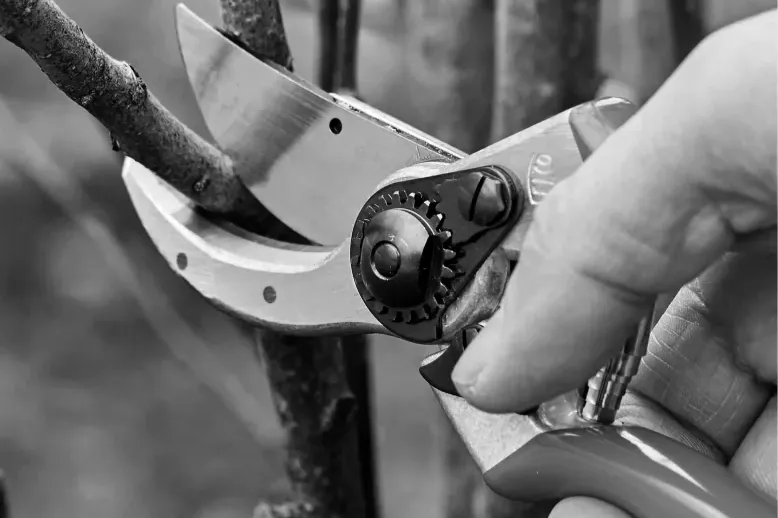
Every gardener owns a pair of hand pruners. They're simple, quiet and cheap. But cordless electric pruners have become one of the most popular yard tools of the last few years, especially with gardeners who have a lot to prune or hands that don't love squeezing anymore.
So which should you use? Below we compare electric and manual pruning shears on cutting power, effort, speed, cut quality, weight, cost, maintenance and safety, so you can pick the right tool for your yard.
What's the difference between electric and manual pruning shears?
Both do the same job: make clean cuts on live stems and small branches. The difference is where the force comes from.
- Manual pruners use your grip. A spring opens the blades and you squeeze the handles to close them. The thicker the branch, the harder you squeeze.
- Electric pruners use a battery-powered motor. You pull a trigger and the motor closes the blade with the same force every time, whether it's the first cut or the five hundredth.
Most quality tools in both groups use a bypass design, where the upper blade slides past a lower hook like scissors, which gives the cleanest cut on live wood.
How do they compare side by side?
| Electric pruning shears | Manual pruning shears | |
|---|---|---|
| Max branch | About 1.4 to 1.5 in | About 3/4 in |
| Effort per cut | Trigger pull | Hard squeeze |
| Hand fatigue | Low | Builds quickly |
| Speed on big jobs | Fast and steady | Slows as you tire |
| Good for arthritis | Yes | Often painful |
| Weight | About 2 lb | Under 1 lb |
| Price | About $50 to $150 | About $15 to $60 |
| Charging | Yes | No |
Capacity figures for manual tools follow the University of Minnesota Extension, which puts hand pruning shears at cuts up to about 3/4 inch and loppers at up to about 1 1/2 inches.
Which cuts thicker branches?
Electric, clearly. A typical pair of hand pruners is designed for stems up to about 3/4 inch. You can force it through something thicker, but that's when blades twist, cuts tear and wrists complain. Above 3/4 inch, the usual advice is to switch to loppers.
Compact electric pruners like the Wood Ranger Power Shears are rated for branches up to about 1.4 inches, almost the same as a pair of loppers, but with one hand and no arm strength needed. In practice, that means fewer tool changes: one pruner handles the thin twigs and the thicker stems.
Which is easier on your hands?
Electric, by a wide margin. Every manual cut uses your grip muscles and the small joints in your fingers and wrist. A few dozen cuts is nothing. A few hundred, which is normal for a fruit tree, a rose bed or a grape vine, adds up to real fatigue, and for people with arthritis or carpal tunnel it can be painful.
The Arthritis Foundation advises gardeners to use easy-to-grip tools and let larger joints do the work. An electric pruner goes further: your fingers don't provide the cutting force at all.
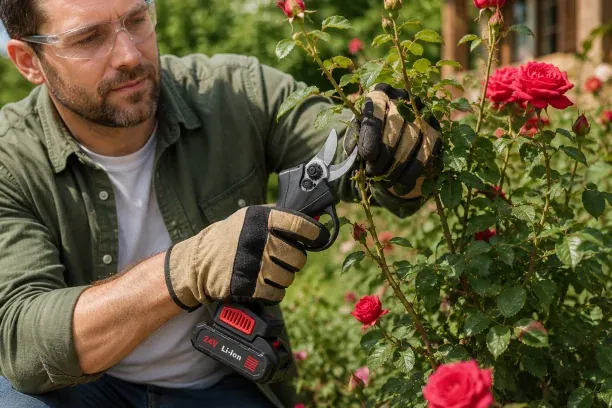
Which is faster?
For a handful of cuts, there's no real difference. For a big job, electric is faster, for two reasons. First, the cut takes the same split second every time, even on thick stems that would need two or three squeezes by hand. Second, you don't slow down as your hand tires, and you don't need breaks to shake out a cramp.
That's why vineyards and commercial orchards switched to electric pruners long before they became home gadgets. When you make thousands of cuts, the time and strain saved per cut add up fast.
Which makes cleaner cuts?
Both make clean cuts when the blades are sharp and the branch is within the tool's range. The difference shows up at the edge of that range. With manual shears, a tired hand often closes only partway, so you twist the tool to finish, which tears bark. A motor closes the blade fully in one smooth stroke.
Blade steel matters for both. Hardened steel like SK5 holds an edge longer. Wipe the blades after each session and clean them with rubbing alcohol after cutting diseased wood.
Is weight a problem with electric pruners?
Electric pruners are heavier, about 2 lb for a compact cordless model versus well under 1 lb for most manual pruners, because of the motor and battery. In practice, most people find that a fair trade. Holding a tool is much easier on your hand than squeezing one, and at around 2 lb, models like the Wood Ranger are designed for one-hand use.
Which costs more to own?
Manual pruners are cheaper to buy, usually $15 to $60 for a good pair. Compact electric pruners usually cost about $50 to $150. The Wood Ranger Power Shears are $79.99 for one, or as low as $47.99 each in bundles.
Running costs are small for both: blade cleaning and occasional sharpening or replacement. An electric pruner adds the cost of charging, which is tiny, and eventually a replacement battery. Some, like the Wood Ranger, include a spare blade in the box.
If an electric pruner lets you keep doing your own pruning instead of hiring help, it pays for itself very quickly.
Which makes a better gift for an older gardener?
Electric, almost always. Many people give up pruning, or start paying someone to do it, not because they don't enjoy it but because their hands can't take the squeezing anymore. An electric pruner removes exactly that barrier. It's a practical gift that lets a parent or grandparent keep caring for their roses, fruit trees and shrubs themselves.
Look for a light model with a safety lock, a removable battery and a long return window, so it's easy to return or exchange if it isn't the right fit. Bundles also make it easy to buy one for yourself and one to give.
Which is safer?
Manual pruners can only close as hard as you squeeze, so they're more forgiving of mistakes. Electric pruners close with real force, so you need to keep fingers out of the jaws. Good electric models include a safety lock. The Wood Ranger Power Shears need a quick double-click of the trigger to power on.
For both: wear gloves and glasses, keep your free hand behind the blade, close or switch off the tool before setting it down, and never prune above shoulder height from a ladder.
Which is better for fruit trees, roses and vines?
Fruit trees: electric. Thinning a backyard apple, pear or peach tree means dozens of cuts on water sprouts and crossing branches, many of them close to an inch thick. That's slow, tiring work with hand pruners, and you usually end up reaching for loppers too.
Roses: electric for the main late-winter pruning, when you cut back thick, woody canes. A small manual pruner is still handy for summer deadheading.
Grape vines: electric, without question. Cane pruning means hundreds of cuts per row, and it's the job electric pruners were originally designed for in vineyards.
Shrubs and hedges: electric for thinning and renewal pruning of thick stems. For flat-shearing a formal hedge, a hedge trimmer is the right tool.
Herbs, flowers and houseplants: manual. Light snips don't need a motor.
How do you maintain each type?
Both need the same blade care, and electric pruners add simple battery care:
- Clean the blades after each session to remove sap and dirt. Use rubbing alcohol when moving from a diseased plant to a healthy one.
- Keep them sharp. A sharp blade cuts cleanly and puts less strain on you or the motor. Some electric models, like the Wood Ranger, include a spare blade.
- Oil the pivot lightly now and then so the blade moves smoothly.
- Battery care (electric only). Recharge after use, don't leave the battery in a hot car or a freezing shed, and store it indoors over winter.
- Store dry. Moisture causes rust on any blade.
Neither type needs the fuel, oil or tune-ups of gas tools, which is one reason cordless yard tools have become so popular. We cover the same idea for blowers in electric vs gas leaf blowers.
Which should you choose?
| If you... | Choose |
|---|---|
| Prune fruit trees, roses, vines or lots of shrubs | Electric |
| Have arthritis, carpal tunnel or a weak grip | Electric |
| Keep switching between pruners and loppers | Electric |
| Want to buy a gift for an older gardener | Electric |
| Snip a few flowers and herbs now and then | Manual |
| Want the lightest, simplest tool for a pocket | Manual |
Plenty of gardeners keep both: a small manual pruner in the pocket for deadheading and herbs, and an electric pruner for real pruning days.
What's our electric pick?
We like the Wood Ranger Power Shears for home gardeners. They have SK5 steel bypass blades with a spare in the box, cut branches up to about 1.4 inches, weigh 2.1 lb, run about 30 minutes per charge on a 24V battery, have a double-click safety trigger and ship from Ohio with a 90-day money-back guarantee.
See the full Wood Ranger Power Shears review, or read do electric pruning shears work? if you're still deciding.
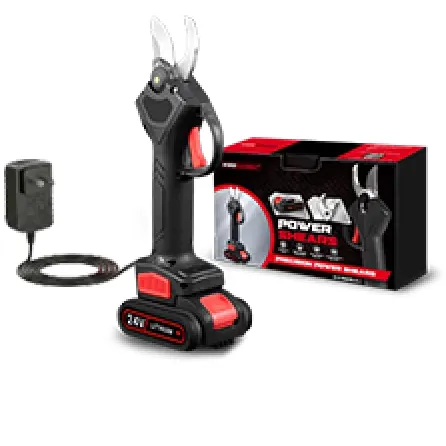
Our pick: the Wood Ranger Power Shears
2.1 lb cordless pruning shears with SK5 steel blades, a 24V battery and a safety trigger. Cuts branches up to about 1.4 in. Ships from Ohio.
Check today's price →From $47.99 each in bundles · 90-day guarantee
What pruning tips apply to both?
- Prune most trees and shrubs in late winter to early spring, while they're dormant.
- Remove dead, broken and diseased wood first. That's fine any time of year.
- Cut about 1/4 inch above an outward-facing bud, or just outside the branch collar, without leaving a stub.
- Don't remove more than about a quarter of a tree's live foliage at once.
- Use a saw for limbs thicker than your tool's rated capacity.
Find out which plants to prune now and which to leave in what to prune in fall.
More yard guides
- Wood Ranger Power Shears review
- Do electric pruning shears work?
- Electric vs gas leaf blower
- Wood Ranger leaf blower review
- Fall yard cleanup checklist
The bottom line
Manual pruners are still great for light, occasional snipping. But if you have real pruning to do, or your hands aren't what they used to be, an electric pruner is the clear upgrade: it cuts thicker branches, never tires and saves your hands. For most home gardeners, the Wood Ranger Power Shears are an easy place to start, with a 90-day money-back guarantee.
Sources
- University of Minnesota Extension. Pruning trees and shrubs.
- Arthritis Foundation. Gardening with arthritis.
- Official Wood Ranger Power Shears product page and checkout, checked October 2026.
Frequently asked questions
Are electric pruning shears better than manual?
For big jobs and sore hands, yes: they cut thicker branches and do the squeezing for you. For a few snips a year, manual pruners are enough.
How thick can manual pruning shears cut?
Hand pruners are designed for cuts up to about 3/4 inch, according to the University of Minnesota Extension. Use loppers or a saw for thicker branches.
Are electric pruners heavy?
Compact cordless models weigh about 2 lb, compared with under 1 lb for most manual pruners. Holding the tool is still much easier than squeezing one.
Do electric pruners make clean cuts?
Yes. A sharp powered bypass blade closes fully in one smooth stroke, so you avoid the torn, half-finished cuts that happen when a tired hand gives out.
How much do electric pruning shears cost?
Compact electric pruners usually cost about $50 to $150. The Wood Ranger Power Shears are $79.99, or as low as $47.99 each in bundles.
Which pruning shears are best for arthritis?
Electric pruners are usually the best choice because the motor provides the cutting force and your hand only holds the tool and presses a trigger.
Should I keep my manual pruners?
Many gardeners keep both: a small manual pruner for deadheading and herbs, and an electric pruner for real pruning days.

Tim Humbert
Tim looks into the viral gadgets that show up in your feed, from mini leaf blowers to chain sharpeners and car care cloths. He reads the product pages, checkout and return policies, and buyer feedback so you know what a gadget really does before you spend money on it. His reviews are built on manufacturer information, official checkout and return policies, trusted safety sources and buyer feedback, and are updated when offers change. More about Tim.