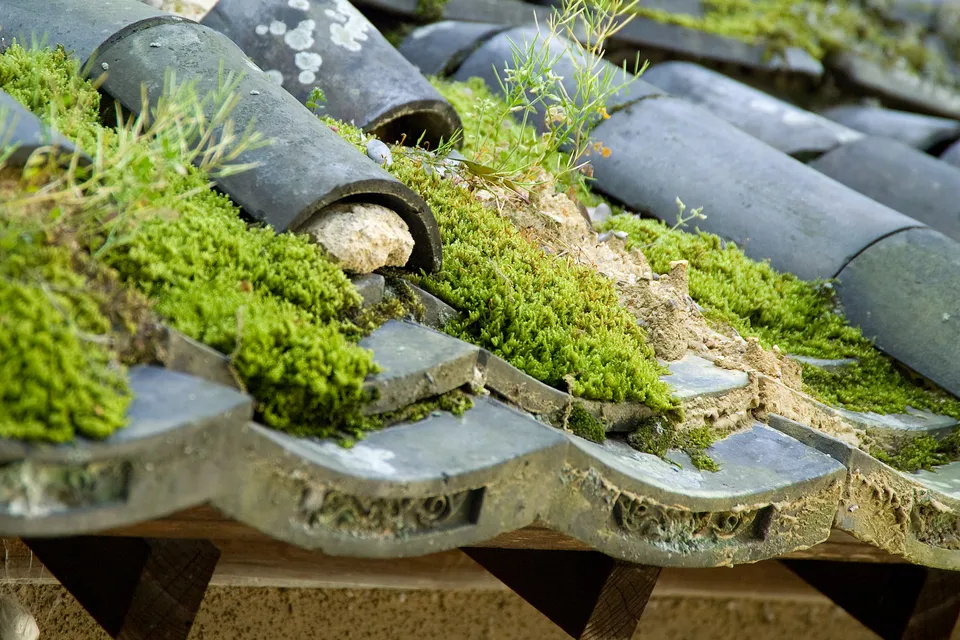
- Work from the ground or a secure ladder; never walk on a wet, mossy roof.
- Gently brush off loose moss with a soft brush on a long pole, working from the top down.
- Apply a moss treatment labeled for your roof type and let it work.
- Rinse with low-pressure water, spraying down the slope, never up under the shingles.
- Prevent regrowth by trimming overhanging branches and keeping gutters clear.
Moss on a roof looks charming in photos but causes real problems. It holds moisture against shingles, lifts their edges, clogs gutters and can shorten the life of the roof. It's common on shady, north-facing slopes and under overhanging trees. Removing it is a careful, gentle job: the goal is to get rid of the moss without damaging the roof or falling.
This guide explains why moss grows on roofs, how to remove it safely, which treatments to use, how to rinse without damaging shingles, how to prevent it from coming back and when to call a professional.
Why does moss grow on roofs?
- Shade: roofs under trees or facing north stay damp longer.
- Moisture: rain, fog and dew keep surfaces wet.
- Debris: leaves and needles trap water and give moss a foothold.
- Rough surfaces: asphalt shingles and wood shakes have texture that holds spores.
The EPA notes that controlling moisture is key to preventing growth like mold and mildew around the home, and the same idea applies to roof moss.
Does moss damage the roof?
Yes, over time. Moss holds water against shingles, which can speed wear. Thick moss can lift shingle edges, letting water get underneath. It also sheds into gutters, causing clogs and overflows. Removing it early is easier and gentler than dealing with thick mats.
How do you stay safe?
- Work from the ground or a properly secured ladder whenever possible.
- Never walk on a wet or mossy roof; it's extremely slippery.
- Use fall protection if you must go on the roof, or hire a pro.
- Stay away from power lines.
- Have someone nearby while you work.
Falls from roofs and ladders cause serious injuries. For steep or high roofs, a professional is the safest choice.
How do you brush off moss?
When the moss is dry, use a soft-bristle brush or a plastic scraper on an extension pole. Work from the top of the roof down, in the direction the shingles overlap, so you don't lift them. Remove loose clumps gently; don't scrape hard or you'll strip the granules that protect asphalt shingles.
Which moss treatments work?
Use a moss treatment labeled for roofs and for your roof material. Many products are sprayed on and left to kill the moss, which then loosens and washes off with rain over weeks. Follow the label, protect plants below with water or a tarp, and avoid runoff into ponds or streams. Don't mix chemicals; Health Canada warns that mixing cleaning products can release toxic gases.
How do you rinse moss off without damage?
Use low-pressure water from a garden hose, spraying from the top down so water runs with the shingles, not under them. Never use a pressure washer on shingles; high pressure can strip granules, crack shingles and force water under them. A focused but gentle stream, aimed down the slope, is enough to rinse loosened moss.
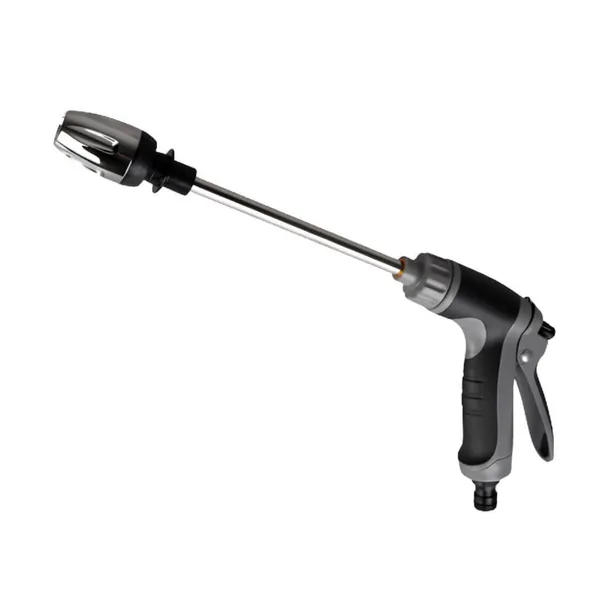
Reach the roof edge and gutters from a safer position
Power Blast Plus: extended metal wand, Precision Flow adjustable spray head, ergonomic grip, fits standard garden hoses. $66.66, or from $49.95 each in bundles.
Check today's price →$66.66, or from $49.95 each in bundles
Why does a long-reach nozzle help?
The Power Blast Plus has an extended metal wand and an adjustable Precision Flow spray head that fits standard garden hoses. The extra reach helps you rinse roof edges, low roofs, porch roofs and gutters from the ground or a lower ladder step, and the adjustable head lets you choose a gentle spray for shingles instead of a hard jet. Read our Power Blast Plus review.
What about the gutters?
Moss and debris washed off the roof end up in the gutters. Clean them after treatment so water flows freely. Clogged gutters can cause overflows and ice dams in winter. See how to clean gutters with a leaf blower.
How do you prevent moss from coming back?
- Trim overhanging branches to let in sun and air.
- Keep the roof clear of leaves and debris.
- Clean gutters at least twice a year.
- Install zinc or copper strips near the ridge; rain carries trace metals down the roof that discourage moss.
- Treat early when you see small patches.
Does roof material matter?
| Roof | Approach |
|---|---|
| Asphalt shingles | Soft brush, roof-safe treatment, gentle rinse; never pressure-wash |
| Wood shakes | Gentle treatment for wood; avoid scraping |
| Tile | Treatment and gentle rinse; tiles can crack if walked on |
| Metal | Easier to clean; moss rarely holds well |
Can you remove moss from other surfaces the same way?
Moss on walkways, patios, decks and fences can be treated and rinsed more aggressively because there's no risk of lifting shingles. See how to clean patio pavers, how to clean a deck and how to clean a fence.
When should you call a professional?
- The roof is steep, high or slippery.
- Moss is thick and widespread.
- Shingles are lifted, cracked or missing.
- You'd need to walk on the roof.
A roofer can treat the moss and check for damage at the same time.
How much does the Power Blast Plus cost?
The Power Blast Plus is $66.66 for one, $61.05 each for two, $55.54 each for three and $49.95 each for four, with a 30-day guarantee. Shipping and tax are calculated at checkout.
When is the best time to remove roof moss?
Late summer and early fall are ideal: moss is easier to brush off when dry, and treatments work well in mild weather before winter rain sets in. Many treatments need a few dry days after application. Avoid working on a frosty or wet roof.
Is lichen the same as moss?
No. Lichen forms crusty, flat patches that cling tightly to shingles, while moss is soft and fluffy. Lichen is harder to remove and shouldn't be scraped. Roof treatments can kill it, after which it slowly weathers away.
What about black streaks on the roof?
Black streaks on asphalt shingles are usually algae, not moss. They're mostly cosmetic. Roof cleaners labeled for algae, applied gently and rinsed with low pressure, can lighten them. Zinc or copper strips help prevent both algae and moss.
How much does professional moss removal cost?
Costs vary by roof size, pitch, height and how much moss there is. Many roofers combine moss removal with a roof inspection and gutter cleaning. Get a couple of quotes and ask what treatment and rinsing method they use; avoid anyone who plans to pressure-wash shingles.
How do you protect plants below?
Water plants and the ground thoroughly before treatment so they absorb less runoff, cover delicate plants with a tarp and rinse leaves afterward. Read the product label for guidance on plants and pets.
What's a moss removal checklist?
- Safe access from the ground or a secured ladder.
- Dry day with mild weather.
- Soft brush or plastic scraper on a pole.
- Roof-safe moss treatment.
- Garden hose with gentle, adjustable spray.
- Gutters cleaned afterward.
- Branches trimmed back.
Do home remedies work?
Some homeowners use mild solutions like diluted dish soap or oxygen-based cleaners on small patches. Results vary, and some home mixtures can harm plants or roofing materials. A product labeled for your roof type is the most predictable choice. Whatever you use, test on a small area, apply gently and rinse with low pressure.
How often should you check the roof?
Look at the roof from the ground each spring and fall, especially shady slopes. Small patches are easy to treat; thick mats take much more work. Clearing leaves and needles from the roof and gutters twice a year removes the debris moss needs to get started. See how to prepare for the first snow.
Can moss and mildew grow on siding too?
Yes, especially on shady walls. Siding can usually be cleaned with a mild cleaner and a strong hose spray. See how to remove mildew from siding and how to clean vinyl siding.
Can moss removal void a roof warranty?
Harsh methods like pressure washing or scraping can damage shingles and may affect a manufacturer's warranty. Gentle brushing, roof-safe treatments and low-pressure rinsing are much less risky. Check your shingle maker's care guidance if you're unsure.
What mistakes should you avoid?
- Using a pressure washer on shingles.
- Spraying water up the slope under the shingles.
- Walking on a wet, mossy roof.
- Scraping hard and removing shingle granules.
- Letting treatment runoff reach ponds or plants.
The bottom line
Remove roof moss gently: brush off loose moss from the ground or a secure ladder, apply a roof-safe treatment, rinse with low-pressure water down the slope and never use a pressure washer on shingles. Trim branches and keep gutters clear to stop it coming back, and call a pro for steep or high roofs.
For gentle rinsing with extra reach, our pick is the Power Blast Plus. Check today's Power Blast Plus price.
Sources
- U.S. Environmental Protection Agency. A Brief Guide to Mold, Moisture and Your Home.
- Health Canada. Never mix bleach with other cleaning products.
- Official Power Blast Plus product page and checkout, checked October 2026.
Frequently asked questions
How do you remove moss from a roof?
Brush off loose moss gently, apply a roof-safe treatment and rinse with low-pressure water down the slope.
Can I pressure wash moss off my roof?
No. High pressure can strip granules, crack shingles and force water underneath.
Does moss damage a roof?
Yes, it holds moisture, can lift shingles and clogs gutters.
How do I stop moss from growing back?
Trim overhanging branches, keep the roof and gutters clear and add zinc or copper strips.
Is it safe to walk on a mossy roof?
No, it's very slippery; work from the ground or call a pro.
When is the best time to remove roof moss?
Late summer or early fall, on dry, mild days.

Tim Humbert
Tim looks into the viral gadgets that show up in your feed, from mini leaf blowers to chain sharpeners and car care cloths. He reads the product pages, checkout and return policies, and buyer feedback so you know what a gadget really does before you spend money on it. His reviews are built on manufacturer information, official checkout and return policies, trusted safety sources and buyer feedback, and are updated when offers change. More about Tim.