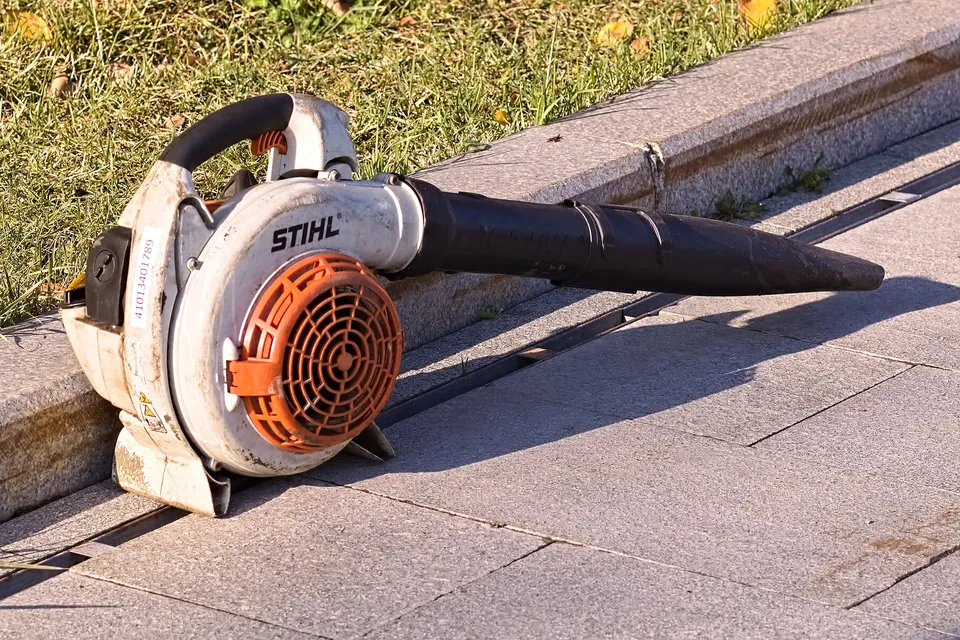
- Charge the battery fully and check the intake is clear.
- Wear eye and ear protection and closed shoes.
- Start on low and hold the nozzle a few inches above the ground at a slight angle.
- Sweep side to side in overlapping passes, walking forward slowly.
- Blow with the wind toward one collection point, like a tarp.
- Work in zones: patio, then walkways, then the lawn edges.
A cordless leaf blower looks like the simplest tool in the garage: point it and squeeze. But a few small techniques make the difference between scattering leaves all over the yard and clearing a patio in three minutes. The good news is that cordless blowers are the easiest kind to learn on: no gas, no pull cord, no choke, and the motor stops the moment you let go.
This guide covers how to set up a cordless blower, the basic technique, how to clear patios, driveways, lawns, beds and gutters, battery tips, safety, common mistakes and how to store it.
How do you set up a cordless blower before the first use?
- Charge the battery fully before the first job. Many lithium batteries ship partly charged.
- Read the quick-start guide for the trigger and any speed or turbo buttons.
- Attach the nozzle firmly if it comes separate.
- Check the air intake is clean and nothing is blocking the vents.
- Test it briefly on low in an open space.
What's the basic technique?
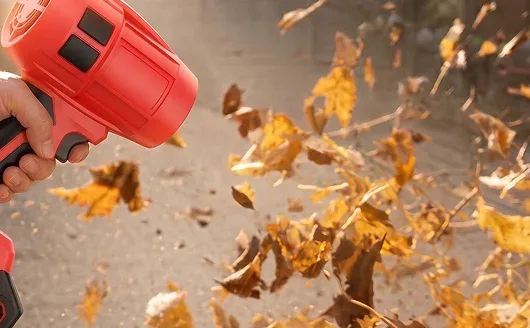
Hold the blower at your side with your arm relaxed, nozzle pointing forward and slightly down, a few inches above the ground. Instead of pointing straight down, which scatters leaves in every direction, use a low angle so the air "rolls" the leaves ahead of you. Move the nozzle side to side in a smooth arc while walking slowly forward, overlapping each pass a little. Let the air do the work. You'll create a growing pile in front of you that you can push toward a tarp, the compost or a lawn area for mulching.
Which speed should you use?
| Job | Speed |
|---|---|
| Flower beds and mulch | Low, so you don't blow mulch away |
| Patios, decks and porches | Low to medium |
| Driveways and walkways | Medium to high |
| Lawns with dry leaves | Medium to high |
| Grass clippings on concrete | Medium |
| Light snow | High |
Using the lowest speed that moves the debris saves battery and gives you more control.
How do you clear a patio or deck?
- Move furniture, cushions and mats to one side.
- Start next to the house and blow away from the walls.
- Blow along the boards on a deck, not across them, to clear the gaps.
- Push everything to one edge, then off the patio onto the lawn or a tarp.
- Do a final pass under furniture once you move it back.
See how to clean a deck.
How do you clear a driveway?
Start at the top near the garage and work down toward the street, but don't blow leaves into the street: they clog storm drains and many towns ban it. Instead, push leaves to the side of the driveway onto the lawn or into a pile for bagging. Work in strips the width of your arc. For grass clippings after mowing, a quick pass along the edges keeps concrete clean. See how to clean a driveway.
How do you blow leaves off a lawn?
- Wait for dry leaves: a dry afternoon is best.
- Divide the lawn into sections and choose one collection point for each.
- Blow with the wind.
- Use a tarp: blow leaves onto it, then drag it to the compost or curb.
- Mulch some leaves into the lawn with a mower; a thin layer feeds the grass.
The EPA explains how leaves make excellent compost. See what to do with fallen leaves.
How do you clean flower beds without blowing away mulch?
Use the lowest speed and hold the nozzle higher and further away. Short bursts lift leaves off the mulch without moving it. Blow from the back of the bed toward the lawn, and use your hand or a rake for leaves stuck between plants.
How do you make the battery last longer?
- Use the lowest effective speed.
- Release the trigger between passes.
- Plan your route so you don't blow the same leaves twice.
- Keep the battery at room temperature; cold reduces runtime.
- Don't store it fully empty for months.
- Keep a second battery charged for big jobs.
Which safety rules matter?
- Eye protection: blowers kick up grit and twigs.
- Hearing protection for longer sessions. NIOSH explains how noise exposure adds up over time.
- A dust mask in dry, dusty conditions or in the garage.
- Closed shoes and long pants.
- Never point it at people, pets or cars passing by.
- Keep kids away while you work.
What are the most common mistakes?
- Pointing the nozzle straight down.
- Fighting the wind.
- Blowing wet, matted leaves instead of raking them.
- Using full power everywhere and draining the battery.
- Blowing leaves into the street or the neighbor's yard.
- Working early in the morning when neighbors are sleeping.
What else can you use it for?
A light cordless blower is handy in the garage, the workshop and the car, for drying the car after washing, clearing grass clippings and blowing light snow off steps. See leaf blower uses and drying a car with a leaf blower.
Which blower is easiest to use?
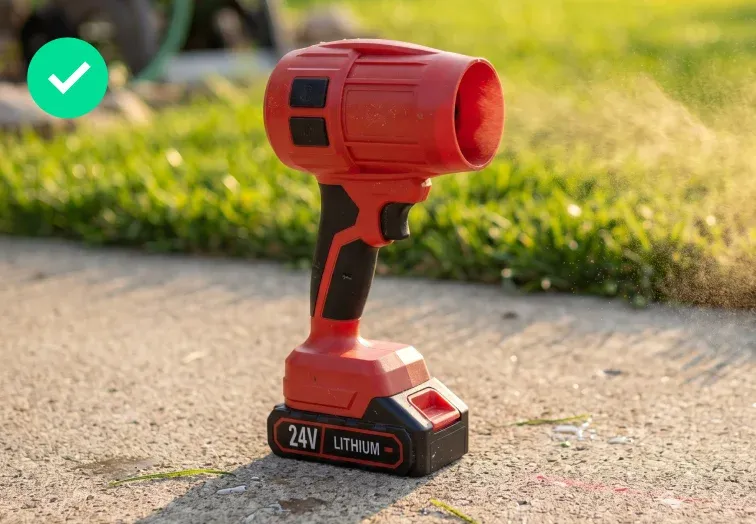
For most homeowners, a light cordless mini blower is the easiest to use well. The Wood Ranger Power Leaf Blower weighs about 2.1 lb, has a 1600W brushless motor and a variable-speed trigger, and runs about 30 minutes per charge. It ships from Ohio in 2–3 days with a 90-day guarantee, and costs from $55.99 each in a 3-pack. Read our Wood Ranger review (4.6/5).
An easy blower for every job
2.1 lb, variable speed, about 30 minutes per charge and no gas or cords. From $55.99 each in bundles, 90-day guarantee, ships from Ohio.
Check today's price →From $55.99 each in bundles · 90-day guarantee
How do you store a cordless blower?
Wipe off dust and leaves, check the intake, and store the blower in a dry place. Store the battery indoors at room temperature, partly charged if you won't use it for several weeks. Hang the blower on a hook or put it on a shelf where it's easy to grab, because the easier it is to reach, the more you'll use it.
How do you stay on good terms with the neighbors?
Cordless blowers are much quieter than gas, but courtesy still helps. Avoid early mornings and late evenings, keep sessions short, and never blow leaves onto their property or the sidewalk. Some towns have rules about blower hours; check yours. See quiet leaf blowers.
Can you clear gutters with a cordless blower?
Yes, for dry leaves and pine needles. With a stable ladder and a helper, blow debris out of the gutter away from you, working from the downspout end. Never stand on the top rungs or lean out, and don't use a blower on a roof. Wet, packed debris needs to be scooped out by hand with gloves. See how to clean gutters with a leaf blower.
Can a cordless leaf blower handle snow?
It handles light, fluffy snow on cars, steps, porches and short walkways very well, usually faster than a shovel. It won't move heavy, wet snow or slush. Keep the battery warm indoors until you need it, and clear snow early before it's packed down. See can a leaf blower remove snow?
Is it safe to let teens use a leaf blower?
Responsible teens can use a light cordless blower with supervision at first. Teach them to wear eye and ear protection, never to point the blower at people, pets or cars, and to release the trigger when someone approaches. Cordless models are a good choice because there's no fuel to handle and the motor stops instantly.
What's a good weekly fall routine?
During peak leaf season, a short session once or twice a week keeps things manageable: patio and steps, then walkways and the driveway, then the lawn edges. Mulch some leaves into the lawn with the mower and compost the rest. Ten to twenty minutes a week beats a whole exhausting Saturday at the end of the season.
Why does a tarp make leaf cleanup faster?
Blowing leaves into a pile is easy; picking them up is the slow part. Lay a large tarp at the edge of the lawn, blow leaves onto it, then drag it to the compost or curb. It saves bending, raking and bagging, and it's one of the simplest tricks to cut fall cleanup time in half.
What's the best weather for blowing leaves?
A dry, calm or lightly breezy afternoon is ideal. Morning dew makes leaves stick, and strong gusts blow them back where you started.
The bottom line
Using a cordless leaf blower well comes down to a low angle, smooth overlapping passes, working with the wind toward one collection point and using the lowest speed that does the job. Blow dry leaves, rake wet ones, protect your eyes and ears, and store the battery indoors. A light model makes every one of these steps easier.
Our pick: check today's Wood Ranger Leaf Blower price on the official site.
Sources
- U.S. Environmental Protection Agency. Composting At Home.
- NIOSH. About Noise and Hearing Loss Prevention.
Frequently asked questions
How do you hold a leaf blower correctly?
At your side, nozzle a few inches above the ground at a low angle, sweeping side to side as you walk forward.
What speed should I use?
The lowest speed that moves the debris: low for beds, medium for patios, higher for driveways and dry lawns.
Should you blow leaves with or against the wind?
With the wind, toward one collection point like a tarp.
Can you blow wet leaves?
Wet, matted leaves are hard for any blower. Blow when dry and rake the rest.
How do you make the battery last longer?
Use lower speeds, release the trigger between passes and keep the battery at room temperature.
Is it OK to blow leaves into the street?
No. It clogs storm drains and is banned in many towns.

Tim Humbert
Tim looks into the viral gadgets that show up in your feed, from mini leaf blowers to chain sharpeners and car care cloths. He reads the product pages, checkout and return policies, and buyer feedback so you know what a gadget really does before you spend money on it. His reviews are built on manufacturer information, official checkout and return policies, trusted safety sources and buyer feedback, and are updated when offers change. More about Tim.