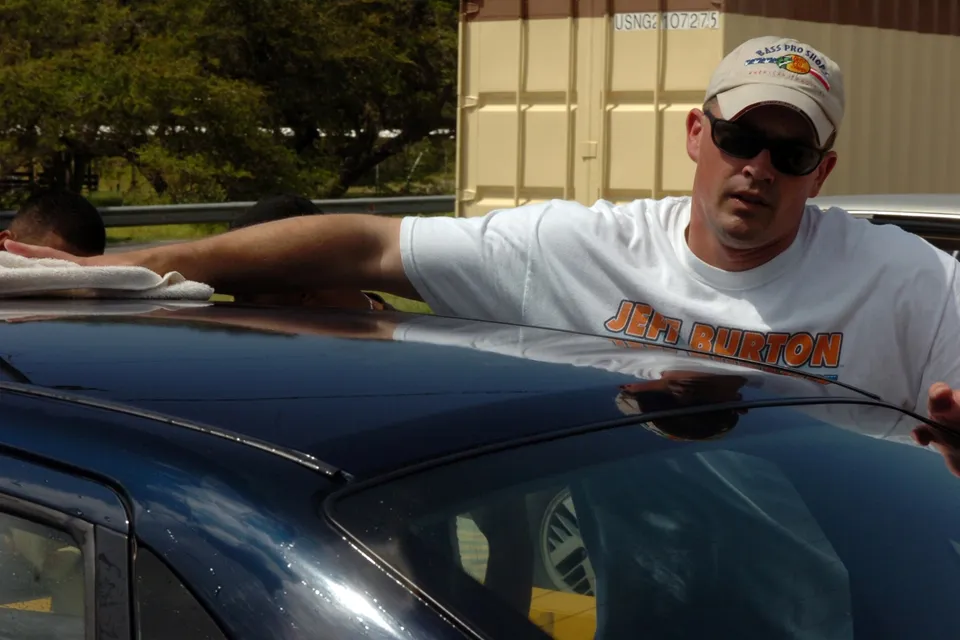
- Use a clean blower and a clean battery-powered model if possible (no exhaust).
- Start at the roof and work down: glass, hood, trunk, then sides.
- Blow out the hiding spots: mirrors, grille, emblems, door handles, fuel door, lights and wheels.
- Finish with a soft microfiber towel for the last drops.
Detailers have used air to dry cars for years, because the less you touch the paint, the fewer swirl marks you create. Dedicated car dryers can cost a lot, but a clean cordless leaf blower does a similar job for a fraction of the price. It pushes water off flat panels in seconds and, more importantly, blasts it out of the crevices where drips come from after you've finished with the towel.
This guide explains why blower drying works, what kind of blower to use, a step-by-step method, the spots you shouldn't miss, mistakes to avoid and how to combine air drying with a towel for a spot-free finish.
Why dry a car with a blower?
- Less contact with the paint, so fewer swirl marks and micro-scratches.
- Faster than towel drying a whole car.
- No drips later: water hidden in mirrors and trim is blown out.
- Fewer water spots, especially with hard water.
- Great for wheels, grilles and emblems that towels can't reach.
See how to remove swirl marks and how to remove water spots.
Which blower works best?
| Type | Good for cars? | Why |
|---|---|---|
| Cordless mini blower | Very good | Light, easy to aim, no exhaust or cord to drag across paint |
| Corded electric blower | Good | The cord can rub the paint; keep it on the ground |
| Gas blower | Not ideal | Exhaust, heavy, can blow grit; hard to control |
| Dedicated car dryer | Excellent | Filtered, warm air, but costs much more |
How do you dry a car with a leaf blower?
- Wash and rinse the car as usual, ideally in the shade. See how to wash a car at home.
- Blow off the blower itself, and point it away from the car for a second to clear any dust.
- Start with the roof, pushing water toward the edges.
- Do the glass: windshield, rear window and side windows.
- Move to the hood and trunk, sweeping water off the sides.
- Work down the sides from top to bottom.
- Blow out the crevices: mirrors, door handles, emblems, grille, fuel door, light housings and roof rails.
- Finish with the wheels and tires, blowing water out of lug nuts and brake areas.
- Open the doors and blow out the door jambs.
- Wipe any remaining drops gently with a clean microfiber towel.
Which spots hold the most water?
- Side mirrors and their housings.
- Door handles and keyholes.
- Emblems, badges and lettering.
- The front grille and lower vents.
- Headlight and taillight edges.
- The fuel door.
- Roof rails and antenna base.
- Wheel spokes and lug nut holes.
- Door, hood and trunk jambs.
These are where the annoying drips come from ten minutes after you thought you were done.
What mistakes should you avoid?
- Blowing near dirt or gravel: grit can be thrown onto the paint. Dry the car on a clean surface.
- Using a dirty blower: clean the nozzle and intake first.
- Letting the cord drag across the paint with corded blowers.
- Drying in direct sun: water evaporates and leaves spots before you finish.
- Holding the nozzle too close: a few inches away is plenty.
- Skipping the final wipe: a soft towel catches the last drops.
What if you have hard water?
Hard water leaves mineral spots when it dries on the paint. Air drying quickly helps a lot because there's less time for minerals to settle. Work fast, panel by panel, in the shade, and finish with a quick detailer spray and microfiber towel if needed. A final rinse with filtered water, if you have it, helps even more.
Can you use the blower inside the car too?
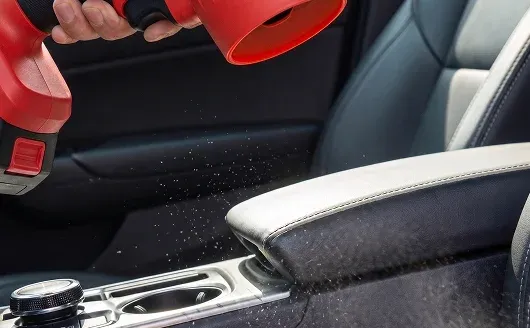
Yes. On low speed, a blower pushes crumbs, dust and pet hair out of seat seams, vents, door pockets and footwells toward the open door. Follow with a vacuum for the floor mats. Wear eye protection and keep the speed low around electronics. See how to clean the garage for the same technique in a workshop.
Does it help in winter?
In winter, a blower is great for clearing light, fluffy snow off the car without scraping the paint. Ice still needs a proper ice scraper or the defroster. See how to clear snow off a car and car paint care in winter.
Which blower do we recommend for car drying?
The Wood Ranger Power Leaf Blower is about 2.1 lb, so it's easy to aim around mirrors and wheels with one hand. Its 1600W brushless motor and variable-speed trigger let you go gentle around trim and stronger on flat panels. It runs about 30 minutes per charge, enough for several cars, and has no exhaust or cord to drag across the paint. It ships from Ohio with a 90-day guarantee, from $55.99 each in a 3-pack. Read our Wood Ranger review (4.6/5).
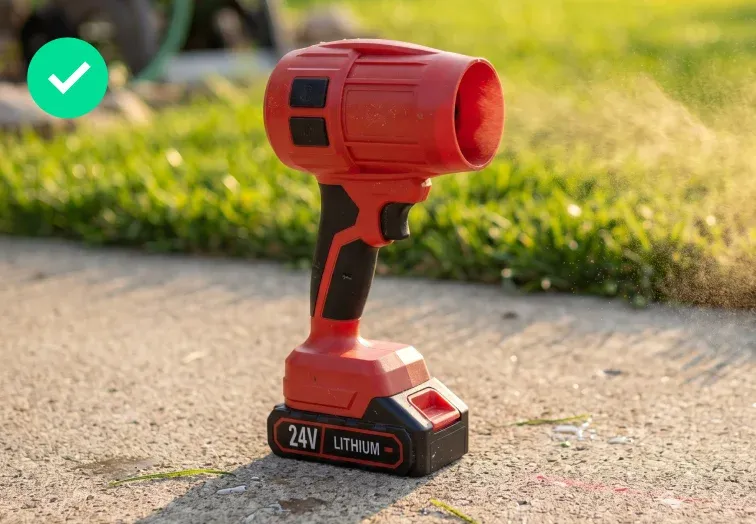
A light blower for car drying and more
About 2.1 lb, variable speed and no exhaust or cords near your paint. From $55.99 each in bundles, 90-day guarantee, ships from Ohio.
Check today's price →From $55.99 each in bundles · 90-day guarantee
Should you still use a towel?
Yes, but much less. The blower removes most of the water, so your towel only needs to catch the last drops, which means far less rubbing on the paint. Use a clean, plush microfiber towel and pat or glide it gently instead of scrubbing. See how to dry a car after washing.
Does this work for motorcycles and bikes?
It works even better. Motorcycles and bicycles have lots of crevices, chains and engine parts that hold water. A blower dries them quickly and helps prevent rust spots. Keep the speed moderate around electrical connectors.
What's a simple wash-and-dry routine?
Rinse, wash with the two-bucket method, rinse again, then blow dry from the top down and finish with a microfiber towel. Once a month, add a spray wax or sealant: protected paint sheds water faster, so drying gets even quicker. The EPA WaterSense program notes that outdoor uses account for a large share of household water use, so using a nozzle that shuts off and washing efficiently saves water too.
How long does blower drying take?
For a typical sedan, blower drying takes about five to ten minutes, plus a quick towel pass. That's often faster than drying the whole car by hand, and it's much easier on the paint. SUVs and trucks take a little longer because of the roof and larger panels, but the crevice work, mirrors, grille and wheels, is where a blower saves the most time.
How much battery does it take?
Drying a car usually uses only a few minutes of runtime, so a blower that runs about 30 minutes per charge can dry several cars, or one car plus the patio and garage. Use medium speed on flat panels and higher speed only for crevices and wheels to stretch the battery. See leaf blower battery life.
Do you need a filter on the blower?
Dedicated car dryers filter the air to avoid blowing dust onto the paint. With a leaf blower, the best you can do is keep it clean, avoid sucking up dirt and work on a clean surface. Blow off the area around the car before you start, and point the blower away from the car for a second to clear the nozzle each time you turn it on.
Is blower drying good for ceramic-coated cars?
It's ideal. Coated paint sheds water quickly, so a blower clears most of it in seconds, and less towel contact helps the coating last longer. Many detailers recommend air drying for coated cars for exactly that reason.
Can you dry the car inside the garage?
Yes, but open the door and clear dust from the floor first, or the blower will stir it up onto the wet paint. Better yet, dry the car on the driveway right after washing, then pull it into the garage.
How do you dry wheels and tires properly?
Wheels hold more water than any other part of the car, in the spokes, lug nut holes and around the brakes. Blow each wheel from several angles, then dry the tire sidewall with a separate towel so brake dust doesn't end up on your paint towel. If you use tire shine, apply it only after the tires are completely dry.
Can you dry floor mats with a blower?
Yes. Hang rubber mats or prop them up and blow the water off both sides in a minute, then let them finish air drying before putting them back.
The bottom line
Drying a car with a clean cordless leaf blower is fast, reduces swirl marks and stops the drips that cause water spots. Work top to bottom, blow out mirrors, emblems, grilles and wheels, and finish with a soft microfiber towel. A light, variable-speed blower makes it easy and gives you a tool you'll also use on leaves, the garage and light snow.
Our pick: check today's Wood Ranger price on the official site.
Sources
- U.S. Environmental Protection Agency. WaterSense: How We Use Water.
- Federal Trade Commission. Online Shopping.
Frequently asked questions
Is it safe to dry a car with a leaf blower?
Yes, with a clean blower used on a clean surface. It reduces towel contact and swirl marks.
Which leaf blower is best for drying a car?
A light cordless blower with variable speed: no exhaust and no cord to drag across the paint.
Where should you start when blower drying?
At the roof, then glass, hood, trunk and sides, finishing with mirrors, grille and wheels.
Do you still need a towel?
Yes, a soft microfiber for the last drops, with far less rubbing.
Can a gas leaf blower dry a car?
It's not ideal: it's heavy, harder to control and has exhaust.
Does blower drying prevent water spots?
It helps a lot because water is removed before minerals dry on the paint.

Tim Humbert
Tim looks into the viral gadgets that show up in your feed, from mini leaf blowers to chain sharpeners and car care cloths. He reads the product pages, checkout and return policies, and buyer feedback so you know what a gadget really does before you spend money on it. His reviews are built on manufacturer information, official checkout and return policies, trusted safety sources and buyer feedback, and are updated when offers change. More about Tim.