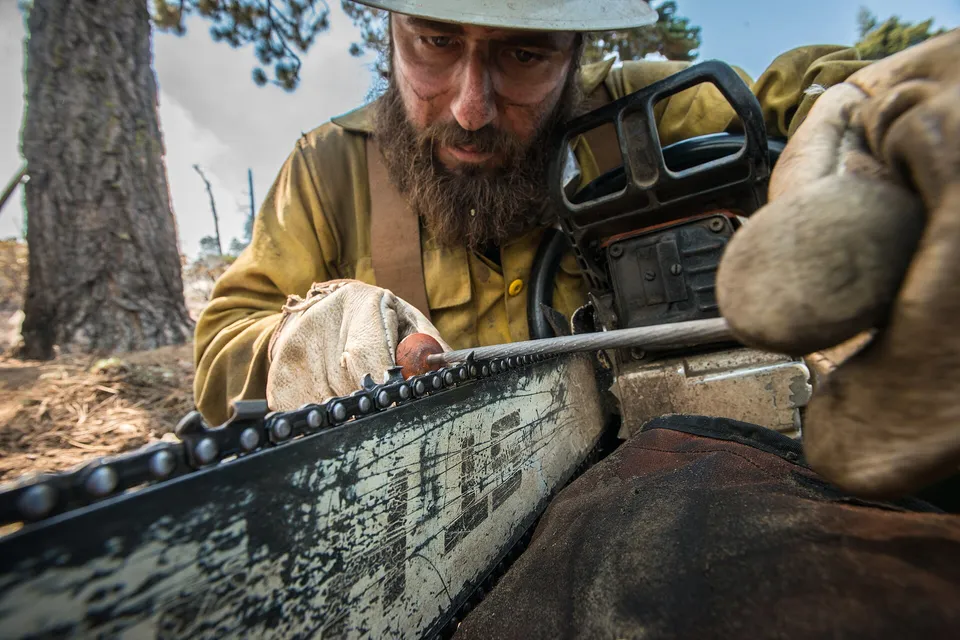
- Use the right file size for your chain (check the chain package or manual).
- Secure the bar in a vise or clamp, with the chain brake on and the saw off.
- Hold the file at the correct angle, usually marked on a file guide (often about 25–35°).
- File from the inside of each cutter outward, with smooth, even strokes on the push only.
- Give every cutter the same number of strokes, then do the other side.
- Check the depth gauges every few sharpenings with a flat file and gauge tool.
A sharp chain cuts like it's pulling itself through the wood, throws big chips instead of dust, and keeps you safer because you're not forcing the saw. A dull chain smokes, wanders and makes kickback more likely. Learning to touch up a chain with a file is one of the most useful chainsaw skills you can have, and it only takes a few minutes once you have the rhythm.
This guide covers the tools you need, how to find your file size and angle, the step-by-step filing method, how to handle depth gauges, common mistakes and when to use a guided sharpener instead.
When does a chain need sharpening?
- It makes fine sawdust instead of chips.
- You have to push the saw to cut.
- The saw pulls to one side or cuts crooked.
- It smokes even with good bar oil.
- You hit dirt, a rock or a nail.
See signs a chainsaw chain is dull and how often to sharpen a chain.
What tools do you need?
- Round file in the right diameter for your chain pitch.
- File guide with angle markings (makes it much easier).
- Flat file and depth gauge tool for the rakers.
- Vise or bar clamp to hold the saw steady.
- Gloves and a marker to mark your starting tooth.
How do you know your file size and angle?
Your chain's pitch and recommended file size are printed on the chain package, the saw manual or sometimes on the drive links. Common sizes are 5/32, 3/16 and 7/32 inch. The filing angle is also in the manual and often stamped on the top of each cutter. The Oregon sharpening guide has charts for most chains.
How do you file the chain step by step?
- Turn the saw off and remove the battery or spark plug cap.
- Clamp the bar in a vise, chain brake engaged.
- Check tension: a slightly firm chain is easier to file. See chainsaw chain tension.
- Mark the first cutter with a marker.
- Place the file in the cutter, using the file guide to keep the angle and height.
- Push the file forward from the inside of the cutter to the outside, with light, steady pressure. Lift on the return stroke.
- Use the same number of strokes (often 3–5) on each cutter facing the same direction.
- Advance the chain and repeat for every other cutter until you reach the mark.
- Switch sides and file the cutters facing the other way.
- Check the depth gauges (see below).
What are depth gauges and when do you file them?
Depth gauges, or rakers, are the small humps in front of each cutter. They control how deep each cutter bites. As you sharpen, cutters get lower, so the rakers eventually need to be filed down a little to keep the chain cutting well. Every three to five sharpenings, lay a depth gauge tool over the chain and file any raker sticking above it with a flat file, then round its front edge slightly.
What are the most common mistakes?
- Using the wrong file size.
- Changing the angle from tooth to tooth.
- Filing on the backstroke.
- Uneven strokes, which make cutters different lengths and the saw cut crooked.
- Forgetting the depth gauges.
- Filing a hot chain right after cutting.
Is a guided sharpener easier?
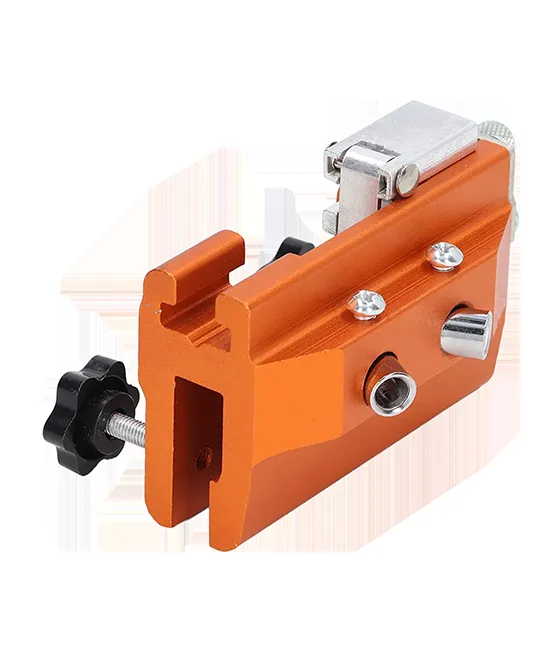
For many homeowners, yes. Freehand filing takes practice to keep the angle consistent across 50 or more cutters. A guided hand sharpener clamps to the bar and controls the angle for every tooth, so results are consistent even if you only sharpen a few times a year. The SawShark is a hand-crank sharpener that clamps to your chainsaw bar and guides every tooth at the same angle, with no power needed. In October 2026 it cost $29.95, or from $17.97 each in bundles, with a 30-day return policy. Read our SawShark review (4.5/5) and is SawShark legit?
Sharpen at the right angle every time
Hand-crank sharpener that clamps to your bar and guides each tooth. No power needed. $29.95, or from $17.97 each in bundles.
Check today's price →$29.95, or from $17.97 each in bundles
When should you replace a chain instead?
Replace a chain when the cutters are worn down to the limit line marked on the top plate, when teeth are cracked or broken, or after hitting metal or rocks badly. A worn bar can also cause problems; check the rails for burrs and wear. See chainsaw maintenance.
Which safety tips matter?
- Always work with the saw off and the chain brake on.
- Wear cut-resistant gloves.
- Clamp the saw firmly so it can't move.
- Keep files clean; a clogged file cuts poorly.
The OSHA chain saw safety fact sheet covers protective equipment and safe operation. See chainsaw safety tips.
Can you sharpen in the field?
Yes. A file and guide or a compact hand sharpener fit in a pocket or toolbox. A quick touch-up after every tank of fuel or battery, or whenever you see dust instead of chips, keeps the chain cutting well all day. See how to cut firewood.
How do you get better at freehand filing?
Consistency comes from practice and a few habits. Use a file guide until the angle feels natural; many guides have arrows that show the filing direction and angle lines that should line up with the chain. Count your strokes out loud. Keep the file level, with about one-fifth of its diameter above the top plate of the cutter. Work in good light, and stop to clean metal filings out of the file teeth with a file card. After a few chains, most people can touch up a chain in five to ten minutes.
Why must all cutters be the same length?
If cutters on one side are longer than the other, they take bigger bites and the saw pulls to that side, giving crooked cuts. Find the shortest cutter on the chain and file the others down to match it. A cheap caliper or simply comparing by eye with a good light helps. Even cutters also mean smoother cutting and less vibration.
What if a tooth is badly damaged?
A tooth that hit a rock or nail may be chipped or have a rolled edge. File it back until you reach clean, bright metal, and then bring the other cutters to the same length. If several teeth are badly damaged, or a tooth is cracked, replace the chain; a weakened tooth can break during cutting.
Should you use an electric grinder?
Bench grinders designed for chains are fast and accurate in experienced hands, but they can overheat the cutters and remove too much metal if you're not careful. For homeowners who sharpen a few times a season, a file with a guide or a guided hand sharpener is simpler, cheaper and gentler on the chain.
How often should you touch up the chain?
A light touch-up of two or three strokes per cutter every time you refuel keeps a chain sharp all day and takes only minutes. A full sharpening is needed after hitting dirt or when the chain stops pulling itself into the wood. See how often to sharpen a chainsaw chain.
Should you clean the chain before sharpening?
Yes. Sawdust, pitch and dirt clog the file and hide damage. Brush the chain and bar clean, or soak a very dirty chain briefly in a degreaser, rinse and dry it before filing. While the chain is off, clean the bar groove and oil holes too. A clean chain sharpens faster and lets you see the bright, fresh edge you're aiming for on every cutter.
What should a field sharpening kit include?
Keep a round file and handle, a flat file, a depth gauge tool, a file guide, the saw's combination tool, gloves and a rag in a small pouch with the saw. Add a compact guided sharpener if you prefer not to freehand. With this kit you can keep cutting all day instead of driving home with a dull chain.
How do you know you sharpened it well?
A well-sharpened chain pulls itself into the wood with little pressure, throws thick chips instead of dust and cuts straight. If it pulls to one side, cutters are uneven; if it still makes dust, the edges aren't sharp yet or the depth gauges are too high.
How do you store files and a chain?
Keep files dry in a pouch so they don't rust or bang against other tools, and replace them when they stop biting. Store spare chains oiled in a sealed bag.
The bottom line
Sharpening with a file comes down to the right file size, a consistent angle, the same number of push strokes on every cutter and checking the depth gauges every few sharpenings. If you'd rather not freehand it, a guided sharpener like the SawShark gives consistent results in minutes.
Our pick: check today's SawShark price on the official site.
Sources
- Oregon Tool. Sharpening Chainsaw Chain.
- OSHA. Chain Saw Safety Fact Sheet.
Frequently asked questions
What size file do I need for my chainsaw chain?
Check the chain package or manual. Common sizes are 5/32, 3/16 and 7/32 inch.
What angle do you file a chainsaw chain?
Follow your manual; many chains use about 25 to 35 degrees, often marked on the cutter and file guide.
Do you file on the push or pull stroke?
On the push stroke only, lifting the file on the return.
How many strokes per tooth?
Usually 3 to 5, the same number on every cutter.
What are depth gauges?
Small humps in front of each cutter that control bite depth. File them every few sharpenings with a gauge tool.
Is there an easier way than freehand filing?
A guided sharpener like the SawShark clamps to the bar and holds the angle for you.

Tim Humbert
Tim looks into the viral gadgets that show up in your feed, from mini leaf blowers to chain sharpeners and car care cloths. He reads the product pages, checkout and return policies, and buyer feedback so you know what a gadget really does before you spend money on it. His reviews are built on manufacturer information, official checkout and return policies, trusted safety sources and buyer feedback, and are updated when offers change. More about Tim.