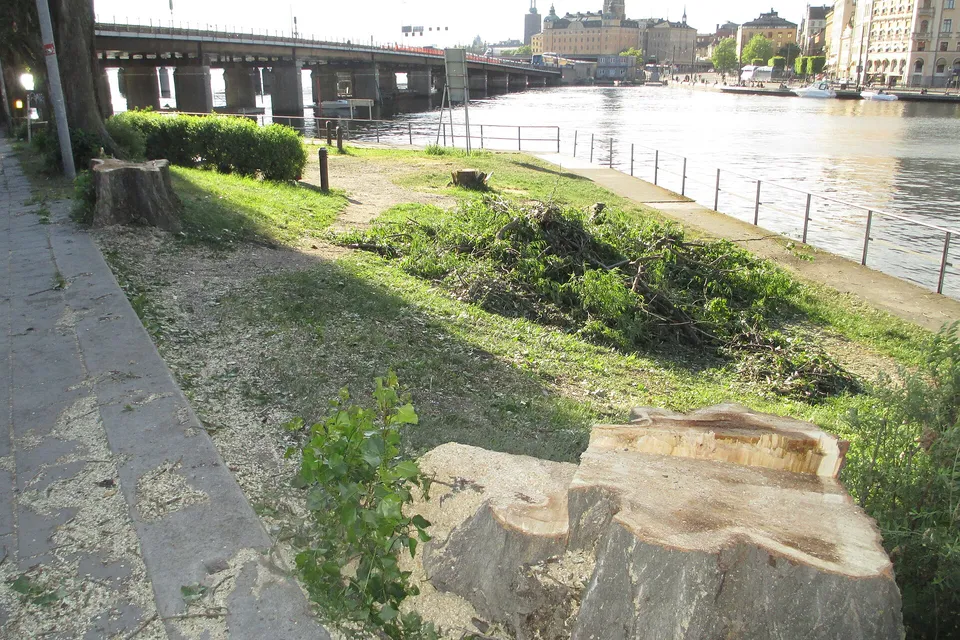
- Check safety first: wires, buildings, fences, lean, dead branches and your escape path.
- Wear protective gear: helmet, eye and ear protection, gloves, chaps and boots.
- Make a notch about one-fifth into the trunk on the side facing the direction of fall.
- Make the back cut slightly above the notch, leaving a hinge of uncut wood.
- Step back along your escape path as the tree falls.
- Limb and cut the trunk into sections.
Removing a small tree, like an overgrown sapling, a dead ornamental or a volunteer tree in the wrong spot, is a job many homeowners can do safely with a chainsaw. The key words are small and safely. Felling even a small tree involves real risks: a trunk that falls the wrong way, a saw that kicks back or a branch that drops unexpectedly. This guide covers when it's a DIY job, the gear you need, how to plan the fall, how to make the cuts and how to clean up.
When is it safe to cut down a tree yourself?
- The trunk is small, roughly under 6 inches in diameter.
- The tree is well away from power lines, buildings, fences, cars and roads.
- It stands fairly straight with no heavy lean.
- It has no large dead branches that could fall.
- There is a clear space at least twice the tree's height in the direction you want it to fall.
If any of these isn't true, hire a certified arborist. Never cut near power lines; call the utility.
What gear do you need?
| Gear | Why |
|---|---|
| Chainsaw with a sharp chain | A sharp chain cuts cleanly and safely |
| Helmet with face screen | Protects from falling branches and chips |
| Ear protection | Chainsaws are loud |
| Cut-resistant chaps or pants | Protect legs |
| Gloves and steel-toe boots | Grip and foot protection |
| Felling wedges (optional) | Help control the direction of fall |
The OSHA chain saw safety fact sheet lists recommended protective equipment and safe practices.
Why does a sharp chain matter so much?
A dull chain makes you push harder, cuts unevenly and increases the risk of the saw binding or kicking back. Before felling, make sure the chain is sharp and evenly filed on both sides, so it cuts straight. A chain that pulls to one side can throw off your notch and back cut. See why a chainsaw cuts crooked.
Start every job with a sharp chain
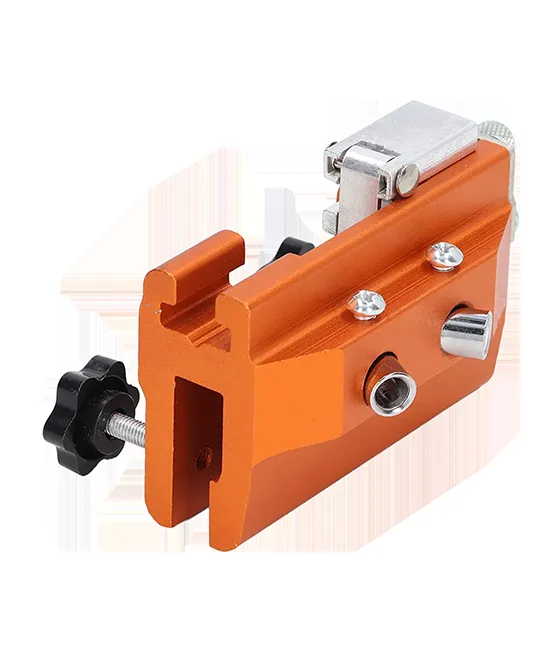
SawShark hand-crank sharpener: clamps to your bar, guides every tooth at the same angle, no power needed. $29.95, or from $17.97 each in bundles.
Check today's price →$29.95, or from $17.97 each in bundles
How do you plan the direction of fall?
- Look at the tree's natural lean and where the heaviest branches are.
- Choose a fall direction with a clear landing zone.
- Plan two escape routes at about 45 degrees behind and to the sides of the fall direction.
- Clear brush and tripping hazards from your work area and escape paths.
- Make sure everyone else stays at least two tree lengths away.
How do you make the notch?
The notch (or face cut) decides which way the tree falls. On the side facing the fall direction:
- Make a downward-angled top cut about one-fifth to one-quarter of the way into the trunk.
- Make a horizontal bottom cut that meets the end of the top cut, forming a wedge.
- Remove the wedge. The notch should point exactly where you want the tree to fall.
How do you make the back cut?
On the opposite side, make a horizontal cut slightly above the bottom of the notch. Cut toward the notch, but stop before reaching it, leaving a strip of uncut wood called the hinge. The hinge guides the tree as it falls. As the tree starts to lean, stop cutting, engage the chain brake and walk away along your escape route. Never cut through the hinge.
How do you avoid kickback?
Kickback happens when the upper tip of the bar touches wood or the chain gets pinched, throwing the saw back toward you. Keep the tip clear, hold the saw firmly with both hands, stand to the side of the bar and keep the chain sharp with correct depth gauges. CCOHS explains kickback and how to prevent it.
What about very small trees and saplings?
For saplings under 2 or 3 inches, a notch isn't always needed; a single cut at a comfortable height usually works, while pushing the trunk the way you want it to fall. Loppers or cordless pruning shears handle very thin trunks and branches; see how to cut thick branches.
How do you limb and cut up the tree?
- Start at the base and work toward the top, cutting branches from the opposite side of the trunk when possible.
- Watch for branches under tension; they can spring back.
- Cut the trunk into sections (bucking), supporting it so the cut doesn't pinch the bar.
- Stack firewood-size pieces to dry; see how to cut firewood and best firewood to burn.
What do you do with the stump?
Cut the stump as low as is safe, keeping the chain out of the dirt (dirt dulls a chain instantly). Options for removal include a stump grinder rental, a professional grinding service or letting it decay naturally. Some trees will sprout from the stump, so trim new shoots as they appear.
When is the best time to cut a tree?
Late fall and winter are often good times: leaves are off, you can see the branch structure clearly, the ground is firm and many plants are dormant. Avoid windy days, and check local rules or HOA guidelines before removing trees.
When should you call a professional?
- The tree is large or leaning toward a building.
- It's near power lines.
- It's dead, hollow or has large dead limbs.
- You're unsure about any step.
Arborists have the training and equipment to remove trees safely. See chainsaw safety tips and after-storm yard cleanup.
How much does SawShark cost?
SawShark is $29.95 for one, $26.95 each for two, $23.36 each for three and $17.97 each for four. Returns are accepted within 30 days for products in original condition. Read our SawShark review.
How do felling wedges help?
Plastic felling wedges are tapped into the back cut behind the bar once there's room. They keep the cut from closing on the bar and can help tip a tree in the planned direction. Use plastic or aluminum wedges only, never steel, which can damage the chain if you hit it.
What if the bar gets stuck?
If the trunk closes on the bar, stop the saw, engage the chain brake and don't yank it. Tap a wedge into the cut to open it, or use a second saw or hand saw to cut the trunk free from above. Pinching usually means the tree is leaning back toward the cut, which is a sign to call a professional if you're unsure.
What if the tree gets hung up?
If the tree lodges in another tree as it falls, don't climb it, cut the supporting tree or work under it. A hung-up tree is very dangerous. Keep everyone away and call a professional arborist with the right equipment.
Should you remove branches first?
For small trees with low branches that block your access to the trunk, trimming those lower branches first gives you room to work safely. Cordless pruning shears or a pruning saw handle small limbs quickly. Don't climb to remove high branches; that's a job for a professional.
How do you clean up after?
Stack trunk sections for firewood, chip or bundle branches for yard waste pickup, and use a leaf blower to clear sawdust and small debris from paths and the lawn. See how to stack firewood.
What's a pre-felling checklist?
- Tree small, straight and well away from lines and buildings.
- Chain sharp and evenly filed; tension and oil checked.
- Full protective gear on.
- Fall direction and two escape routes planned and cleared.
- Helpers and pets at least two tree lengths away.
- Calm weather.
Do you need permission to cut down a tree?
Some cities and HOAs regulate tree removal, especially for larger trees or trees near property lines and sidewalks. Check local rules first, and talk to neighbors if the tree is near a shared boundary. Small trees on your own property are usually fine, but it's worth checking.
Can you use an electric chainsaw?
Yes. Cordless and corded electric chainsaws are well suited to small trees, limbing and firewood. They start instantly and are quieter and lighter than gas saws. Keep the chain just as sharp. See electric vs gas chainsaw.
What mistakes should you avoid?
- Cutting with a dull or unevenly sharpened chain.
- Skipping the notch or cutting through the hinge.
- Standing directly behind the tree as it falls.
- Working alone with no one nearby who knows where you are.
- Letting the chain touch the ground.
The bottom line
Small, straight trees away from buildings and lines can be a safe DIY job with the right gear, a sharp chain, a planned fall direction and escape routes, a proper notch and a back cut that leaves a hinge. Anything bigger, leaning or near lines belongs to a professional.
For a sharp chain before every job, our pick is SawShark. Check today's SawShark price.
Sources
- OSHA. Chain Saw Safety.
- CCOHS. Chainsaws: Kickback.
- Official SawShark product page, checked October 2026.
Frequently asked questions
Can I cut down a small tree myself?
Yes, if it's small, straight and well away from lines, buildings and roads.
How do you make a felling notch?
Cut a wedge about one-fifth into the trunk on the side facing the fall direction.
What is the hinge in tree felling?
A strip of uncut wood between the notch and back cut that guides the fall.
What gear do I need?
Helmet, eye and ear protection, gloves, chaps and boots, plus a sharp chain.
What if my chainsaw gets stuck in the tree?
Stop the saw, engage the brake and use a wedge to open the cut.
When should I call a professional?
For large, leaning or dead trees, or anything near power lines or buildings.

Tim Humbert
Tim looks into the viral gadgets that show up in your feed, from mini leaf blowers to chain sharpeners and car care cloths. He reads the product pages, checkout and return policies, and buyer feedback so you know what a gadget really does before you spend money on it. His reviews are built on manufacturer information, official checkout and return policies, trusted safety sources and buyer feedback, and are updated when offers change. More about Tim.